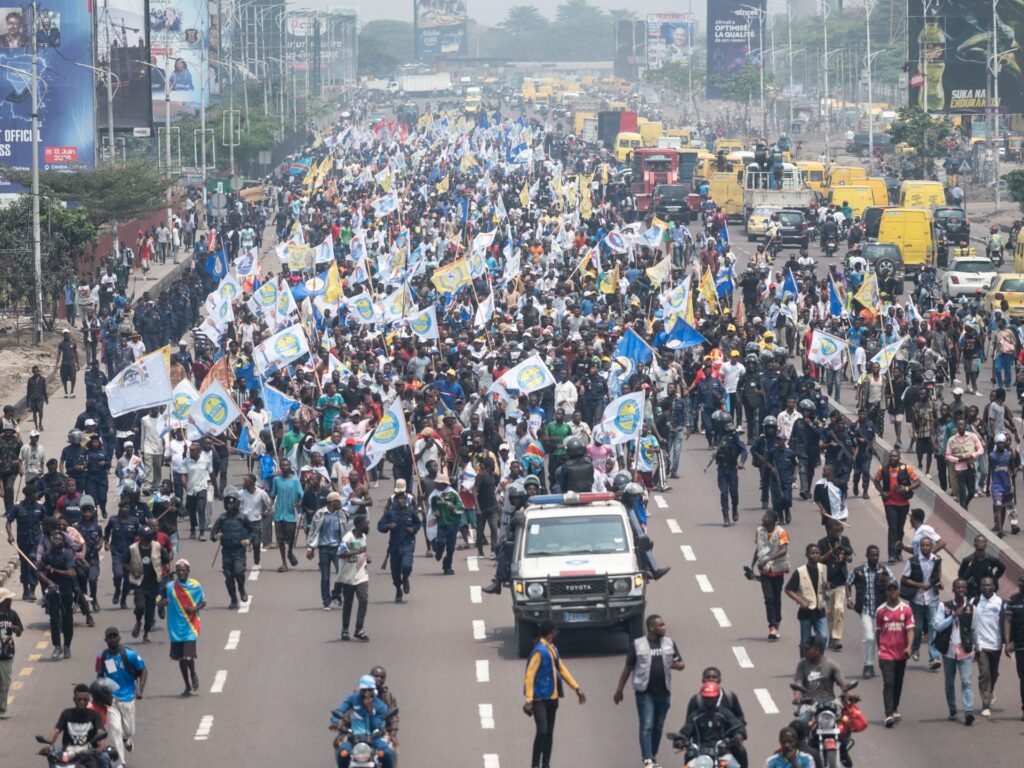
In the Democratic Republic of Congo (DR Congo), police forces have intensified their efforts to quell widespread protests erupting across the country. These demonstrations are in direct response to the proposed changes to the nation’s constitution by President Félix Tshisekedi, changes that would potentially enable him to seek a third term in office.
Protesters from various regions have taken to the streets, voicing their opposition to what many perceive as an attempt to undermine democratic principles and extend presidential power beyond established limits. The move to amend the constitution has sparked nationwide unrest, with demonstrators demanding the preservation of the current constitutional term limits.
Police cracking down on these protests have employed a range of measures aimed at dispersing crowds and preventing further gatherings. Reports indicate the use of tear gas, water cannons, and at times physical force to break up assemblies. Several arrests have been made, with many demonstrators detained on charges related to public disorder and resisting police authority.
The government defends the proposed constitutional amendments, stating they are necessary to ensure political stability and continuity of leadership. Officials argue that these changes will allow the president to continue his reform agenda and maintain momentum in key development projects.
However, the opposition parties and civil society groups have criticized the move as undemocratic and a dangerous precedent that could lead to political stagnation or authoritarian rule. They warn that altering the constitution to benefit incumbent leaders threatens the democratic freedoms and institutions of the DR Congo.
International observers have expressed concern over the escalating tensions and call for dialogue between the government and opposition to resolve disputes peacefully. The United Nations and African Union have urged all parties to uphold human rights and refrain from violence in handling the protests.
The situation remains fluid, with demonstrators promising to continue their resistance against what they see as an unjust attempt to entrench the president’s power. Citizens are calling for transparency, respect of constitutional limits, and free political participation in the nation’s governance.
This ongoing crisis highlights the delicate balance between political leadership and democratic norms in DR Congo, a country with a history of political instability and conflict. The coming weeks will be critical in determining whether the nation can navigate this challenge without further violence or political upheaval.