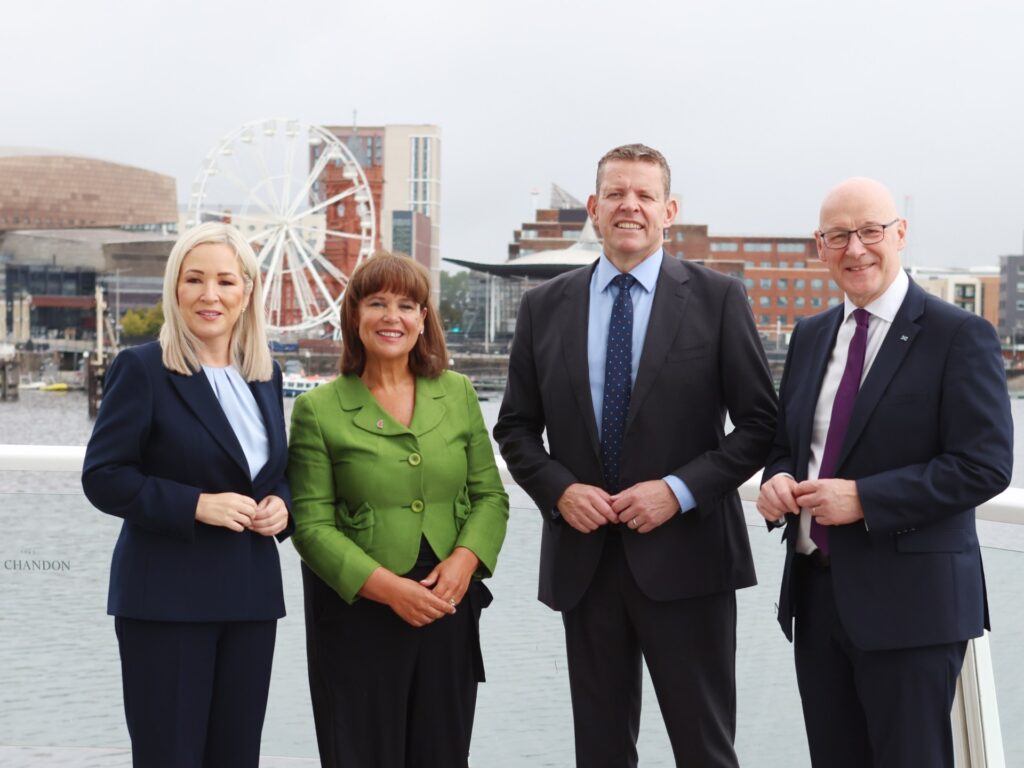
In a significant political development, the leaders of nationalist parties in Scotland, Wales, and Northern Ireland have come together to assert their right to self-determination, challenging the authority of the British government in London. This unprecedented alliance highlights a shared commitment among the three nations to pursue greater autonomy and democratic rights.
The leaders argue that the UK government has “no right” to block their people’s democratic aspirations. Their united stance underscores growing frustrations over the central government’s reluctance to grant referendums or other mechanisms allowing these nations to decide their own political futures.
Scotland, Wales, and Northern Ireland each have distinct nationalist movements advocating for varying degrees of independence or greater devolved powers. Scotland’s Scottish National Party (SNP) has been the most prominent in pushing for a second independence referendum, following the first in 2014, where Scots voted to remain part of the UK.
In Wales, Plaid Cymru has been championing increased self-government and greater recognition of Welsh identity and rights. Meanwhile, Northern Ireland’s Sinn Féin, a party with a historical focus on unification with the Republic of Ireland, continues to advocate for the reunification cause amid the complexities stemming from Brexit and the Northern Ireland Protocol.
This collaboration between the nationalist leaders is seen as a strategic move to amplify their voices on the international stage and to present a united front when negotiating with the UK government. By stressing the democratic basis of their claims, they aim to draw attention to what they consider an unfair denial of representation and political agency.
The joint statement released by these leaders emphasized that democracy must allow for the will of the people to be respected, especially in matters of constitutional significance. They contend that denying referendums or blocking democratic processes undermines the principles of freedom and self-governance.
The UK government, for its part, has maintained that such decisions impact the integrity of the United Kingdom and therefore must be approached with caution. Critics from London argue that the economic, social, and political implications of independence or substantial devolution are complex and require thorough consideration.
However, the nationalist leaders believe that dialogue built on respect for democratic choices is essential. They call on the British government to recognize their right to self-determination and to facilitate legal frameworks that enable peaceful and fair decision-making by the people of Scotland, Wales, and Northern Ireland.
This united push for self-determination comes at a critical time marked by political shifts, including the aftermath of Brexit and ongoing debates about the future shape of the United Kingdom. The solidarity among these leaders sends a potent message that the question of national identity and governance remains a pivotal issue.
The coming months could see a more coordinated effort among Scotland, Wales, and Northern Ireland to lobby both domestically and internationally, seeking support for their causes. Observers will be closely watching how the UK government responds to this challenge and whether it opts to engage with these demands seriously or continue to resist them.
In conclusion, the unity demonstrated by the nationalist leaders from these three nations reflects a significant moment in UK politics. Their firm stance on self-determination and democracy signals potential shifts in the constitutional landscape, with implications for the future of the United Kingdom itself. How this dynamic unfolds will undoubtedly shape the political narratives and realities within these nations for years to come.