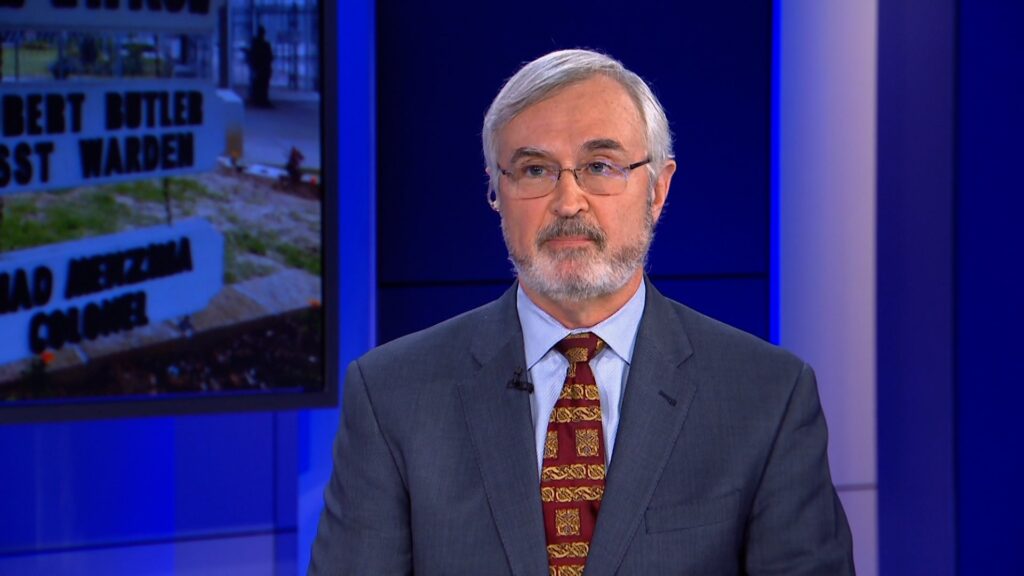
John Malcolm of the Meese Institute has recently voiced a controversial opinion on Al Jazeera, advocating for the United States to return to the use of the firing squad as a method of capital punishment. This stance marks a significant shift from current practices and has sparked debate across legal, ethical, and public policy spheres.
Malcolm, a notable figure at the Meese Institute, which is named after former Attorney General Edwin Meese and focuses on justice and legal issues, argues that the firing squad is a more efficient, humane, and reliable form of execution compared to lethal injection, which has been the predominant method used in most states.
One of the key reasons Malcolm cites is the increasing difficulty in obtaining drugs used in lethal injections, due to pharmaceutical companies refusing to supply them for executions and legal restrictions. This has led to delays, botched executions, and significant public controversy.
The firing squad, by contrast, is presented as a straightforward method that reduces the chance of prolonged suffering. Malcolm highlights that it is quick, effective, and less prone to technical problems. He also points out the historical precedent and the fact that some states like Utah still authorize the use of firing squads under specific circumstances.
Opponents of this viewpoint, however, argue that the firing squad is a barbaric and outdated form of execution that clashes with modern values of dignity and human rights. They contend that moving backward in execution methods signals a regression in the justice system rather than progress.
The debate extends into practical and legal realms as well. Questions about the psychological impact on the executioners, the public perception of the death penalty, and international human rights standards come into play. Civil rights groups and anti-death penalty advocates continue to call for the abolition of capital punishment altogether.
Nevertheless, Malcolm’s position underlines a larger issue facing the US justice system: the struggle to find a humane, legal, and socially acceptable way to carry out capital punishment, where it remains authorized by law. His call for a return to the firing squad is not merely about method but about addressing the complexities and controversies that have engulfed the death penalty in contemporary America.
This conversation continues amid broader national debates on criminal justice reform, human rights, and the future of the death penalty. States are increasingly reconsidering the use of capital punishment, with some moving to abolish it, while others seek more practical approaches to its implementation.
John Malcolm’s remarks bring attention to the ongoing challenges and invite a re-evaluation of how society administers its most severe punishments. Whether or not the firing squad will see a resurgence remains to be seen, but the discussion itself highlights the evolving landscape of justice in the United States.