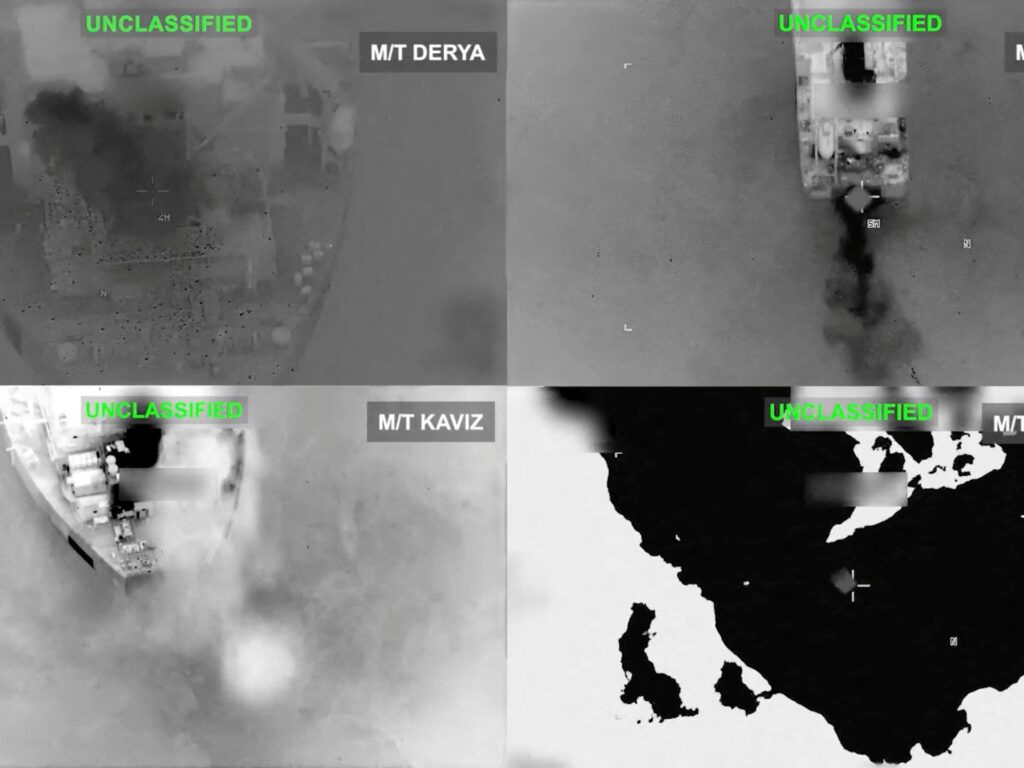
In a significant escalation of tensions in the Middle East, the US military launched attacks on five Iranian oil tankers. This operation followed repeated targeting of a US warship by the Iranian Revolutionary Guard Corps (IRGC), which struck the vessel twice within a span of two days. The US justified its strikes as a necessary measure to protect its assets and maintain regional stability.
The targeted tankers, belonging to Iran, were reportedly involved in activities deemed hostile by the US, which heightened concerns over the security situation in the Gulf region. Details on the precise locations and the extent of damage to the tankers have not been fully disclosed, but the strikes signify a clear message against Iranian aggression.
In response, Iran retaliated by launching military strikes against Jordan, marking a dangerous intensification of hostilities that threatens to destabilize the broader Middle Eastern region. The Iranian response underscores the escalating cycle of military actions between the two countries, with potential implications for their allies and neighboring states.
Jordan, serving as a strategic ally to the West, particularly the US, found itself drawn into the conflict through Iran’s counterattacks. The Jordanian government has condemned the strikes and called for international support to deter further Iranian aggression.
Analysts warn that this escalation could lead to a larger conflict involving other regional powers and international stakeholders. The Gulf region, already volatile due to longstanding political and sectarian divisions, faces increased risk of disruption in oil supply chains and heightened military confrontations.
The international community has expressed concern over the unfolding conflict. Calls for de-escalation and diplomatic dialogue have been made by several countries and international organizations seeking to prevent further violence and promote stability.
This recent series of attacks highlights the fragile state of US-Iran relations and the complexities of Middle Eastern geopolitics, where military actions directly impact economic and security interests globally.
As the situation develops, all eyes remain on diplomatic channels and potential efforts to mediate peace and contain the conflict’s escalation. In the meantime, the region braces for potentially more confrontations and the consequences of increased military engagement between these key adversaries.