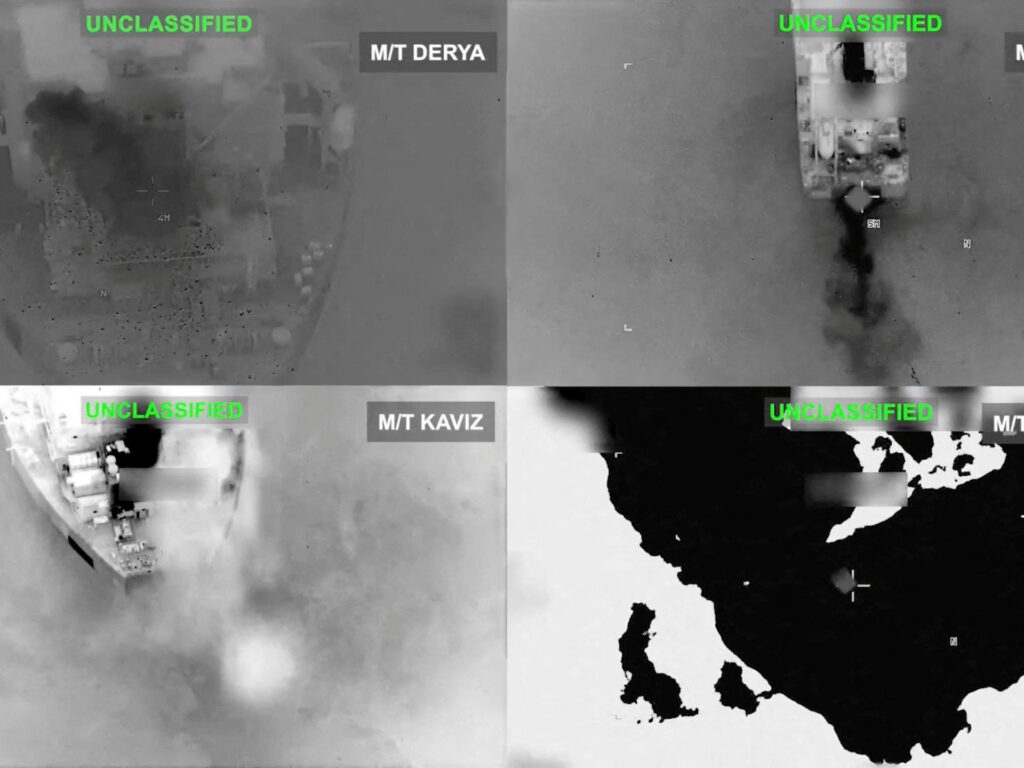
In a dramatic escalation of tensions in the Middle East, the US military has destroyed five Iranian tankers, a move that has sparked a swift and aggressive response from Iran. The US action came as a direct response to attacks by Iran’s Islamic Revolutionary Guard Corps (IRGC), which targeted a US warship twice within the span of two days.
The conflict unfolded with the US asserting that the destruction of the tankers was a defensive measure aimed at preventing further aggression by Iran. The tankers were allegedly involved in transporting supplies that could support paramilitary operations against American forces and allies in the region.
Iran retaliated promptly, launching attacks on Jordan, demonstrating the volatility and the potential expansion of the conflict beyond the immediate US-Iran dynamic. The strikes on Jordan signal a strategic move by Iran to strike back indirectly and assert its influence and power in the region. This development has raised concerns globally about the stability of the Middle East and the risks of a broader confrontation.
The US warship had come under direct threat twice in two days, with attempts by the IRGC to engage and intimidate US naval forces through tactical maneuvers and missile systems. The US military’s response in destroying the tankers was described as necessary to ensure the safety and security of its personnel and operations in the region.
The destruction of the tankers has severely impacted Iran’s logistical capabilities, particularly its ability to sustain paramilitary groups and broaden its military influence through proxy networks. Experts suggest that this move might disrupt Iran’s long-range operational capacity, at least temporarily.
In response, Iran’s attacks on Jordan have introduced new dimensions to the conflict, potentially jeopardizing the stability of a key US ally in the Middle East. Jordan’s strategic position and its alliance with the US are critical factors that have made it a target for Iran’s retaliation efforts.
The international community has expressed concern over the rapid escalation, emphasizing the need for de-escalation and diplomatic interventions to prevent further military actions. Many nations are calling for restraint to avoid what could become a devastating regional conflict.
The situation remains fluid, with both sides preparing for possible further confrontations. US military commanders have reiterated their commitment to protecting US interests and allies in the region. Meanwhile, Iran continues to assert its position and challenge American influence through asymmetric warfare and proxy engagements.
Analysts warn that the striking down of the tankers could lead to a cycle of retaliation that may escalate into a larger conflict involving multiple regional actors. As the US and Iran trade blows, the risks of miscalculation and unintended consequences grow.
This latest development underscores the fragile nature of peace in the Middle East and the complexity of the geopolitical dynamics at play. It is a stark reminder of how quickly military incidents can escalate, drawing in multiple countries and destabilizing regional security.