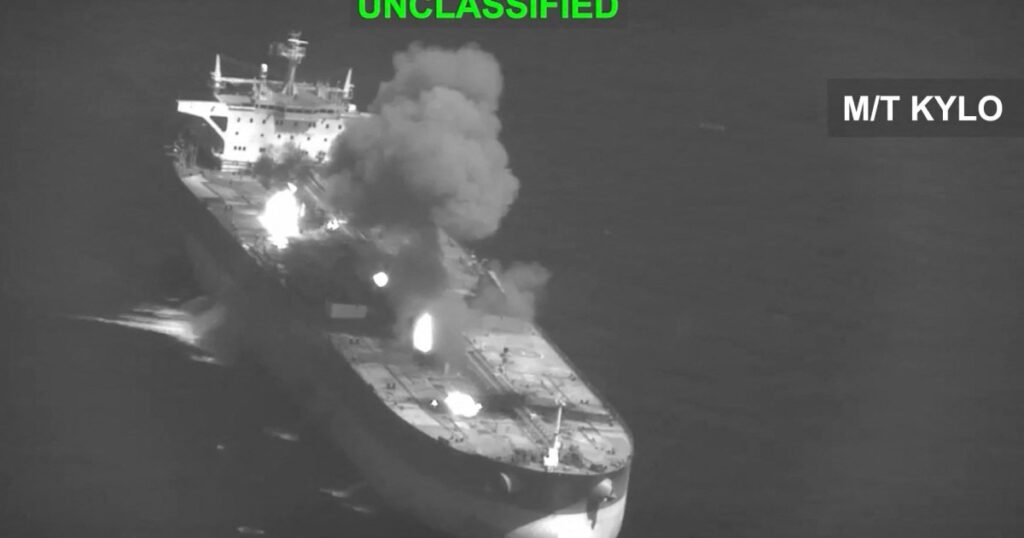
The United States has recently carried out strikes against Iranian oil tankers accused of aiding regional proxy groups. These attacks took place in strategic locations, including the Gulf of Oman and near Iran’s Kharg Island, a vital oil export hub.
According to US officials, the targeted vessels were involved in transporting fuel and resources to groups considered hostile to regional stability and US interests. This action reflects the ongoing tensions between the US and Iran, where Washington seeks to curb Iran’s influence in the Middle East through economic and military means.
The Gulf of Oman serves as a crucial maritime route, linking the Persian Gulf with the Arabian Sea, making it a significant corridor for oil shipments. By striking tankers in this area, the US aims to disrupt supply chains that potentially bolster proxy forces across countries such as Iraq, Syria, Lebanon, and Yemen.
Iran has condemned the strikes, labeling them as violations of international law and maritime security. Tehran insists that its oil exports and shipping activities comply with international regulations and accuse the US of escalation.
These strikes follow a series of similar US military actions targeting Iranian-linked assets, underscoring the continuing volatility in the region. They also highlight the geopolitical rivalry and the complex web of alliances affecting the security and economic landscape of the Middle East.
Experts suggest that such military moves by the US could lead to heightened tensions and risk of broader conflict, emphasizing the delicate balance in the Gulf. They urge diplomatic efforts alongside security measures to prevent further deterioration.
Meanwhile, global oil markets are closely monitoring these developments, as disruptions in this region directly impact oil prices and supply stability worldwide. The international community has called for restraint and dialogue to avoid escalation and ensure the safety of shipping lanes.
In conclusion, the US strikes on Iranian oil tankers accused of supporting regional proxies represent a significant episode in the ongoing geopolitical struggle involving Iran and its neighbors. The outcome of these tensions will have far-reaching implications for regional security, international relations, and global energy markets.