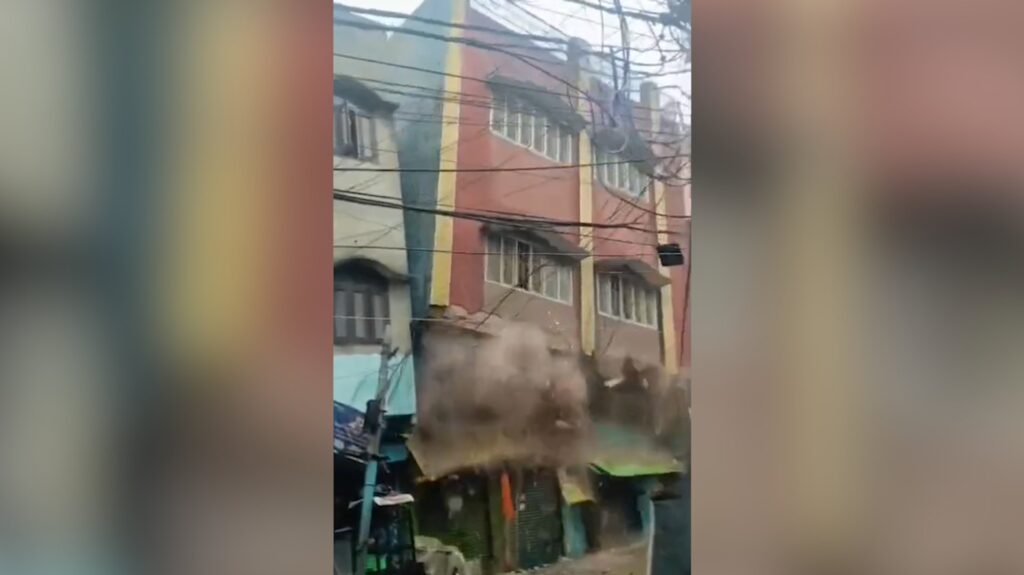
A building collapse occurred in Muradabad, northern India, following heavy rainfall in the region. The collapse was severe enough to tear through power lines, causing sparks to scatter across the street and creating a hazardous situation for residents and passersby. Authorities were alerted to the incident shortly after the collapse, and emergency services rushed to the scene to assess the damage and assist any potential victims. The heavy rain in northern India recently has increased the risk of structural damage in older buildings, with this incident highlighting the urgent need for infrastructure inspections and repairs. Local officials are investigating the cause of the collapse, focusing on the impact of prolonged rain and possible structural weaknesses. This event has raised concerns about the safety of buildings in the area, especially during the monsoon season, when heavy rains are common. The region’s power supply has been disrupted due to the damage to electrical lines, impacting local residents and businesses. Power restoration crews have been deployed to repair the lines and restore electricity as quickly as possible. The community has been urged to stay clear of the affected area to avoid further accidents. Emergency shelters and aid services are being organized to support those displaced by the collapse. This incident is a reminder of the challenges posed by heavy rains to urban infrastructure in northern India. Meteorologists have warned of continued rainy conditions, prompting authorities to issue safety advisories for vulnerable structures. The local government is considering measures to prevent similar incidents, including stricter building codes and improved drainage systems. Residents are encouraged to report any signs of building instability to prevent future tragedies. The Muradabad collapse has sparked conversations about urban planning and disaster preparedness in the region. Experts emphasize the importance of regular maintenance and emergency preparedness to mitigate the risks during the monsoon season. As rescue operations proceed, authorities remain vigilant in monitoring the weather and the safety of other buildings. Support from humanitarian organizations is being coordinated to assist those impacted. The collapse underscores the need for investments in resilient infrastructure to withstand extreme weather events. It also highlights the critical role of timely weather forecasts and community awareness in disaster risk reduction. As investigations continue, lessons learned from this disaster will inform policies aimed at safeguarding residents and infrastructure. The incident has been widely covered in local media, bringing attention to the urgent infrastructural challenges facing northern India during heavy rainfall. Ongoing efforts include rebuilding and reinforcing damaged structures to enhance safety. The government has pledged to improve emergency response mechanisms for quick action in future incidents. Community leaders are collaborating with officials to create awareness campaigns on structural safety. The incident serves as a sobering reminder of the vulnerability of urban centers during seasonal monsoons. It calls for a collective effort to build resilience and safeguard lives and properties. Residents are advised to exercise caution and follow official guidance until the area is deemed safe. Authorities plan to conduct comprehensive safety audits of other buildings at risk from similar weather conditions. The Muradabad community is rallying around those affected, showcasing solidarity in a time of crisis. Relief and rehabilitation efforts will continue as the situation stabilizes and reconstruction begins.