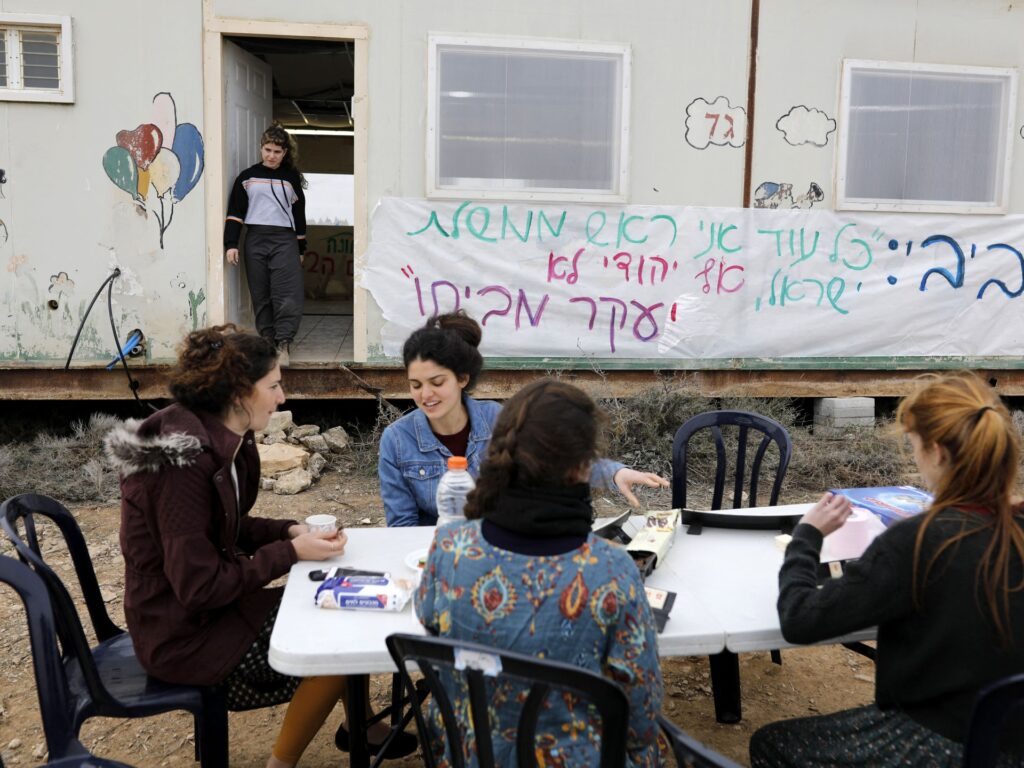
In the complex and often contentious landscape of Israeli settlements, a group known as the ‘Hilltop Girls’ has emerged as a significant force behind what is referred to as Israel’s ‘soft settlement’ strategy. Unlike violent confrontations or overt acts of aggression, these women are orchestrating a subtler form of territorial acquisition, contributing to land grabs by Israeli settlers in ways that avoid the immediate notoriety of violent incidents but nonetheless impact the geopolitical dynamics of the region.
The ‘Hilltop Girls’ are a collective of young Israeli women activists who focus on establishing and expanding settlements on strategic hilltops in the West Bank. Their efforts are marked by a non-violent approach, emphasizing the creation of facts on the ground through building infrastructure, organizing community life, and asserting a permanent Israeli presence in contested areas.
This ‘soft settlement’ approach contrasts with more aggressive tactics historically associated with settlement expansion, such as mass protests, clashes, or direct confrontations with Palestinians. Instead, the strategy works through a combination of legal ambiguities, political support, and grassroots activism that incrementally shifts the boundaries and control of land.
Their activities include renovating abandoned structures, setting up educational and cultural institutions, and facilitating daily life for settlers to reinforce their claim to the land. By doing so, they contribute to a gradual but steady expansion of Israeli settlements, embedding these communities deeper into the fabric of the West Bank.
The Hilltop Girls’ approach is strategic in nature, aiming to embed Israeli presence in a way that becomes normalized and difficult to reverse without significant political consequences. This form of settlement expansion is often overlooked in international discourse because it lacks the dramatic imagery of conflict, yet it effectively alters the on-the-ground reality.
Critics argue that this ‘soft settlement’ strategy is a deliberate effort to circumvent legal and diplomatic obstacles by avoiding overtly illegal actions while still promoting settlement growth. They highlight the risk that these incremental changes can lead to de facto annexation of Palestinian lands, undermining prospects for a two-state solution.
Supporters of the Hilltop Girls contend that their work is a legitimate expression of Israeli citizens’ desire to connect with their historical and religious heritage. They see it as a peaceful assertion of rights and an effort to secure Israel’s future by establishing a broad and diverse presence in contested territories.
The Hilltop Girls’ influence extends beyond physical settlement activities; they engage in extensive advocacy, leveraging media and political channels to support their cause. Their narrative emphasizes resilience, pioneering spirit, and the importance of rootedness in the land.
Understanding the role of the Hilltop Girls is key to comprehending the evolving dynamics of Israeli settlement policies. Their non-violent yet impactful methods represent a nuanced chapter in the ongoing conflict and highlight the multifaceted strategies used to shape the region’s future.
As the international community continues to debate and respond to the settlement issue, the subtle yet persistent work of groups like the Hilltop Girls remains a critical factor in shaping the realities on the ground, influencing the prospects for peace, and defining the contours of territorial control in the Israeli-Palestinian conflict.