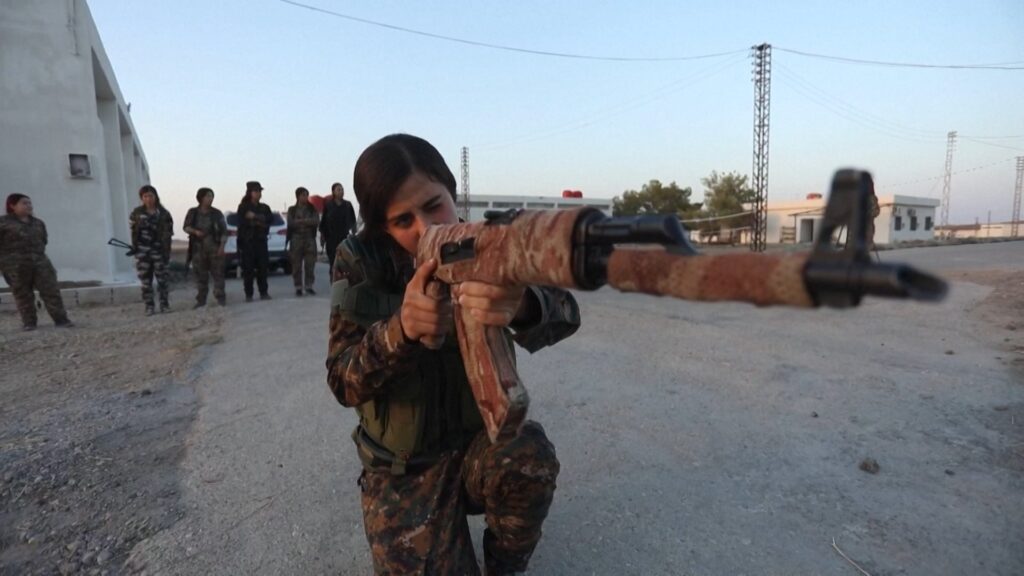
In the ongoing reshaping of Syria’s security landscape, Kurdish women fighters who heroically battled against ISIL are now striving to secure a position in the country’s emerging security apparatus. This shift follows the recent dissolution of the Syrian Democratic Forces (SDF), the multi-ethnic coalition that had been pivotal in combating ISIL and stabilizing the region.
Among the most renowned groups within the SDF were the Women’s Protection Units, known as YPJ, an all-women militia credited for their fierce resistance against extremist forces. The YPJ’s role was not only crucial on the battlefield but also symbolized the empowerment of Kurdish women in a conflict zone dominated by male fighters.
With the dissolution of the SDF, the future of the YPJ’s combat role has become uncertain. The group is actively seeking integration into Syria’s new security structure to maintain their presence and influence in regional security. Advocates argue that including the YPJ in official security forces would ensure continued resistance against extremist remnants and promote gender equality within the ranks.
The move to incorporate former SDF fighters, particularly women from the YPJ, aligns with broader efforts to stabilize Syria post-conflict. There is growing recognition that security forces must be representative of the diverse communities they serve, and incorporating experienced Kurdish women fighters could enhance both operational effectiveness and social cohesion.
Challenges remain, however, including political hurdles and skepticism from various factions hesitant to accept Kurdish-led units into the national security framework. Additionally, the changing dynamics in Syrian governance and external influences complicate efforts to formalize the YPJ’s role.
Despite these obstacles, the Kurdish women fighters remain resolute. Having endured years of frontline combat against ISIL, their commitment to securing Syria’s future stability and safeguarding their communities is unwavering. Their fight now is not only against terrorism but also for recognition and an equal place in the new Syria they helped shape.
Observers note that the integration of the YPJ could serve as a model for women’s participation in security forces across the Middle East, challenging traditional gender norms and promoting inclusivity.
As Syria moves towards rebuilding, the legacy of the Kurdish women fighters who stood against ISIL underscores a critical chapter in the nation’s struggle for peace and justice. Ensuring their role in the country’s future security forces could mark a significant step towards inclusive governance and long-term stability.