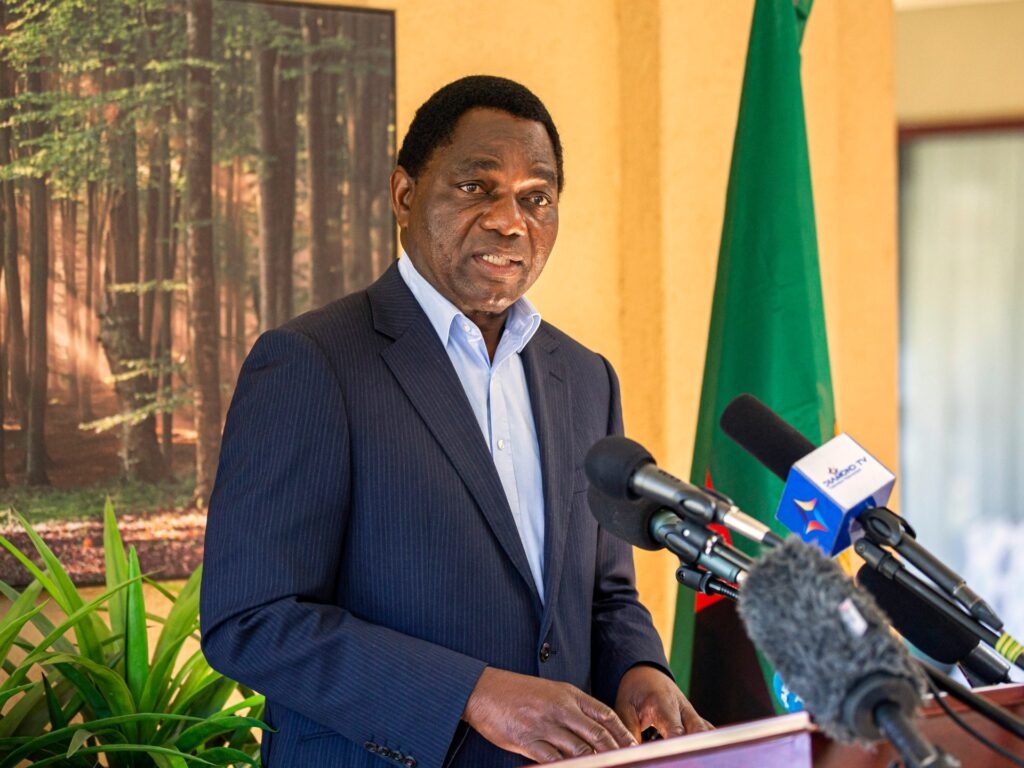
Zambia’s President Hakainde Hichilema has commenced his second term following a contentious election marked by disputed vote counts and subsequent arrests. Despite securing economic gains during his first term, Hichilema’s administration now faces escalating political tensions that cast a shadow over the country’s progress.
The recent election was closely watched both domestically and internationally. While Hichilema secured a victory, opposition parties and observers raised concerns regarding the transparency and fairness of the vote. Allegations of irregularities and voter suppression surfaced, leading to protests and heightened unrest.
In the aftermath of the elections, several arrests have been reported across the country, targeting opposition members and activists who have voiced dissent against the election results. Human rights organizations have expressed alarm over these crackdowns, urging the government to respect democratic principles and ensure the protection of civil liberties.
Economically, Zambia has witnessed notable improvements under Hichilema’s leadership, especially in stabilizing inflation and attracting foreign investment. However, the growing political discord threatens to undermine these achievements. Analysts warn that ongoing instability may deter investors and slow down the nation’s recovery process.
President Hichilema has called for national unity and reconciliation, emphasizing the need to focus on development and economic revitalization. His government is under pressure to address allegations of electoral misconduct transparently and to create an inclusive political environment.
The international community remains engaged, with regional bodies and foreign governments urging dialogue and peaceful resolution to disputes. The direction Zambia takes in the coming months will be critical in shaping its democratic trajectory and economic future.
As Zambia navigates these challenges, the balance between maintaining political stability and fostering economic growth will be central. The outcome of this delicate dynamic will have profound implications for the country’s governance and the well-being of its citizens.