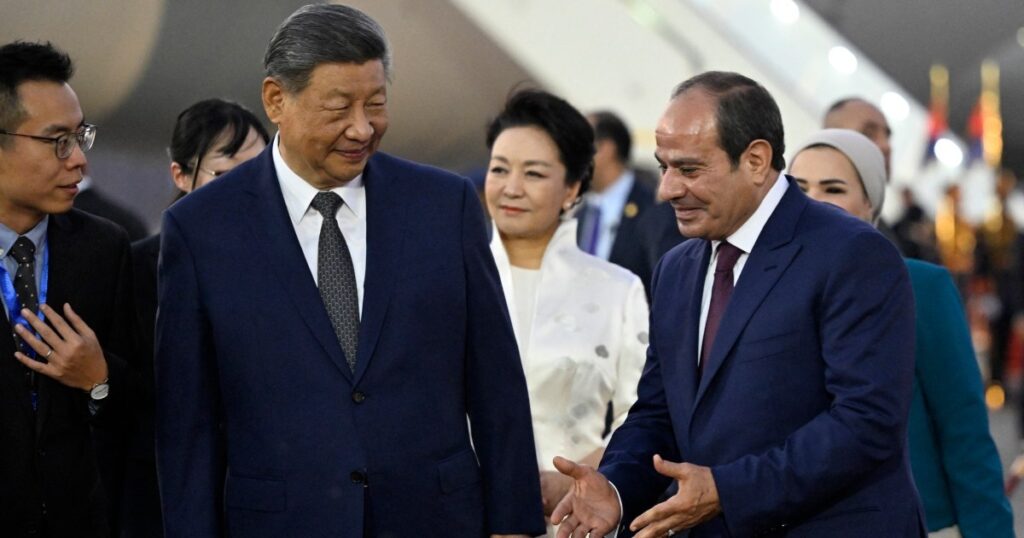
China’s President Xi Jinping recently made a historic visit to Egypt, meeting with Egyptian President Abdel Fattah el-Sisi. This high-profile diplomatic engagement comes amid rising geopolitical tensions in the Middle East, highlighting China’s strategic intent to deepen its influence in this critical region.
The visit marks a significant milestone in China-Egypt relations, reflecting Beijing’s commitment to strengthening partnerships in the Arab world. Egypt, as a pivotal player in both African and Middle Eastern affairs, offers China a strategic gateway to the broader region.
Key aspects of Xi’s visit include discussions on expanding economic cooperation, infrastructure development aligned with China’s Belt and Road Initiative (BRI), and enhancing cultural and technological exchanges. With Egypt’s vital position along the Suez Canal, a crucial artery for global trade, China aims to secure and enhance access to maritime routes critical for its economic interests.
This move also signals China’s interest in playing a more influential role in Middle Eastern diplomacy, aiming to offer an alternative to traditional power brokers such as the United States. Beijing’s approach emphasizes non-interference while promoting mutual development, which appeals to many countries in the region.
In the context of escalating conflicts and instability in parts of the Middle East, China’s engagement with Egypt suggests a strategic balancing act—cementing ties with key regional players while promoting stability that benefits its economic initiatives.
Moreover, the visit highlights Egypt’s desire to diversify its foreign partnerships beyond traditional allies, seeking to leverage China’s economic clout to boost its own development goals. Collaborations announced during the visit include energy projects, transportation infrastructure like railways and ports, and enhanced trade agreements.
The strengthening of China-Egypt relations is also a reflection of broader shifts in global geopolitics, where emerging powers are redefining traditional alliances and spheres of influence.
In summary, Xi Jinping’s visit to Egypt is a landmark event that underscores the growing strategic partnership between the two nations. It positions China as a critical player in Middle Eastern affairs and showcases Egypt’s role as a key partner in China’s global ambitions. The implications of this partnership will likely resonate throughout the region and beyond, influencing economic, diplomatic, and security dynamics in the years to come.