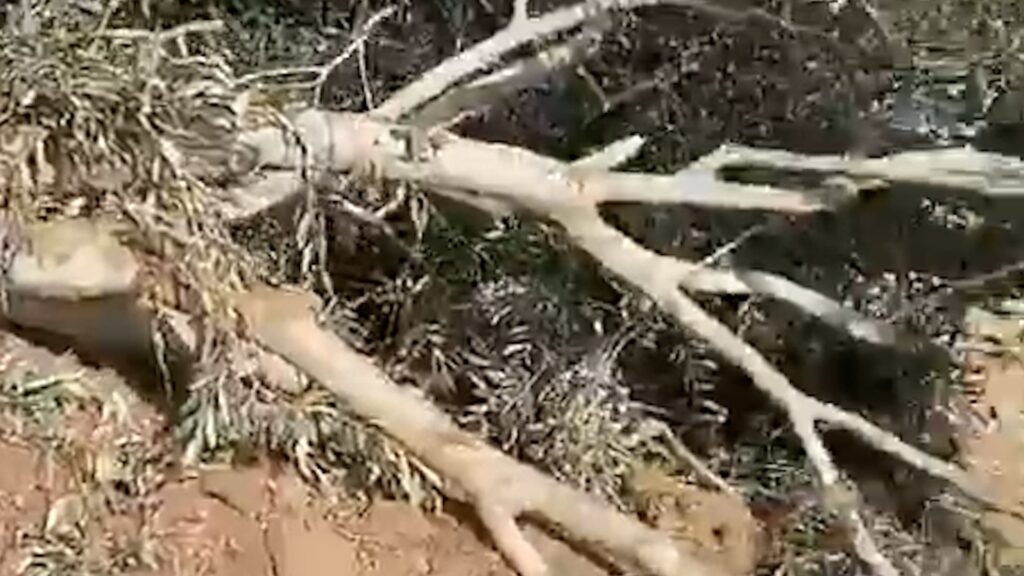
In a recent development drawing international attention, Palestinian farmers have been seen inspecting olive trees that were bulldozed by Israeli forces. Olive trees, a symbol of Palestinian heritage and livelihood, play a crucial role in the agricultural economy of the region, and their destruction has significant cultural and economic ramifications.
The incident occurred in areas where tensions have been escalating between Palestinian communities and Israeli authorities. Reports indicate that the bulldozing of the olive trees was carried out during operations citing security and land regulation reasons by Israeli forces. However, Palestinian farmers and community leaders argue that such actions significantly undermine their ability to sustain their agricultural practices and livelihoods.
Olive farming is not only a source of income for many Palestinian families but also holds deep cultural and historical significance. These trees, some of which are decades old, are seen as a symbol of rootedness and continuity for Palestinian people. The loss of these trees threatens both economic stability and cultural heritage.
The inspection by the Palestinian farmers underscores their resilience and determination to document and bring attention to the ongoing challenges they face. Community leaders have called for international intervention and support to prevent further destruction of agricultural lands and to ensure the protection of Palestinian farmers’ rights.
This incident has sparked reactions from various international human rights organizations, urging for peaceful resolutions and respect for agricultural rights in the disputed territories. The destruction of olive trees has frequently been a flashpoint in the broader Israeli-Palestinian conflict, symbolizing the ongoing struggle over land, identity, and sovereignty.
Efforts to reach a diplomatic solution continue amid these developments, with emphasis on protecting both the political rights and the economic livelihoods of all communities involved. Meanwhile, Palestinian farmers remain steadfast in their commitment to maintaining their ancient traditions and sustaining their land against ongoing adversities.
The situation highlights the broader context of agricultural vulnerabilities and human rights concerns in conflict zones worldwide, calling for enhanced dialogue, protection measures, and humanitarian support to preserve both livelihoods and cultural heritage.