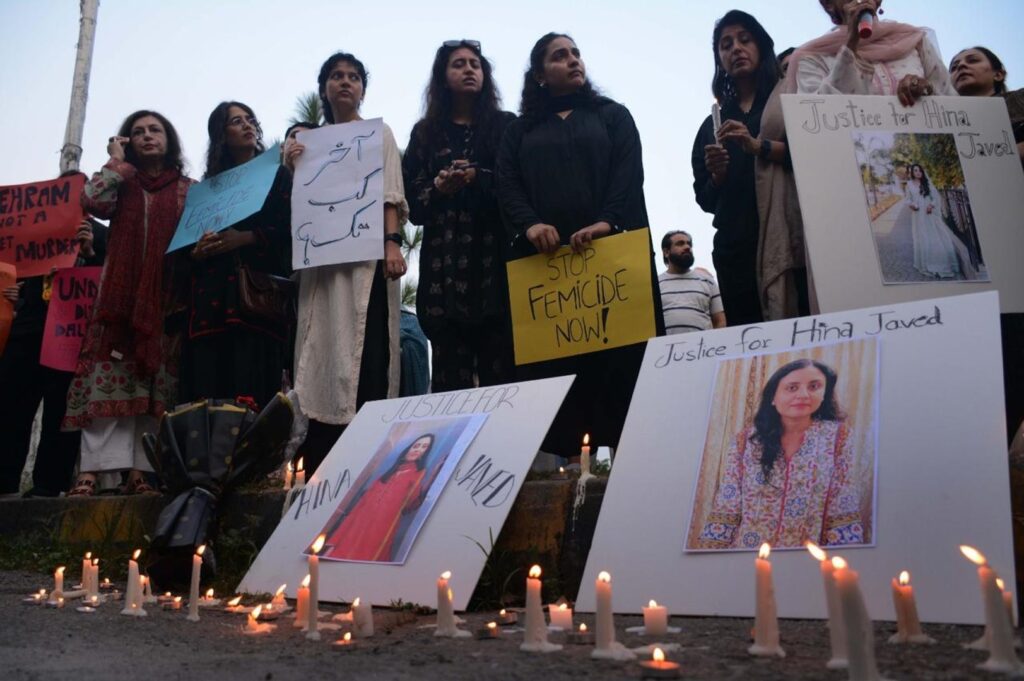
Pakistan is facing a critical moment as the recent surge in femicide cases has prompted urgent calls for the government to declare a femicide emergency. This demand has gained significant attention following the brutal killing of Hina Javed, a well-known Pakistani media professional, whose death has sparked widespread outrage and highlighted the growing crisis of violence against women in the country.
Femicide, the gender-based killing of women simply because they are women, has been increasingly reported in Pakistan, with many cases going unnoticed or unaddressed due to systemic issues within law enforcement and societal attitudes. The murder of Hina Javed has become a symbol of the pervasive violence women face daily, mobilizing activists, human rights organizations, and the public to demand immediate action.
The current situation reflects deep-rooted gender inequalities and the failure of existing legal protections. Despite laws aimed at protecting women, enforcement remains weak, and societal stigmas often prevent victims and their families from seeking justice. Women in Pakistan frequently face harassment, domestic violence, honor killings, and now, an alarming rise in femicides.
Human rights groups have called on Pakistan’s government to not only declare a femicide emergency but also to implement comprehensive measures, including better protection laws, prompt investigation procedures, victim support services, and public awareness campaigns to change cultural perceptions about women.
The killing of Hina Javed underscores the urgent need for systemic reforms. It has also reignited debates about the role of media in highlighting women’s rights issues and encouraging societal change. Her death has galvanized civil society to press for tougher penalties for perpetrators and accountability from the justice system.
International organizations have also expressed concern over Pakistan’s femicide rates, urging collaborative efforts to combat gender-based violence through education, legal reforms, and community engagement. The crisis calls for a multi-pronged approach, balancing legal, social, and educational strategies to protect women and prevent further loss of life.
The government’s response so far has been cautious, with some officials acknowledging the problem and pledging action. However, civil society demands clear policies and immediate implementation to stem the rising tide of femicides. Activists warn that without urgent intervention, the situation could worsen, leading to more tragic losses.
In conclusion, the murder of Hina Javed is a stark reminder of the vulnerability of women in Pakistan and the need for an emergency response to femicide. Declaring a femicide emergency is seen as a necessary step to mobilize resources, focus national attention, and implement effective policies to protect women and honor their right to live free from violence. The call to action represents a pivotal moment for Pakistan to address one of its most pressing human rights challenges.