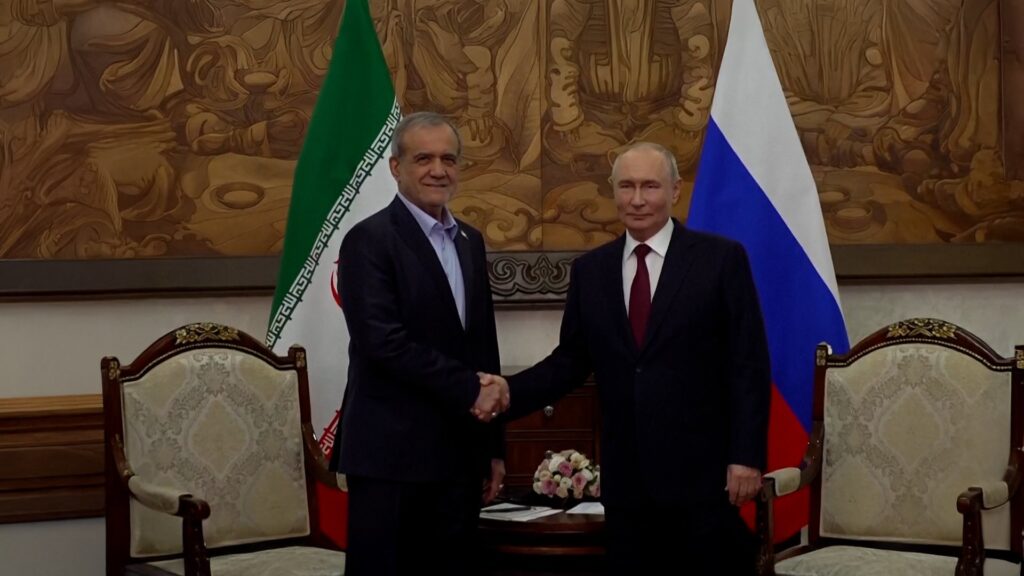
In a recent statement of mutual support, Iran and Russia have reaffirmed their commitment to stand united against what they describe as US ‘unilateralism.’ This declaration signifies a deepening of the strategic partnership between Tehran and Moscow amidst ongoing geopolitical tensions.
Iranian President Pezeshkian expressed gratitude towards Russian President Vladimir Putin for Moscow’s continued backing, emphasizing the necessity of resisting unilateral actions by the United States, which both countries view as attempts to dominate global affairs without regard for international consensus.
President Pezeshkian highlighted that the cooperation between Iran and Russia is founded on shared principles of sovereignty, mutual respect, and a collective vision for a multipolar world order. He asserted that this alliance aims to promote stability and counterbalance the prevailing influence of US policies that have often led to international discord.
For Russia, the partnership with Iran serves strategic interests in extending its influence in the Middle East and reinforcing its stance against Western pressure. The mutual support between the two nations is also seen as a message to other countries that may be considering alignment with US initiatives.
The Iranian leader’s acknowledgement of Moscow’s support comes at a time when both countries face economic sanctions and diplomatic challenges imposed mainly by the United States. Their joint stance is expected to strengthen diplomatic, economic, and military ties.
Analysts observe that Iran and Russia’s unified front could impact regional security dynamics, particularly in Middle Eastern hotspots where US interests are prominent. By coordinating their policies, they aim to ensure their regional and global priorities are safeguarded.
This declaration also follows recent high-level meetings and bilateral discussions aimed at expanding cooperation in energy, defense, and technology sectors. The ongoing strategic dialogue is part of a broader effort to create resilient alliances amid increasing international uncertainties.
While the United States has yet to respond directly to these recent affirmations, the move by Iran and Russia signals a pronounced rejection of Washington’s approach to unilateral decision-making and sanctions.
In summary, Iran’s President Pezeshkian and Russia’s leaders have made clear their resolve to challenge US unilateralism through increased cooperation and solidarity. This development marks a significant moment in international relations, potentially reshaping alliances and power balances in a changing global landscape.