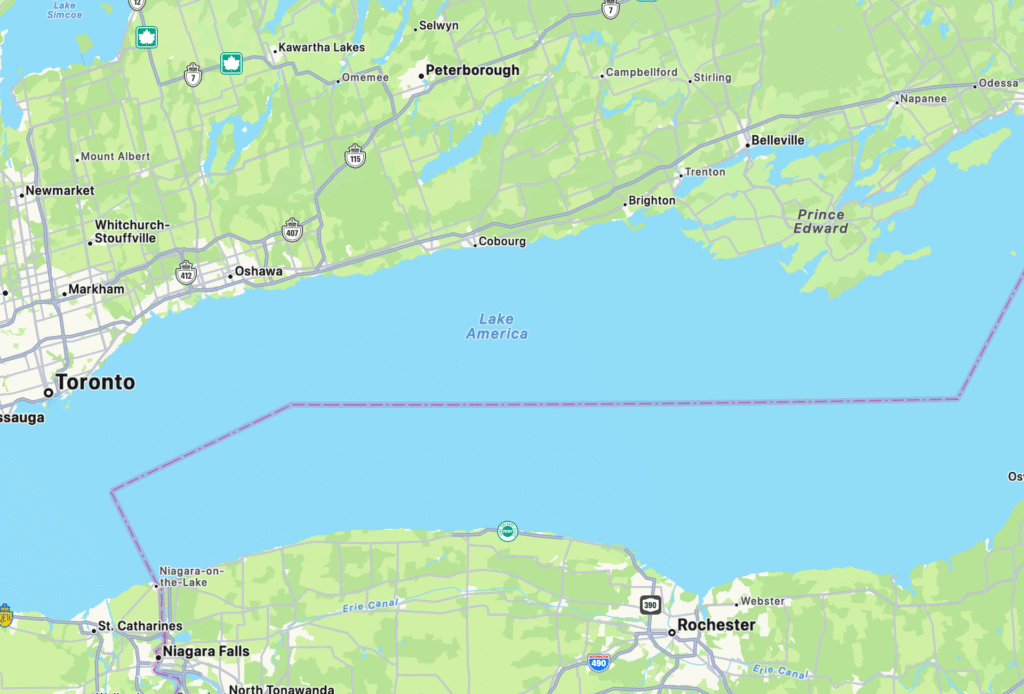
Apple Inc., the technology titan, has changed the name of Lake Ontario to ‘Lake America’ in its Maps application. This marks a significant move aligning with a controversial directive issued by President Donald Trump. The reassignment of the name is part of a broader trend among US-based tech giants to comply with new governmental guidelines regulating geographical names and digital content.
Lake Ontario, one of the five Great Lakes of North America, sits on the border between the United States and Canada. The lake has historically held its name, which reflects the indigenous origins and cultural heritage of the area. The recent change by Apple is unprecedented, stirring debates about national identity, technology’s role in mapping, and political influence over digital platforms.
This alteration comes shortly after another major US technology company implemented a similar change, making Apple the second major player to autonomously enforce a directive linked to President Trump’s executive order. The order aims at promoting a more patriotic or America-centric representation of national symbols and names within domestic technology services.
Critics argue that this move by Apple undermines historical accuracy and disrespects the indigenous and Canadian heritage tied to the original name. Supporters, however, view it as a demonstration of national pride and alignment with government policies. The decision raises complex issues concerning corporate compliance with government orders versus preserving cultural and historical integrity.
Apple has not issued an extensive public statement explaining the rationale behind the name change. However, sources within the company suggest it may be an effort to preempt regulatory challenges or sanctions that could arise from non-compliance with presidential directives. The move is also interpreted as part of Apple’s broader strategy to maintain favorable relations with the US government amid increasing scrutiny of tech giants.
The implementation of this name alteration in the Maps app illustrates the powerful influence technology companies hold in shaping public perception and information. Digital maps serve as a primary source of geographical knowledge for millions, and any modification can have far-reaching implications.
This development has sparked reactions from several stakeholders including Canadian officials, indigenous groups, historians, and users of Apple Maps. Canadian authorities have reportedly expressed concerns over the unilateral change by Apple, emphasizing the importance of maintaining the lake’s historical and geographical nomenclature.
Meanwhile, indigenous communities lament the erasure of their ancestral names and the disregard for their cultural histories. Historians caution against setting precedents where political agendas dictate changes in geographical naming conventions.
From a corporate perspective, Apple finds itself navigating delicate waters—balancing governmental expectations, user trust, and cultural responsibility. This incident could serve as a case study in how tech companies respond to political pressures and the ethical ramifications of altering geographic identifiers.
In light of this, industry analysts predict further scrutiny and potential pushback against similar actions by other digital platforms. The intersection of technology, politics, and cultural heritage is increasingly contentious, as evidenced by this significant yet contentious name change.
Apple’s decision to rename Lake Ontario to ‘Lake America’ thus encapsulates broader themes about globalization, patriotism, and the power dynamics between government mandates and corporate governance. It underscores how technology companies are not merely passive service providers but active agents influencing historical narratives and national identity.
As the story unfolds, attention will focus on whether Apple and other tech companies will continue to enact politically motivated changes and how such decisions will impact their global user base and reputation. The implications extend beyond cartography, touching on issues of sovereignty, cultural respect, and corporate ethics in the digital age.