As Tunisia marks five years since President Kais Saied’s controversial power grab, the country continues to grapple with long-standing economic issues and a shrinking space for political dissent. President Saied’s consolidation of power, which disrupted the democratic transition following the Arab Spring, has deeply influenced Tunisia’s political landscape.
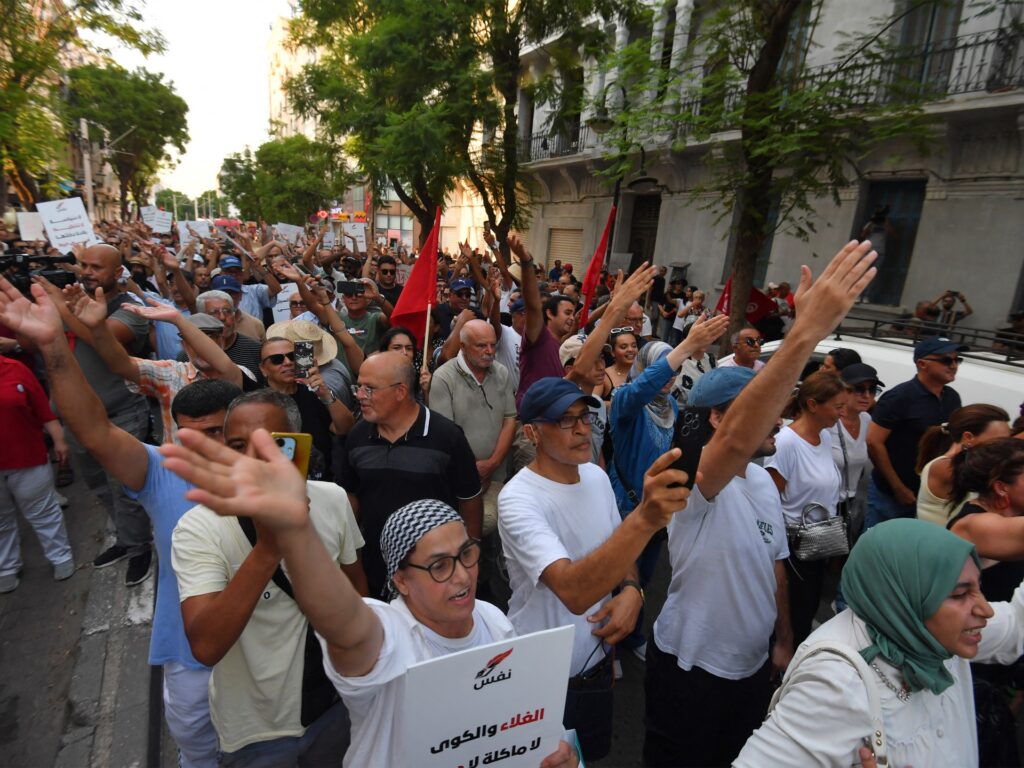
Economic grievances remain at the forefront of public discontent. Despite promises of reform and stability, inflation rates have soared, unemployment—especially among youth—remains high, and public services have barely improved. Many Tunisians feel that their economic hardships have been compounded rather than alleviated, fueling frustration and occasional protests.
The political environment has also shifted dramatically since Saied’s maneuvers in 2019 and 2021, which included dissolving parliament and suspending the constitution. This has effectively curtailed political pluralism and restricted freedom of expression. Independent media outlets face increasing pressure, while opposition voices find it difficult to organize or communicate freely.
Analysts note that this reduction in democratic space risks alienating citizens and exacerbating social tensions. While Saied’s supporters argue that his actions were necessary to stabilize the nation and root out corruption, critics contend that without broad-based participation and respect for political freedoms, Tunisia’s democratic experiment may be in jeopardy.
The social fabric of Tunisia is further strained by rising poverty levels and regional inequalities. Coastal cities like Tunis have fared better economically than interior and southern regions, where investment and infrastructure projects lag behind, feeding long-standing feelings of marginalization.
International observers and human rights organizations have raised concerns about the erosion of democratic norms and urged the Tunisian government to restore inclusive governance and respect for human rights. They stress that sustainable economic development and political stability are mutually reinforcing goals that require cooperation among all societal actors.
As Tunisia stands at this critical juncture, the legacy of the 2011 revolution seems partially eclipsed by current challenges. Citizens yearn for solutions that address both economic survival and democratic freedoms. The next steps taken by the government and civil society will shape the trajectory of Tunisia’s political and socio-economic future.
In summary, five years after President Kais Saied’s power consolidation, Tunisia confronts the resurgence of old economic grievances alongside decreasing political freedoms. The nation’s democratic and developmental prospects hinge on balancing security with respect for rights, economic reform with social justice, and government authority with citizen participation.