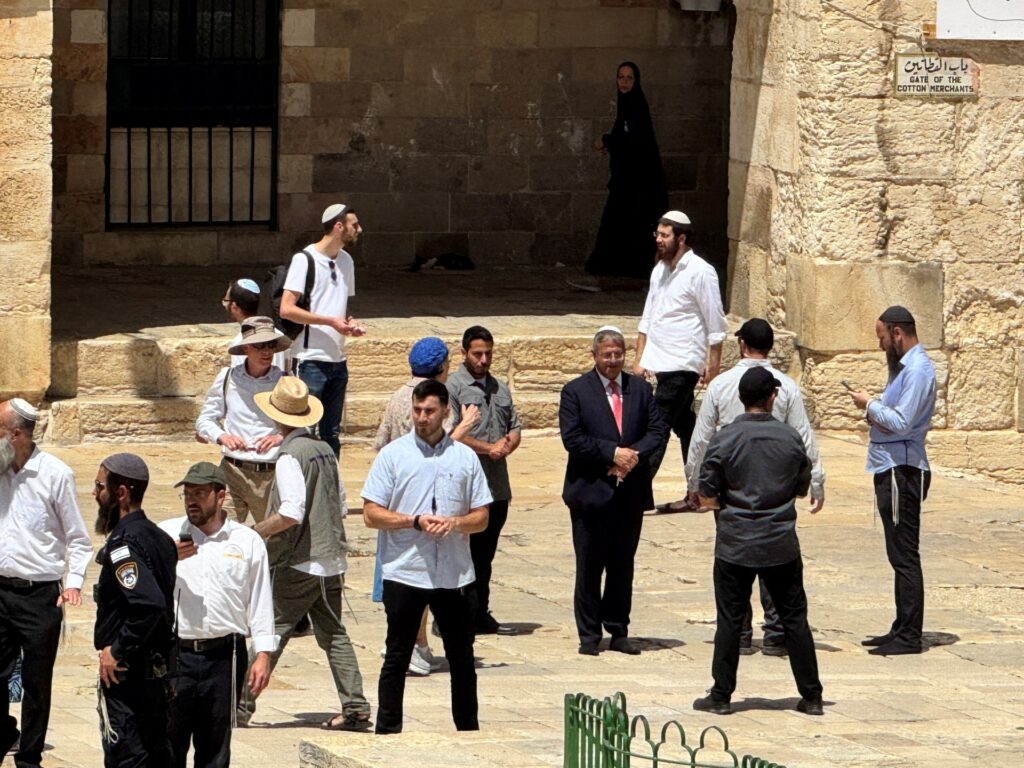
In a highly provocative move, Itamar Ben-Gvir, Israel’s far-right minister, entered the Al-Aqsa Mosque compound in occupied East Jerusalem alongside a group of Jewish settlers. The incident occurred under the protection of heavily armed Israeli occupation forces, escalating tensions in one of the world’s most sensitive religious and political flashpoints.
Al-Aqsa Mosque, Islam’s third-holiest site, is located in the Old City of Jerusalem and holds profound religious significance for Muslims worldwide. The site is also revered by Jews, who refer to it as the Temple Mount, leading to long-standing disputes over access and control.
Ben-Gvir’s presence in the mosque compound has been widely condemned by Palestinian leaders, religious authorities, and the international community, who view the act as an infringement on the sanctity of the site and a violation of agreements aimed at maintaining relative calm.
The entry took place amid heightened tensions in East Jerusalem, where frequent confrontations occur between Israeli settlers, Palestinians, and Israeli security forces. Ben-Gvir, known for his ultra-nationalist views and provocative actions, has frequently made appearances at contentious locations, often sparking unrest.
During the visit, Ben-Gvir was accompanied by a group of Jewish settlers, who also toured the compound under heavy security escort. The Israeli police and paramilitary forces were deployed in large numbers to ensure the safety of those entering the site and to prevent any disturbances.
The Palestinian Authority and various Islamic organizations quickly denounced the incursion as a deliberate attempt to intimidate Palestinians and undermine Muslim custodianship of the holy site. They warned that such provocations could ignite widespread protests and violence.
International bodies, including the United Nations and several Muslim-majority countries, called for restraint and respect for the status quo arrangements that govern access to the Al-Aqsa Mosque.
The Israeli government has faced criticism for permitting Ben-Gvir’s visit, seen by many as endorsing extremist actions that threaten to destabilize the already fragile situation in East Jerusalem and the wider region.
Al-Aqsa Mosque sits on a compound that is administered by an Islamic trust but remains under Israeli security control. Since 1967, when Israel captured East Jerusalem during the Six-Day War, there have been numerous confrontations over access rights and religious freedoms at the site.
Ben-Gvir’s storming of the mosque symbolizes the deep divisions and ongoing conflict surrounding Jerusalem. The move unsettles hopes for peace and fuels fears of potential escalations in violence.
Observers warn that repeated provocations and lack of adherence to long-established agreements concerning the holy sites could lead to a broader outbreak of conflict affecting the entire region.
The incident has renewed calls for renewed dialogue between Israeli and Palestinian leaders to prevent further deterioration of the tense situation in East Jerusalem.
It also shines a spotlight on the policies of the current Israeli government, which includes several far-right figures like Ben-Gvir, whose hardline stances challenge prospects for a peaceful resolution.
In summary, the storming of the Al-Aqsa Mosque by Itamar Ben-Gvir, accompanied by settlers and under heavy Israeli security, represents a severe challenge to the delicate religious and political balance in Jerusalem. It underscores the urgent need for diplomacy and respect for religious sensitivities to avoid conflict escalation and maintain peace in the region.