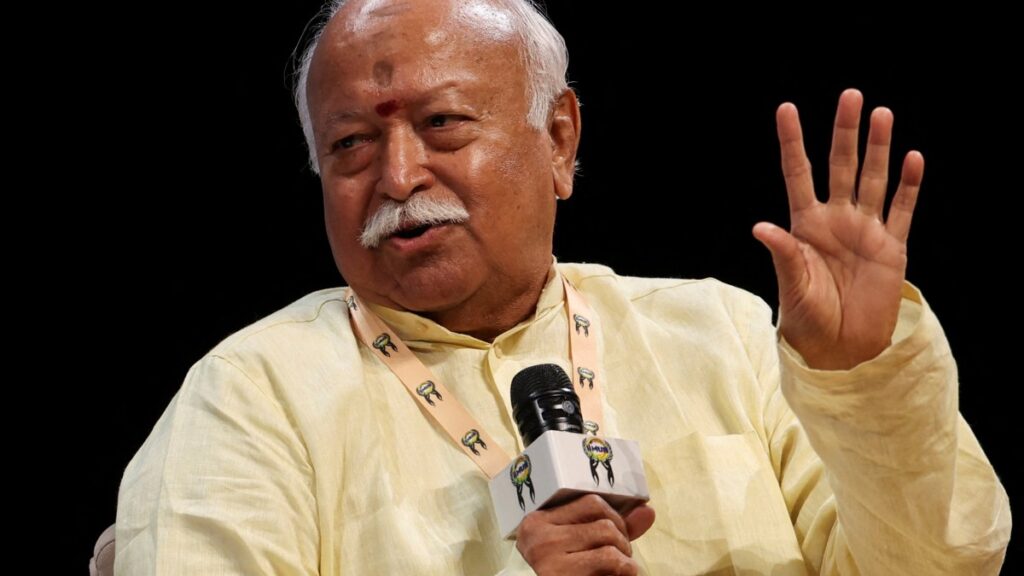
The recent visit of the Rashtriya Swayamsevak Sangh (RSS) chief to the United States has sparked significant backlash, with activists and critics denouncing the trip as a ‘goodwill tour’ intended to promote Hindu nationalism among the Indian diaspora. The RSS, a right-wing Hindu nationalist organization, is often linked to far-right politics in India, and this outreach abroad is seen as an extension of its political agenda.
Critics argue that Hindu nationalists are using such visits to soften their image and mask their far-right ideologies through broad and appealing gestures towards the global Indian community. This tactic, they suggest, aims to garner support and legitimacy in international forums where India has a strong presence.
The visit included a series of events and meetings aimed at engaging with Indian-Americans and other members of the diaspora, promoting cultural and religious solidarity. However, activists warn that these activities serve to normalize and spread the ideology of Hindu nationalism, which has been associated with exclusionary and divisive politics in India.
Human rights organizations and diaspora activists have raised concerns that the visit overlooks the controversial policies and practices linked to the RSS in India. They highlight issues such as religious intolerance, marginalization of minority groups, and increasing authoritarian tendencies that critics associate with the Hindu nationalist movement.
The RSS chief’s tour comes at a time when India is witnessing heightened political and social polarization, with Hindu nationalism playing a significant role in shaping national discourse. The outreach to the diaspora is seen not just as cultural diplomacy but as a strategic effort to influence global opinion and consolidate political power.
Many members of the Indian diaspora have expressed mixed reactions to the visit. While some view it as a positive reinforcement of cultural identity and pride, others caution against the uncritical acceptance of a political ideology that many perceive as exclusionary.
Scholars and political analysts note that the global spread of Hindu nationalism through diaspora engagement represents a new front in the political landscape, complicating the often diverse and pluralistic nature of Indian communities abroad. They warn that this phenomenon could have implications for social cohesion and intercultural relations in host countries.
In summary, the RSS chief’s visit to the US is seen by many as more than just a cultural outreach—it is perceived as a deliberate campaign to promote Hindu nationalism internationally. Activists urge vigilance and critical engagement with such initiatives to ensure that political agendas do not undermine democratic values and social harmony both in India and across the global diaspora.