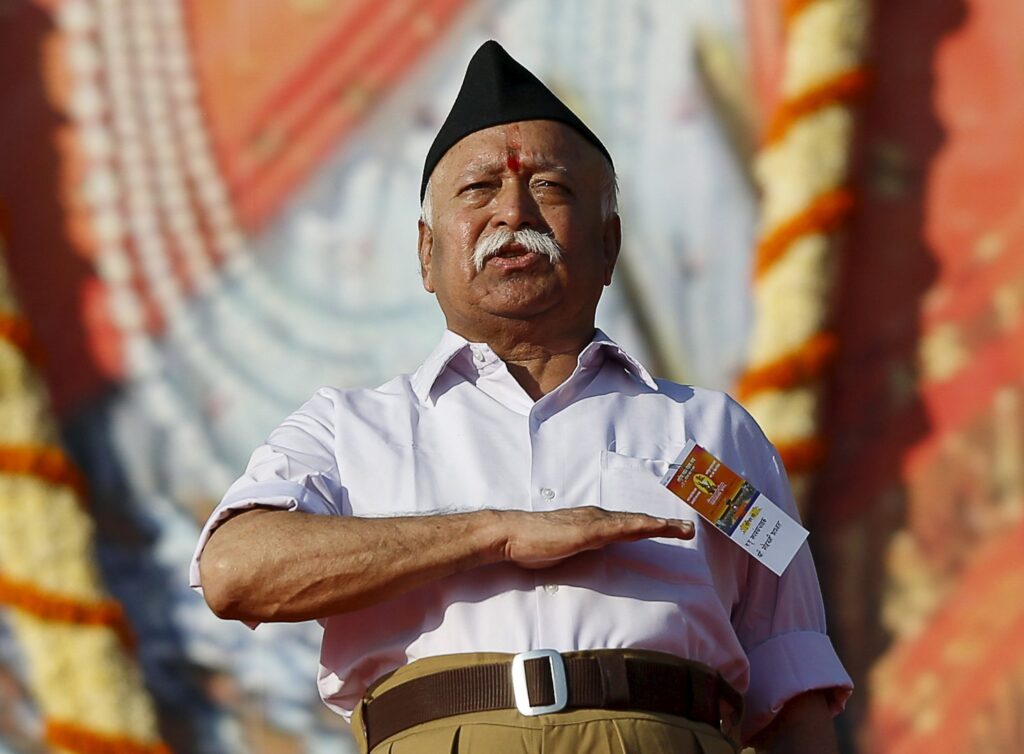
Indian Hindu leader Mohan Bhagwat, the chief of the Rashtriya Swayamsevak Sangh (RSS), is set to speak in New York amidst growing protests from human rights groups and activists. Bhagwat’s visit has sparked significant controversy due to allegations tied to Hindu nationalism and its implications on minority rights in India.
The RSS, often described as a right-wing Hindu nationalist organization, has been criticized by various international and domestic groups for promoting an agenda that some say marginalizes religious minorities, particularly Muslims and Christians. Critics argue that Bhagwat, as the organization’s leader, symbolizes a political ideology that has been linked to communal violence and policies perceived to undermine India’s secular democratic framework.
During his US visit, Bhagwat is expected to address the Indian diaspora and supporters of the RSS, emphasizing themes of cultural pride and national unity. However, this event has triggered protests in New York, with human rights advocates organizing demonstrations to raise awareness about the RSS’s alleged role in promoting Hindu majoritarianism and the impact on democratic freedoms in India.
Protesters have voiced concerns over the global platform provided to Bhagwat, warning that it may embolden hardline nationalist sentiments not only in India but also among diaspora communities abroad. The tension reflects broader debates about the rise of Hindu nationalism under India’s current political leadership and its effects on religious harmony and human rights.
Supporters of Bhagwat and the RSS argue that the organization is committed to preserving India’s cultural heritage and fostering social cohesion. They reject claims of promoting intolerance, asserting that their focus is on national development and pride.
This visit and the accompanying protests underline the complex and often contentious dynamics of identity politics within the Indian diaspora and internationally. The discourse surrounding Bhagwat’s US appearance reveals deep divisions over the interpretation of nationalism, religious freedom, and human rights.
As Bhagwat speaks in New York, the world watches closely, reflecting on the challenges India faces in balancing its rich cultural diversity with the rise of nationalist ideologies. The protests signal a call for vigilance and dialogue about the consequences of political and religious movements that shape not only national but global narratives on freedom and justice.