A group of Palestinian activists are facing terror-related charges following a protest at former President Donald Trump’s golf resort in Ayrshire, Scotland. The incident involved demonstrators targeting the luxury venue with red paint and painting slogans on the property, including “Gaza is not 4 sale.” The protest was aimed at drawing attention to the ongoing conflict in Gaza and opposing Trump’s business interests in the region.
The activists’ actions included defacing the resort’s façade with messages condemning the sale or commercialization of Gaza, reflecting broader political tensions. This event has sparked a heated debate about the limits of protest and the use of terror charges against political activists.
Local authorities are treating the incident as a serious offense, citing security concerns and the potential threat to public order. Critics, however, argue that charging protesters with terror offenses is a disproportionate response and an attempt to suppress legitimate political dissent.
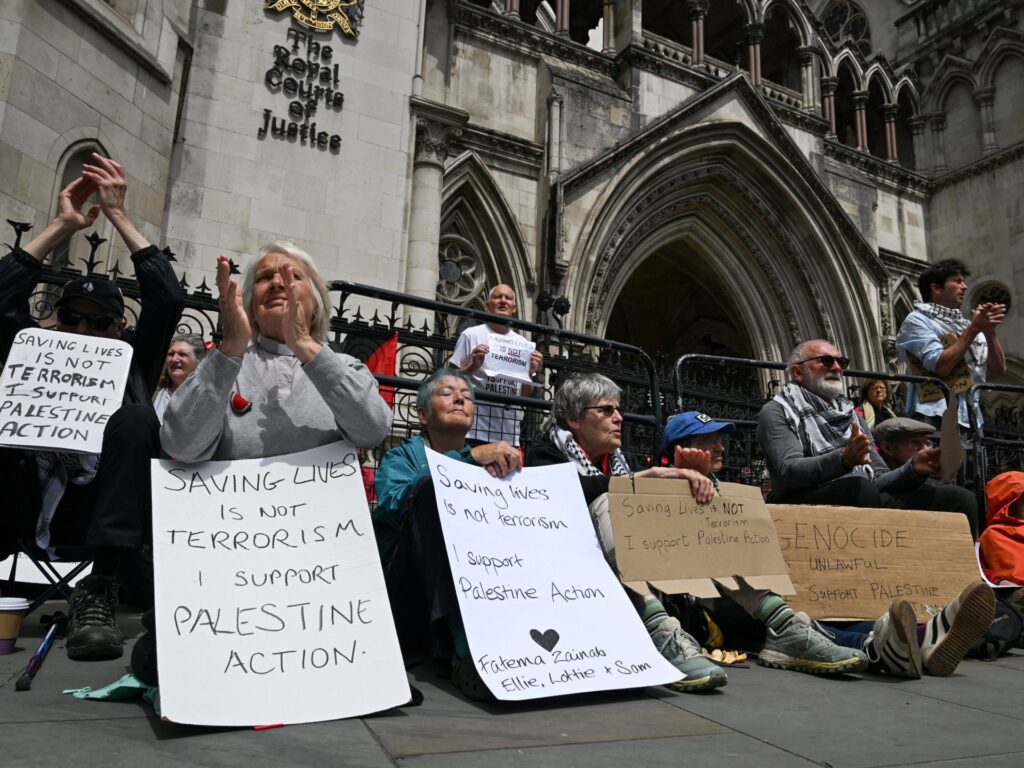
The protest at the Ayrshire golf course follows a series of recent demonstrations globally, where activists have targeted properties associated with high-profile political figures to make statements about the Israeli-Palestinian conflict. Supporters of the activists argue that their actions are a form of peaceful protest aimed at raising awareness of humanitarian issues.
The resort, one of Trump’s notable golf properties, has frequently been a site for protests due to Trump’s contentious political legacy and his policies regarding the Middle East. This latest incident further highlights the intersection of business, politics, and activism.
Authorities have begun investigations to determine whether the protesters’ actions meet the criteria for terror offenses under Scottish law. The outcomes of these proceedings could set important legal precedents for how political protests are handled in the UK.
Human rights groups have pledged to monitor the case closely, expressing concerns over the criminalization of activism and advocacy, particularly in cases connected to international conflicts. They emphasize the importance of protecting freedom of speech and the right to peaceful assembly.
Meanwhile, the implicated activists face potential trials that could carry severe penalties if convicted. Their defense teams are preparing legal challenges, arguing that their clients were engaged in legitimate protest and did not pose a threat to public safety.
This case underscores the complex balance between maintaining law and order and respecting democratic rights to protest and free expression. It also sheds light on the ongoing global discourse surrounding the Israeli-Palestinian conflict and how it continues to resonate far beyond the immediate region.
As the legal proceedings unfold, public opinion remains divided, with some advocating for strict enforcement of laws to maintain security, and others warning of the dangers of overreach in prosecuting political activism. The outcome of this case may influence future policies regarding protests at politically charged sites in Scotland and potentially abroad.
The controversy around the Trump resort protest highlights the challenges governments face in addressing politically motivated demonstrations, especially those connected to deeply rooted international conflicts. It adds another chapter to the ongoing dialogue about the role of civil disobedience in effecting social and political change.