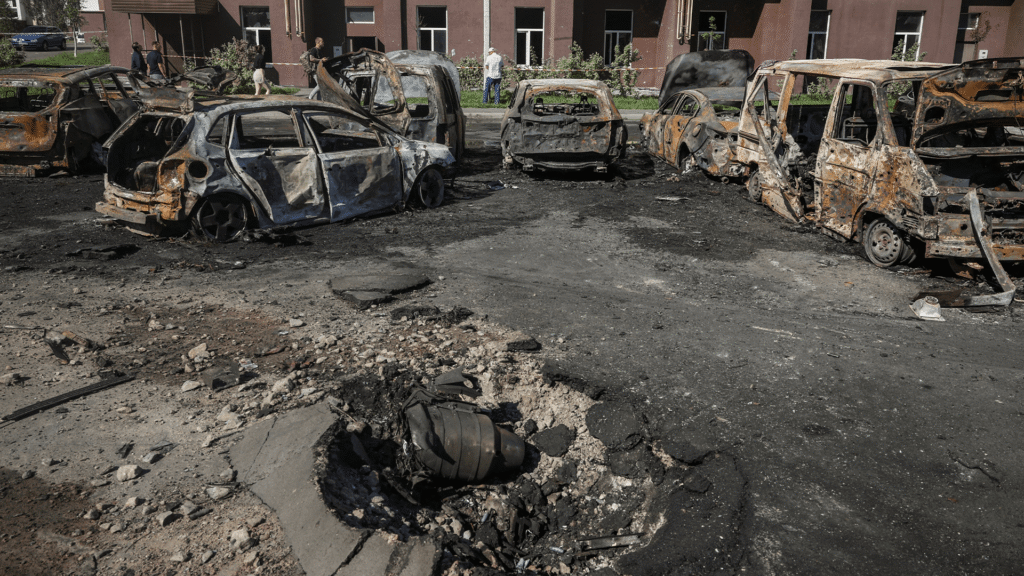
In a harrowing incident underscoring the dangers faced by civilians in conflict zones, a Russian drone struck a residential area near Kyiv, Ukraine’s capital, narrowly missing a woman as it hit a parking lot. The attack, captured on video, vividly shows the moment the drone impacted, causing significant damage and raising alarm about the escalating hostilities in the region.
The footage, which has rapidly circulated on social media, portrays the sheer unpredictability and peril of life under such attacks. It highlights the resilience and luck of the woman involved, who escaped major injury by mere moments. Witnesses described a sudden explosion and the chaotic aftermath as emergency services rushed to the scene.
This attack is part of a series of aggressive moves by Russian forces targeting civilian areas near Kyiv and throughout Ukraine. Analysts warn that these strikes are not only military maneuvers but also attempts to sow fear and disruption among the local population.
Local authorities condemned the incident, emphasizing the need for international attention and support to protect civilians and uphold humanitarian law amid ongoing conflict. Residents of the area are now living with heightened anxiety, worried about future strikes and the safety of their families.
The international community has responded with calls for de-escalation and renewed peace efforts, stressing the importance of safeguarding non-combatants. However, such incidents continue to punctuate the tensions and violence that have marked the conflict.
Experts note that drones have become a common tool in modern warfare, allowing for precise strikes but also increasing the risk to unintended targets, including civilians. The use of drones in such populated areas raises critical questions about the rules of engagement and accountability in conflicts.
This latest attack not only endangers lives but also disrupts the everyday fabric of community life, from schooling to economic activities. The psychological impact on residents, especially vulnerable groups such as children and the elderly, is profound, contributing to a pervasive atmosphere of fear.
Efforts to provide aid and reconstruction face challenges due to ongoing security concerns, with humanitarian groups stressing the urgency of creating safe corridors for assistance. Meanwhile, local governance structures are working to maintain order and provide support, though resources are stretched thin.
In summary, the near miss for the woman exemplifies the random and devastating consequences of such attacks on civilians. It underscores the critical need for resolving conflicts through dialogue and diplomacy, prioritizing human life over military objectives. As Ukraine continues to navigate this difficult period, the resilience of its people remains a beacon of hope amidst adversity.