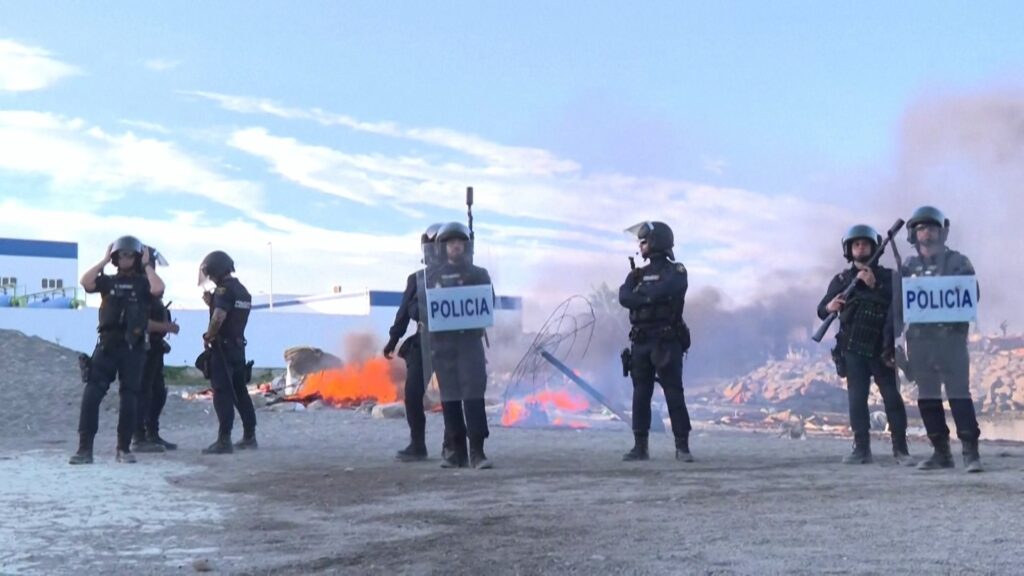
The Spanish autonomous city of Ceuta, located on the northern coast of Africa, has witnessed a sharp escalation in anti-migrant protests recently. Demonstrators, expressing strong opposition to the presence and aid of migrants, have taken drastic measures including dismantling and burning tents set up for migrants. These actions not only undermine humanitarian efforts but also amplify tensions in the region.
The protesters have targeted migrant shelters, many of which were established with the help of humanitarian organizations such as the Red Cross. These shelters serve as critical centers for providing temporary relief and aid to migrants who have arrived in Ceuta seeking refuge or a new beginning.
In addition to destroying these shelters, the demonstrators have gone further by blocking Red Cross workers from distributing aid. This obstruction has led to concerns among human rights groups and international observers about the deteriorating conditions for migrants in the city.
Ceuta has long been a focal point in the complex migration dynamics between Africa and Europe. Its geographic location makes it a key entry point for migrants attempting to reach European soil. The influx of migrants, especially during periods of increased movement, often triggers social and political tensions within the local population.
The recent protests highlight growing frustrations among segments of the local community who believe that migration pressures strain local resources and public services. However, the destruction of aid facilities and hindrance of humanitarian assistance present significant ethical and legal issues.
Human rights organizations have condemned the protests for violating the rights and dignity of migrants, calling for peaceful dialogue and cooperation instead of violence. The Spanish government has been urged to intervene promptly to restore order and ensure that humanitarian aid continues without obstruction.
Authorities in Ceuta have increased security measures around migrant shelters and aid distribution points in response to the unrest. Law enforcement agencies are working to prevent further violence and protect vulnerable populations residing in the city.
The crisis in Ceuta underscores the broader challenges Europe faces in managing migration flows amid rising nationalist sentiments. Finding balanced solutions that uphold both security and humanitarian principles remains a pressing challenge for policymakers.
International bodies and NGOs have recommended enhancing support for frontline cities like Ceuta to better manage migration and protect human rights. They emphasize the importance of collaboration between local authorities, civil society, and international partners.
As protests continue, the situation in Ceuta serves as a stark reminder of the complexities at the intersection of migration, security, and community relations. The immediate priority remains ensuring the safety and well-being of migrants while addressing the concerns of local citizens through constructive engagement and sustainable policies.