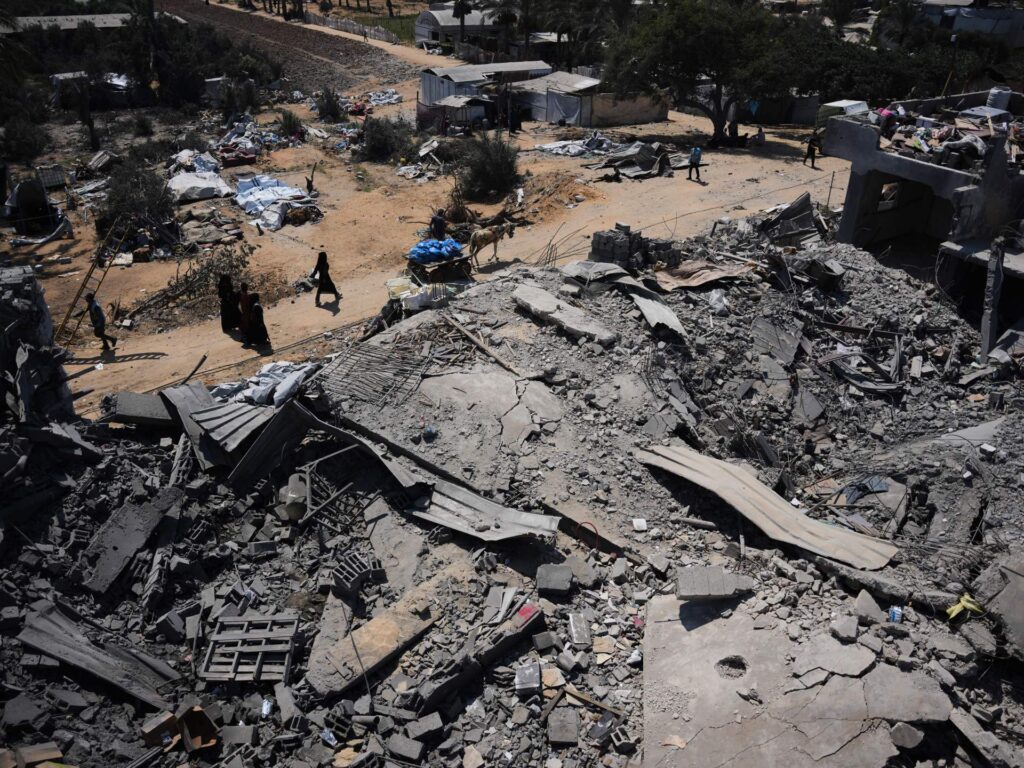
Recent developments in the Israel-Hamas conflict have taken a critical turn as efforts at securing a truce falter under mounting tensions. An envoy involved in the peace process has issued a stark warning, characterizing the current situation as a “point of no return.” This significant statement underscores the delicate and precarious nature of ongoing negotiations and the potential for escalated hostilities if an agreement remains elusive.
Central to the conflict is the contentious issue of Hamas’ weapons. The US has presented a plan for the Gaza Strip, which includes Hamas pledging to hand over its weapons as a pivotal condition for peace. This plan aims to reduce violence and foster stability in the region by disarming Hamas, which is considered a terrorist organization by Israel and several other nations.
However, the initiative has encountered a formidable obstacle in the form of Israeli Prime Minister Benjamin Netanyahu’s outright rejection. Netanyahu’s refusal to accept the US proposal signals a significant impasse, reflecting deep-seated concerns about security and the legitimacy of Hamas. His stance indicates that Israel is unwilling to compromise on the disarmament terms laid out by the US and sees these demands as insufficient or flawed from a security standpoint.
The envoy’s warning about reaching a “point of no return” implies that the breakdown in negotiations could lead to an irreversible escalation, making peaceful resolution increasingly difficult. This situation underscores the fragility of truce efforts and the complex interplay of regional and international interests.
Hamas’ pledge to relinquish weapons, though central to the US plan, faces skepticism given the group’s military and political position within Gaza. The prospect of disarmament raises critical questions about enforcement, monitoring, and the potential for Hamas to maintain its influence or resort to clandestine militarization.
Netanyahu’s rejection also highlights internal Israeli political dynamics that influence decision-making in conflict negotiations. Security concerns dominate the discourse, as Israeli leadership prioritizes protecting citizens and preventing attacks over diplomatic concessions.
The failure to secure a lasting truce threatens to perpetuate cycles of violence with devastating humanitarian consequences for Gaza’s civilian population, who are often caught in the crossfire. The international community remains deeply involved, pushing for renewed dialogue and urging caution to avoid further escalation that could destabilize the broader Middle East region.
As this complex and dangerous impasse unfolds, the prospects for peace remain uncertain. The coming days are crucial for diplomacy, with both Israel and Hamas facing intense international pressure to reassess their positions. The role of mediators and the willingness of both parties to engage in meaningful compromise will be pivotal in determining whether the “point of no return” is a temporary setback or a permanent turning point in the conflict.