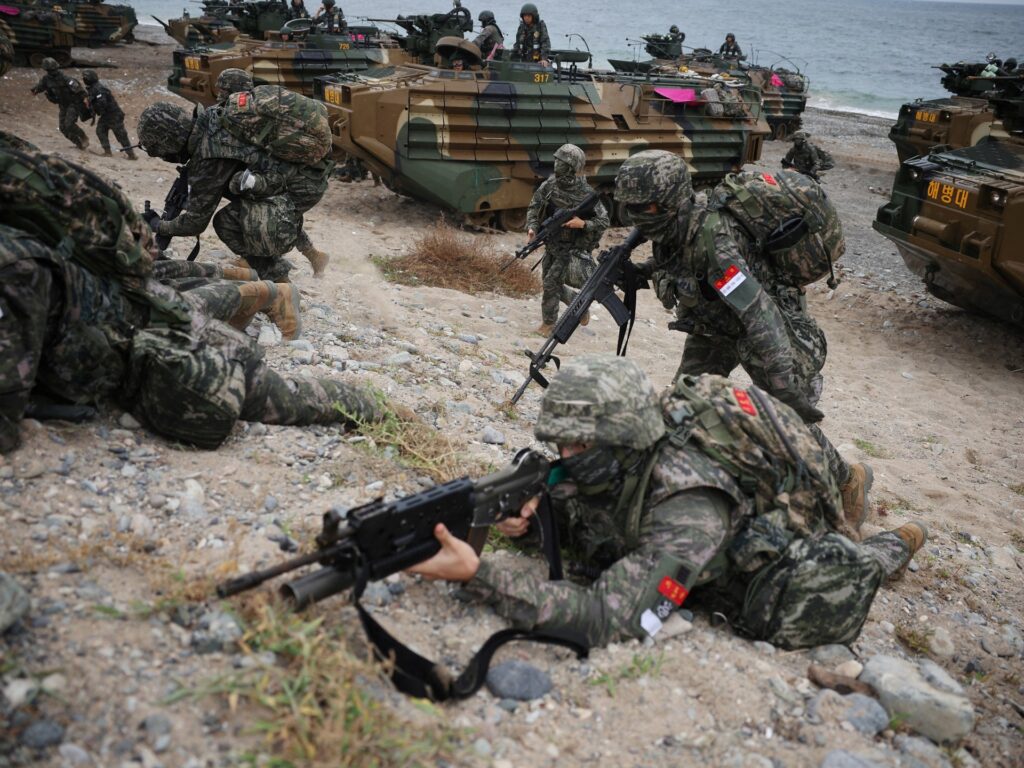
South Korea has announced that the United States has canceled the upcoming joint marine exercises, which were originally planned as part of ongoing military cooperation between the two nations. This decision follows a recent surprise order from then-US President Donald Trump to scale back a separate annual joint military drill. The cancellation comes at a time of heightened tensions in the Middle East, specifically revolving around the conflict in Iran.
The joint exercises are a significant aspect of the US-South Korea military alliance, focusing on enhancing interoperability and readiness between the two nations’ armed forces. The cancellation marks a notable deviation from the usual rigorous training schedule and raises questions about the future of joint military cooperation.
Experts suggest the cancellation could be a strategic move by the US to reduce immediate military tensions and avoid escalation in the region amidst the ongoing Iran war. The South Korean defense ministry highlighted that the decision on the marine exercises aligns with broader efforts to manage and navigate the complex geopolitical landscape influenced by the conflict in Iran.
The annual joint military drills have historically served as both a training opportunity and a deterrence mechanism, particularly in countering threats from North Korea and other regional instability factors. However, the recent reduction and cancellation orders signal a shift in priorities, likely reflecting the US administration’s focus on issues in the Middle East.
South Korean officials expressed concern but also emphasized the importance of maintaining strong defense ties with the US, ensuring readiness amid unpredictability in regional security dynamics. They have stated their commitment to engaging in discussions and planning for future exercises once geopolitical tensions ease.
The Trump administration’s unexpected move to curtail military exercises was met with mixed reactions domestically and internationally. Allies viewed the decision with a combination of apprehension and understanding, recognizing the delicate balance of power and the need to avoid exacerbating conflict.
Moving forward, the situation underscores the interconnectedness of global military strategies and the impact regional conflicts can have on alliances far beyond the immediate war zones. The cancellation can be seen as part of a broader strategic recalibration by the US, aiming to prioritize resources and diplomatic efforts in managing the Iran war while maintaining essential partnerships.
In summary, the US cancellation of joint marine exercises with South Korea amid the Iran war illustrates the complex interplay of global military readiness, diplomatic considerations, and regional security concerns. It highlights the challenges of balancing alliance commitments with the necessity to adapt to evolving international conflict landscapes.