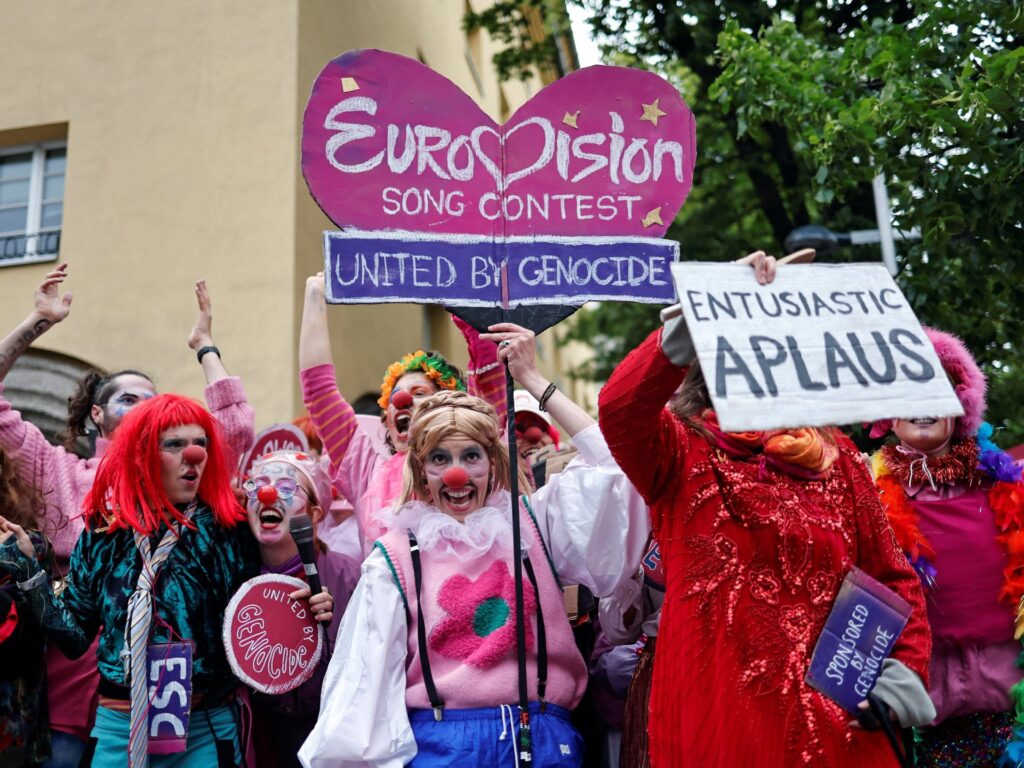
The Dutch public broadcaster AVROTROS has announced its decision to boycott the upcoming Eurovision Song Contest, citing concerns over the event’s compromised neutrality due to escalating international conflicts. Traditionally renowned for fostering cultural exchange and unity among participating countries, Eurovision has been widely regarded as a politically neutral platform. However, recent geopolitical tensions and divisions have increasingly overshadowed the contest’s apolitical stance.
AVROTROS expressed that the deepening international conflicts have not only undermined the spirit of Eurovision but have also led to rising divisions within its framework, making it challenging to maintain an impartial and inclusive environment. The broadcaster emphasized that this stance comes as a response to ongoing global disputes that have seeped into the contest’s atmosphere, influencing voting patterns, public perception, and media coverage.
The decision marks a significant shift in the Netherlands’ engagement with the Eurovision Song Contest, which has been a longstanding tradition for the country. AVROTROS highlighted that their choice to boycott stems from a commitment to principles of neutrality and cultural harmony, rather than political alignment with any party involved in the global conflicts.
Eurovision, launched in 1956, has grown into one of the world’s largest and most-watched music events, renowned not only for its musical performances but also for its celebration of diversity and international cooperation. Despite this, recent years have seen a rise in politicized voting, controversial entries, and public debates reflecting broader geopolitical realities, casting a shadow over the contest’s original mission.
The boycott by AVROTROS has ignited discussions within the Eurovision community and among fans worldwide about the future of the contest amid such geopolitical turbulence. Some argue that politicization threatens Eurovision’s integrity, while others contend that the platform inevitably reflects broader societal issues.
In response to AVROTROS’s announcement, Eurovision organizers reiterated their dedication to maintaining neutrality and fostering unity, expressing regret over the broadcaster’s decision but respecting their position. They conveyed hope that future editions of Eurovision can return to focusing on artistic expression and cross-cultural celebration without the influence of global conflicts.
As international conflicts continue to shape global narratives, the challenge for Eurovision remains in balancing its role as a cultural event and a reflection of contemporary political realities. The Dutch broadcaster’s boycott underscores the complexities faced by global platforms striving to uphold neutrality in an increasingly fragmented world.