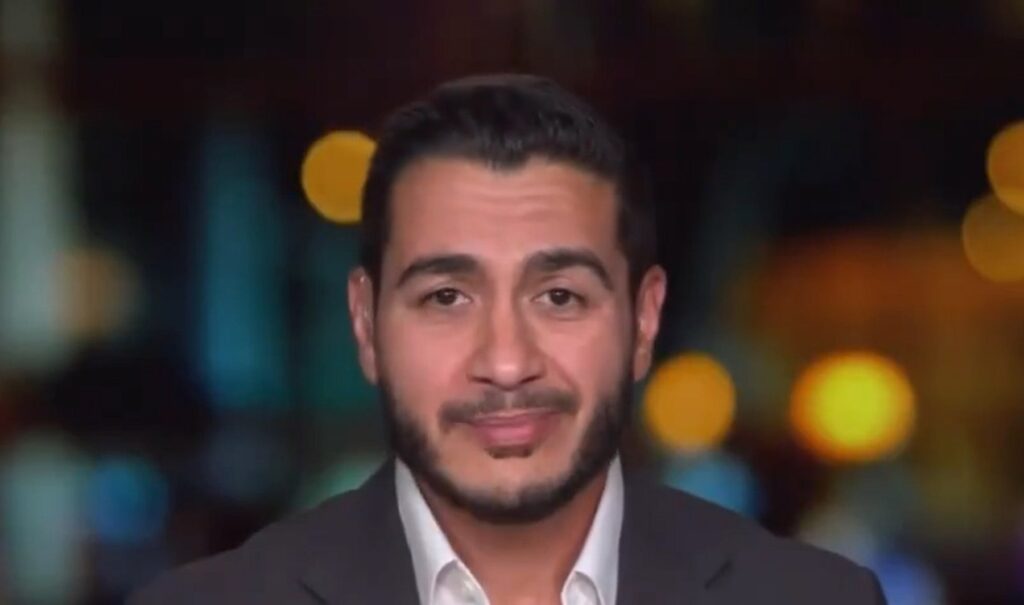
In a recent political exchange, US Senate nominee Abdul El-Sayed has responded strongly to criticism from JD Vance, a Republican figure known for his support of former President Donald Trump. Vance had suggested that El-Sayed’s identity, particularly his religious background, was connected to the difficulties faced by the Trump administration. However, El-Sayed has firmly rejected these claims, emphasizing that neither his identity nor his religion has any bearing on the political challenges or controversies associated with the administration.
El-Sayed, who is known for his progressive platform and focus on healthcare and social justice, took the opportunity to clarify misconceptions put forth by Vance. He articulated that political problems and policy failures should be addressed based on facts and governance, rather than personal identity or religion. El-Sayed’s rebuttal highlights the ongoing clashes in political discourse where personal attacks are often used to undermine opponents.
This confrontation is indicative of the broader polarized political environment in the United States, where candidates often face attacks that attempt to link their personal characteristics to national issues. El-Sayed’s response seeks to redirect the conversation to substantive political debate rather than identity-based critiques.
The exchange also underscores the tension within the Senate races as candidates from different political backgrounds compete for influence and control in a shifting political landscape. El-Sayed’s stance is gaining attention for advocating a campaign focused on policy issues rather than divisive rhetoric.
As the race for the US Senate continues, the interaction between El-Sayed and Vance serves as a reminder of the challenges candidates face in navigating political narratives that often intertwine personal identity with public service evaluation. Observers note that El-Sayed’s call for separating identity from political critique could resonate with voters fatigued by negative campaigning.
Political analysts suggest that this episode might shape the discourse in the Senate race, encouraging candidates to concentrate on their platforms and the practical implications of their policies. El-Sayed’s ability to confront criticism while maintaining a focus on key issues may enhance his credibility among constituents seeking thoughtful representation.
In summary, Abdul El-Sayed’s decisive rebuttal to JD Vance’s comments represents a significant moment in the ongoing political dialogue. By asserting that his identity and religion are irrelevant to the Trump administration’s problems, El-Sayed challenges the use of personal attacks in politics and advocates for a more issue-centered approach to campaigning and governance.