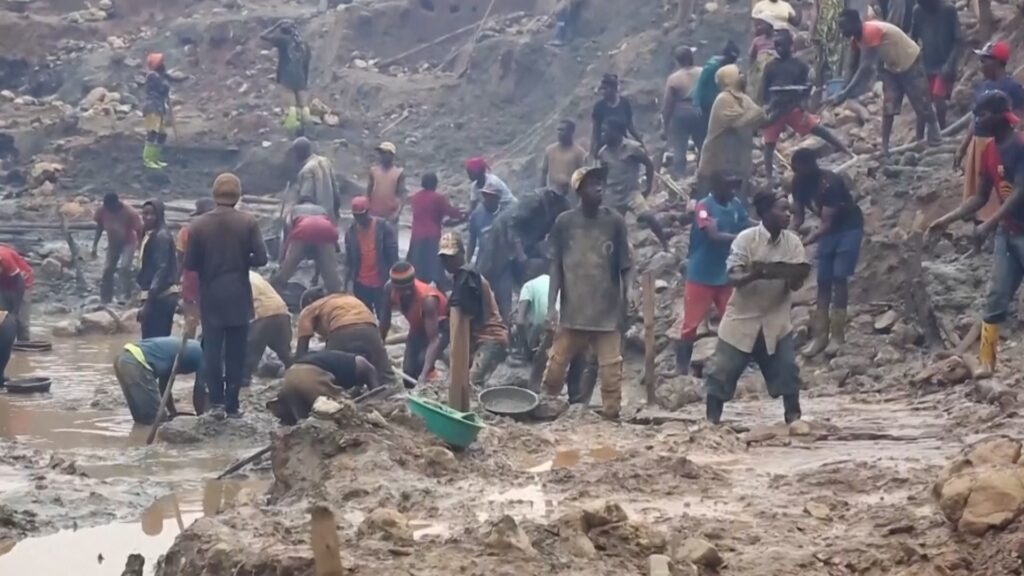
In the Democratic Republic of the Congo (DR Congo), miners are living under the constant shadow of the Ebola virus outbreak, yet they continue to risk their lives daily to earn a livelihood. The region, rich in minerals, has long attracted workers seeking economic opportunities despite the significant health dangers.
Ebola, being one of the most deadly viral diseases, has seen periodic resurgences in this part of Africa. The current outbreak has heightened fears among communities, especially those involved in mining, where close contact and challenging working conditions increase the risk of transmission.
Mining communities are often in remote areas with limited access to healthcare facilities, making Ebola containment and treatment efforts difficult. The miners face tough choices: stay and work amidst the threat of infection or abandon their means of income, potentially plunging themselves and their families into poverty.
Authorities and international health organizations have been working to contain the outbreak through vaccination campaigns, awareness programs, and improved healthcare support. However, the informal nature of many mining operations complicates these efforts. Many miners operate outside regulatory frameworks, making outreach challenging.
Economic necessity compels miners to continue their work despite the risks, highlighting the broader issue of poverty and lack of alternative employment options in the region. Experts emphasize that addressing public health cannot be divorced from tackling the underlying socio-economic conditions that force individuals into hazardous work environments.
The DR Congo’s mineral wealth contributes significantly to the global supply of essential elements like cobalt and copper, critical for electronics and renewable energy technologies. Thus, the miners’ plight resonates far beyond the local context, raising questions about the ethics and sustainability of resource extraction industries.
Efforts to protect miners include improving education on Ebola transmission, providing personal protective equipment, and establishing better health infrastructure close to mining sites. Nonetheless, challenges persist due to the ongoing conflict, distrust in authorities, and logistical barriers.
The situation in DR Congo underscores the complex intersection of public health, economic survival, and resource dependency. It calls for a multi-faceted approach that includes emergency health measures and long-term strategies for economic development and social support.
In summary, DR Congo miners face a perilous balancing act: risking Ebola infection to secure their livelihoods amidst one of the most severe health crises in the region. International solidarity and comprehensive policy responses are crucial to safeguard their health and promote sustainable economic opportunities.