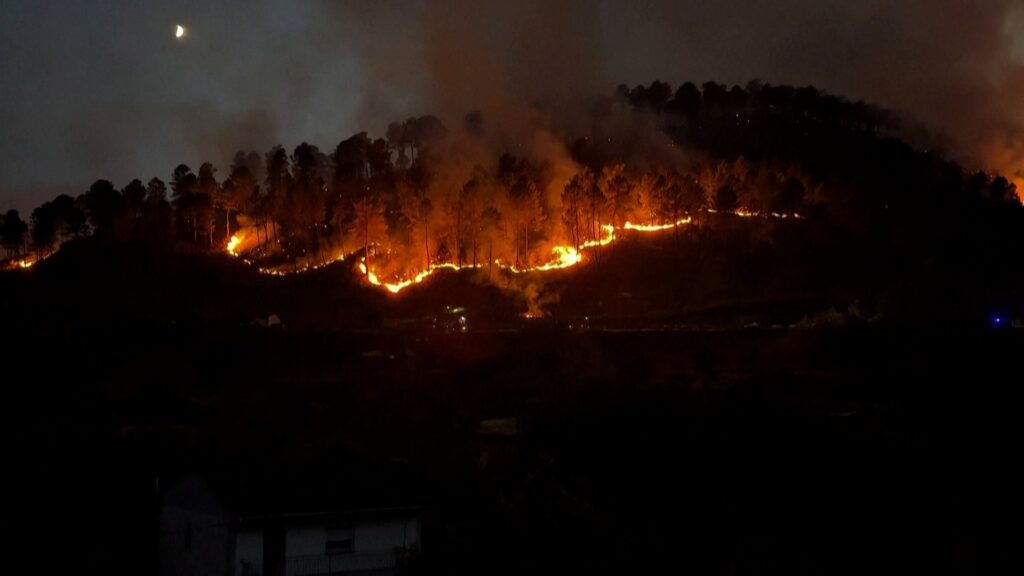
A significant wildfire has erupted in western Spain, prompting the evacuation of more than 800 residents from affected areas. The blaze poses a severe threat to local communities and has mobilized firefighting teams and emergency services in a large-scale response effort.
Authorities have issued evacuation orders for several villages and towns in the path of the advancing fire, ensuring the safety of residents as the wildfire continues to spread due to dry conditions and strong winds. The precise cause of the fire remains under investigation, but initial reports suggest that environmental factors have played a major role in the fire’s rapid expansion.
Firefighters, supported by aerial water-dropping aircraft and ground crews, are working tirelessly to contain the blaze. Despite their efforts, the fire has consumed thousands of hectares of forested land and agricultural fields, threatening both natural habitats and farmland.
Officials have set up emergency shelters to accommodate displaced families, providing food, water, and medical assistance. Local authorities are coordinating with regional and national disaster response teams to ensure all resources are effectively deployed.
The wildfire’s impact extends beyond immediate evacuations. Smoke from the fire has affected air quality in nearby cities, leading health officials to recommend that people limit outdoor activities, particularly those with respiratory conditions.
Meanwhile, social media platforms have become a vital tool for residents and authorities to share updates, safety information, and support. Community volunteers have also stepped in to aid evacuation efforts and assist vulnerable populations.
As the fire continues to challenge firefighting efforts, meteorologists are monitoring weather conditions closely, hoping for favorable changes that could aid in containment. The situation remains dynamic, with officials urging residents to stay alert and follow all safety instructions.
This wildfire serves as a stark reminder of the increasing frequency and intensity of forest fires in Spain and across southern Europe, likely influenced by climate change and prolonged drought periods. Preventive measures, including public education and improved land management, are being discussed as part of long-term strategies to reduce wildfire risks.
For now, the priority remains ensuring the safety of those in the impacted areas and controlling the blaze before it endangers more communities. Updates will continue as firefighters make progress and as the situation develops.