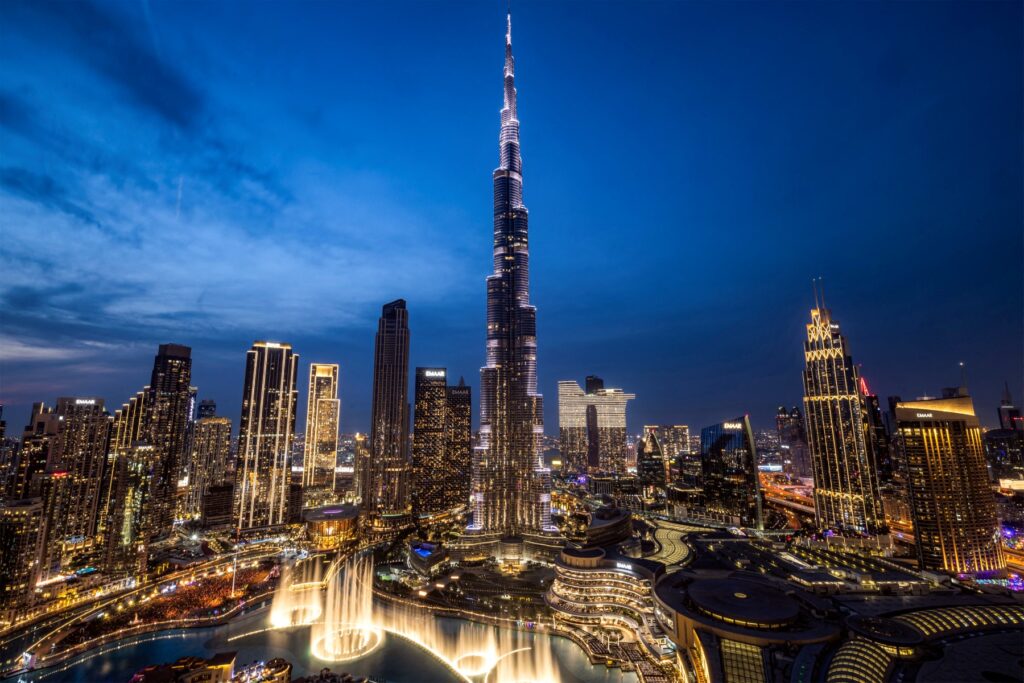
The Dubai skyline including Burj Khalifa (C), the worlds tallest building, is pictured after sunset on December 31, 2024. (Photo by FADEL SENNA / AFP)
The United Arab Emirates (UAE) has announced an indefinite trade embargo on Iran, escalating tensions between the two nations. This decision comes in the wake of alleged missile attacks attributed to Iran, which the UAE claims to have targeted its territory. The UAE government’s declaration aims to sever economic ties and restrict trade exchanges with Iran until further notice.
According to UAE officials, the missile strikes were unprovoked and posed a significant threat to the security and stability of the region. The embargo marks a serious diplomatic and economic move, reflecting the heightened concerns regarding Iran’s military activities.
In response, Iranian authorities have vehemently denied any involvement in the missile attacks directed at the UAE. Tehran suggested that the incident might have been a ‘false flag operation,’ implying that it could have been orchestrated by third parties to falsely implicate Iran and destabilize the region.
This accusation of a false flag highlights the complex interplay of regional politics, where misinformation and covert actions exacerbate existing conflicts. Iran’s denial and the UAE’s subsequent embargo indicate rising hostilities and a deepening divide in the Gulf area.
The embargo impacts various sectors, including oil exports, trade in goods, and financial transactions between the two countries. Economic analysts warn that the disruption could have broader implications for regional markets and international trade routes, given both countries’ strategic positions in global commerce.
Diplomatic channels have remained tense, with calls from international bodies urging restraint and dialogue to avoid further escalation. The situation underscores the fragile balance of peace in the Middle East, where political and military actions frequently have ripple effects.
The UAE’s measures also reflect its commitment to safeguarding its national security and protecting its citizens from external threats. The government has stressed that the embargo will remain until credible assurances are given and investigations confirm the perpetrators behind the missile attacks.
Military experts note that the situation could lead to increased militarization and readiness in the Gulf region, with neighboring countries potentially taking sides or preparing for possible conflict spillovers.
The international community watches closely as the developments unfold, hoping for a peaceful resolution but preparing for the consequences of prolonged tensions. Both Iran and the UAE face critical decisions that will shape their futures and the stability of the Middle East.
This episode adds to the ongoing saga of geopolitical struggles in the region, with strategic, economic, and ideological dimensions intertwined. Stakeholders worldwide remain alert to new developments and the potential impact on global peace and security.