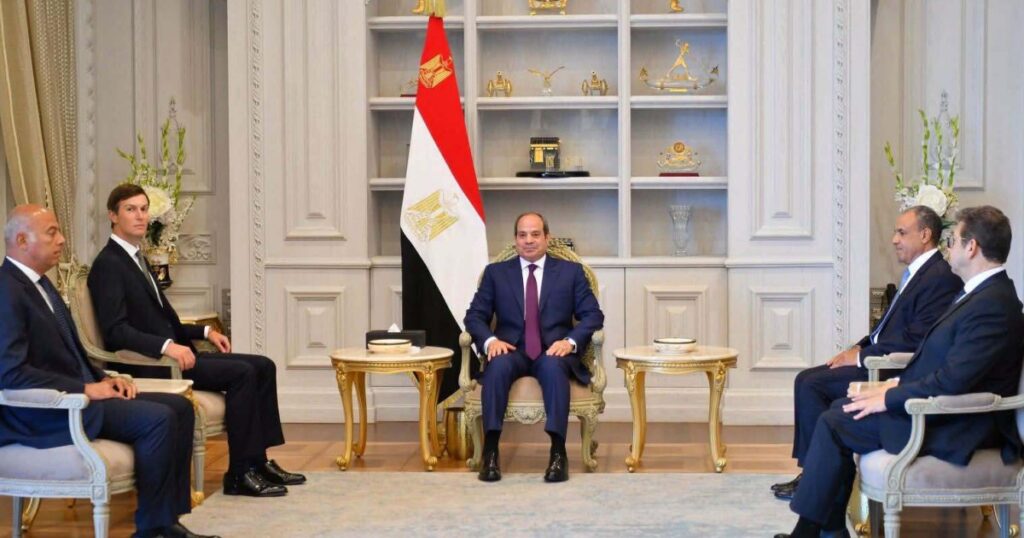
In a significant diplomatic development, Jared Kushner, senior advisor to US President Donald Trump and his son-in-law, is set to meet Israeli Prime Minister Benjamin Netanyahu to discuss the Trump administration’s controversial plan for Gaza. This meeting is particularly notable as it follows a rare and unprecedented engagement between Kushner and leaders of Hamas in Egypt, aiming to open new channels for dialogue.
Kushner’s upcoming discussions with Netanyahu highlight the US administration’s intensified efforts to broker peace and stabilize the region amid ongoing violence and complex political dynamics. The Trump Gaza plan, which has been met with mixed reactions globally, seeks to address key issues such as security, governance, and economic development in Gaza.
Historically, interactions between US officials and Hamas representatives have been extremely limited due to Hamas being designated a terrorist organization by the US and Israel. However, the recent rare meeting in Egypt marks a strategic shift in the approach to handling the Gaza situation, reflecting an urgency to engage with all stakeholders directly.
During Kushner’s talks with Hamas leaders, the focus was reportedly on finding common ground that could facilitate the implementation of the Trump plan. Elements of the plan include easing the blockade on Gaza to improve humanitarian conditions, instituting governance mechanisms to curb militant activity, and encouraging economic investment and infrastructure rebuilding.
Netanyahu’s response to Kushner’s plan and the preceding talks with Hamas is highly anticipated. Israeli concerns remain centered on security threats posed by militant groups in Gaza and the feasibility of ensuring long-term peace and stability under the proposed framework.
Political analysts suggest that Kushner’s meetings might represent a pivotal moment in US-Middle East diplomacy, potentially laying the groundwork for a new phase of negotiations in the Israeli-Palestinian conflict. The administration’s approach signals an attempt to break longstanding diplomatic deadlocks by engaging more directly with diverse actors.
Critics of the Trump Gaza plan argue that it inadequately addresses the core issues of Palestinian sovereignty and rights, fearing that economic incentives alone may not lead to sustainable peace. Supporters, however, believe the plan provides a pragmatic pathway for improving conditions in Gaza and reducing tensions.
The timing of Kushner’s meeting with Netanyahu, coming swiftly after discussions with Hamas, underscores a concerted diplomatic push by the US to synchronize efforts and build consensus among key players. This sequence indicates a strategy aimed at maximizing the potential for a breakthrough despite complex regional politics.
As the meeting unfolds, global observers are keenly watching the outcomes for indications of progress or setbacks. The implications of these discussions extend beyond Gaza, impacting broader Middle East peace prospects and US diplomatic credibility.
In summary, Jared Kushner’s impending talks with Israeli Prime Minister Benjamin Netanyahu, following his unprecedented engagement with Hamas leaders in Egypt, mark a critical juncture in the Trump administration’s efforts to implement its Gaza plan. The success of this initiative could shape the future of Israeli-Palestinian relations and influence regional stability in profound ways.