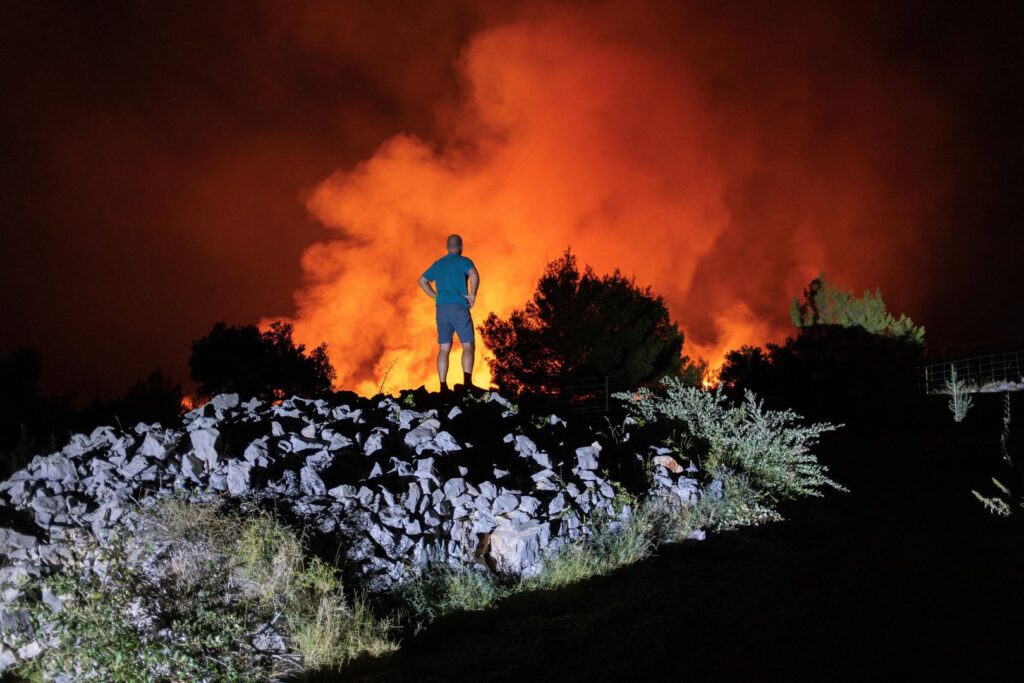
Europe is currently experiencing a devastating series of wildfires fueled by unprecedented heatwaves, burning approximately 500,000 hectares across multiple countries. These extreme temperatures, driven by climate change, have created the perfect conditions for wildfires to spread rapidly, putting thousands of residents in harm’s way and forcing mass evacuations.
The scale of the wildfires this season is alarming, with countries like Spain, France, Italy, and Portugal reporting vast areas of forest and countryside consumed by flames. Emergency services are stretched thin, battling blazes that threaten homes, infrastructure, and natural habitats.
These heatwaves have led to soaring temperatures, breaking historical records across Europe. The combination of dry soil, strong winds, and high heat has made containment efforts challenging. Firefighters, supported by international aid, are working tirelessly to combat the spread and protect vulnerable communities.
Authorities have issued numerous warnings advising citizens to take precautions, including avoiding outdoor fires and remaining vigilant to changes in weather conditions. Evacuation centers have been set up for those displaced, providing shelter and basic necessities.
The impact of these wildfires extends beyond immediate destruction. They contribute significantly to carbon emissions and threaten biodiversity in affected regions. Recovery efforts are expected to take months, with long-term ecological and economic consequences.
Experts emphasize the need for robust climate action and improved forest management strategies to mitigate future wildfire risks. The current situation serves as a stark reminder of the increasing dangers posed by climate change, requiring urgent collective responses at local, national, and international levels.
As Europe battles these ferocious wildfires amid record heat, resilience and cooperation among nations will be crucial to overcoming the crisis and safeguarding communities and the environment for the future.