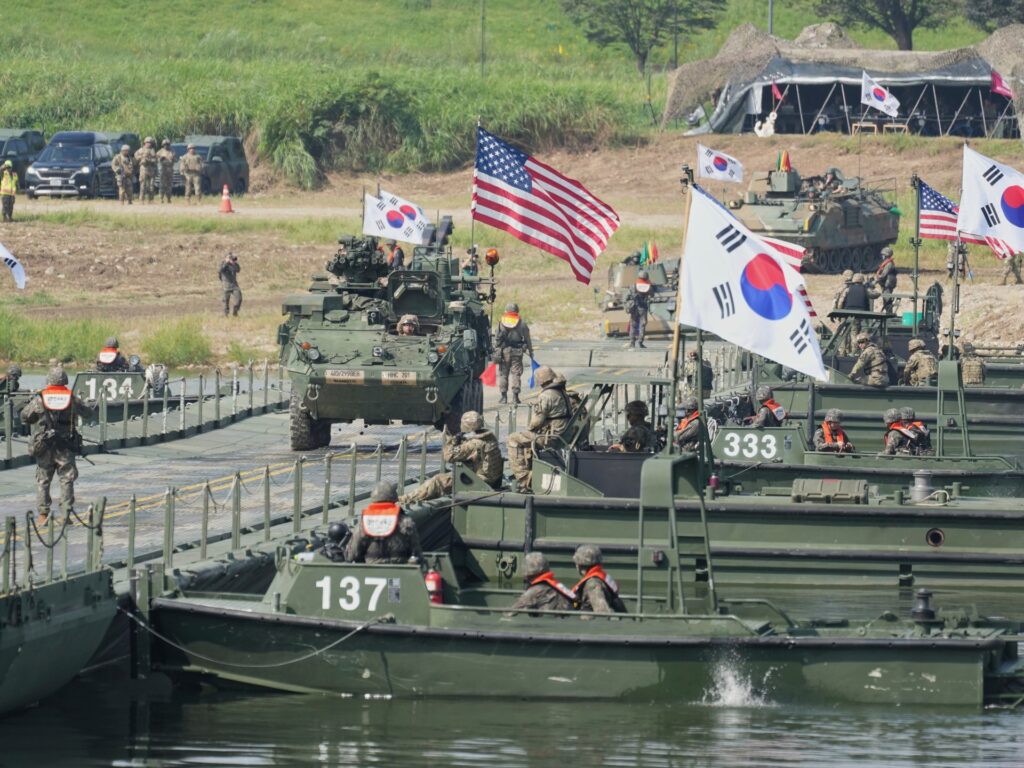
North Korea has vehemently criticized the upcoming joint military exercises planned between the United States and South Korea, accusing the US of escalating tensions and pushing the world “to the brink of nuclear war.” Pyongyang’s reaction underscores the ongoing strains in relations between North Korea and the US-South Korea alliance. The drills, intended to enhance readiness and cooperation between the two allies, are perceived by North Korea as provocative and a direct threat to its sovereignty and security.
The joint military exercises typically involve a wide range of operations, from command post simulations to field training, aimed at improving the combined operational capabilities of US and South Korean forces. However, North Korea has consistently condemned such activities, viewing them as rehearsals for invasion.
Recent statements from Pyongyang have highlighted concerns that the drills could destabilize the region further and provoke a militarized response. The tone of the rhetoric has been particularly sharp this time, with officials warning that the exercises exacerbate the risk of nuclear conflict.
North Korea’s frustration stems from what it sees as a persistent pattern of hostility from the US-led alliance, despite diplomatic efforts and international calls for denuclearization talks. Pyongyang argues that these military maneuvers contradict efforts towards peace and security on the Korean Peninsula.
Observers note that these drills have historically led to escalations in rhetoric and occasional missile tests by North Korea as a show of defiance. The current condemnation may foreshadow similar responses, raising concerns among regional and global security stakeholders.
The US and South Korea maintain that the exercises are defensive in nature and crucial for ensuring the stability of the region amidst ongoing threats from North Korea’s missile and nuclear programs. They have expressed readiness to engage in dialogue while affirming their commitment to deterrence.
As the scheduled drills approach, diplomatic channels remain active, with efforts to mitigate tensions and avoid misunderstandings. The international community continues to watch closely, emphasizing the importance of restraint and communication to prevent confrontation.
This development is a reminder of the fragile security environment on the Korean Peninsula and the broader challenges faced in achieving lasting peace and denuclearization in the region.