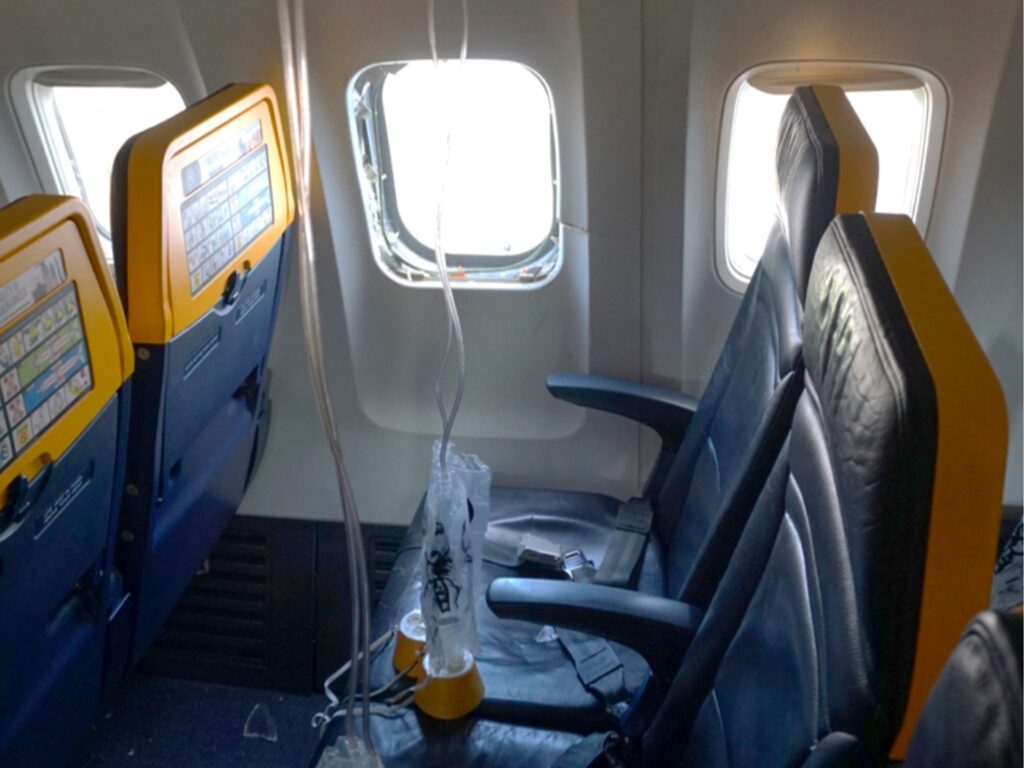
In a startling aviation safety incident, the National Transportation Safety Board (NTSB) revealed that engine debris was responsible for shattering a window on a Ryanair flight, which tragically resulted in a passenger being partially pulled out of the aircraft. This incident has raised significant safety concerns and has prompted a closer examination of aircraft maintenance and wildlife strike prevention measures.
The incident occurred when fragments from the aircraft’s engine penetrated the cabin window, causing it to give way under pressure. The sudden breach led to rapid decompression inside the cabin and put the affected passenger in immediate danger. Quick action by the flight crew and fellow passengers helped prevent a worse outcome.
According to the NTSB investigation, the engine involved had a history of issues related to bird strikes. Flight crews had recorded four suspected bird strikes on the same engine within the previous year. This pattern highlights the potential vulnerability of aircraft engines to wildlife hazards and the importance of thorough inspections and repairs following such events.
Bird strikes are a well-known risk in aviation, as birds can cause serious damage when they collide with aircraft, especially at critical points like engines. The repetitive nature of these strikes on the same engine suggests that more robust protective measures or enhanced maintenance protocols may be necessary to prevent further incidents.
Ryanair, one of Europe’s largest low-cost carriers, has not publicly commented on the NTSB findings as investigations continue. Meanwhile, aviation safety experts emphasize the need for airlines to rigorously monitor engine integrity, especially after multiple impacts, to safeguard passenger safety.
The incident underscores the broader challenge faced by the aviation industry in balancing efficient operations with stringent safety standards. Implementing advanced bird detection and deterrent systems at airports, improving pilot training for bird strike scenarios, and accelerating the development of more resilient engine materials are all potential strategies to mitigate these risks.
Passenger safety remains the paramount concern for airlines and aviation regulators alike. This event serves as a critical reminder of the unpredictable hazards of flight and the ongoing need for vigilance in aircraft maintenance and design.
As investigations proceed, it is anticipated that the findings will inform new guidelines and safety measures aimed at preventing a recurrence of such a dangerous event. The aviation community continues to strive toward an incident-free record, leveraging technology and expertise to protect all those flying.
In conclusion, the Ryanair engine debris incident sheds light on the persistent dangers posed by bird strikes and the importance of diligent maintenance and proactive safety strategies in commercial aviation. Passengers and crew can hope for stronger safeguards in the future, ensuring that air travel remains as safe as possible despite nature’s unpredictable challenges.