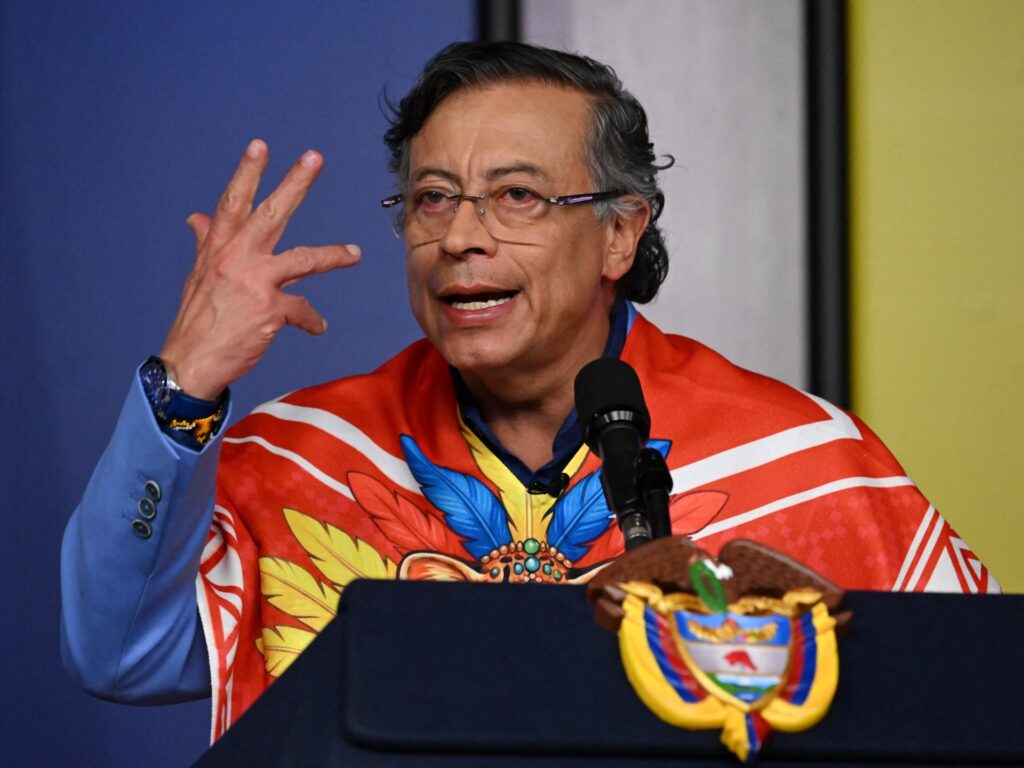
Colombia is facing political turbulence as Gustavo Petro, the outgoing president, has repeated allegations of vote fraud just days before handing over power to his successor. Petro has accused election programmers of deliberately altering vote counts in the recent polls, stirring doubts about the legitimacy of the election process.
The former president’s claims center around accusations that metadata linked to the election results was deliberately concealed from public and official scrutiny. According to Petro, this metadata holds crucial information that could potentially reveal manipulations in the vote tallying system.
Petro’s statements have intensified an atmosphere of mistrust surrounding the election, which has been under close observation by both domestic and international bodies. His allegations, however, have been met with skepticism and outright rejection by electoral authorities and other political leaders who stress the transparency and fairness of the electoral process.
The controversy emerges at a delicate moment in Colombia’s political landscape, as the country is preparing for a peaceful transition of power. The incoming administration has called for calm and urged all parties to respect the institutional processes and work together for national unity.
Experts on electoral integrity have highlighted the importance of verifying and auditing election-related metadata to maintain public confidence. They note that the absence or concealment of such data can undermine democratic processes and fuel polarization.
Despite Petro’s accusations, no concrete evidence has been presented to substantiate claims of vote tampering so far. Election officials have invited independent observers and technical experts to review the election data thoroughly to dispel doubts and restore public trust.
The developments in Colombia underscore ongoing challenges faced by democracies worldwide in ensuring transparent and credible elections. The handling of this situation will be closely watched as a test of Colombia’s democratic institutions and their resilience against disinformation and electoral disputes.
As Colombia approaches the transition date, stability and peace remain paramount for the nation’s future. The international community continues to encourage dialogues that promote electoral integrity and the peaceful transfer of power, essential components of any robust democracy.