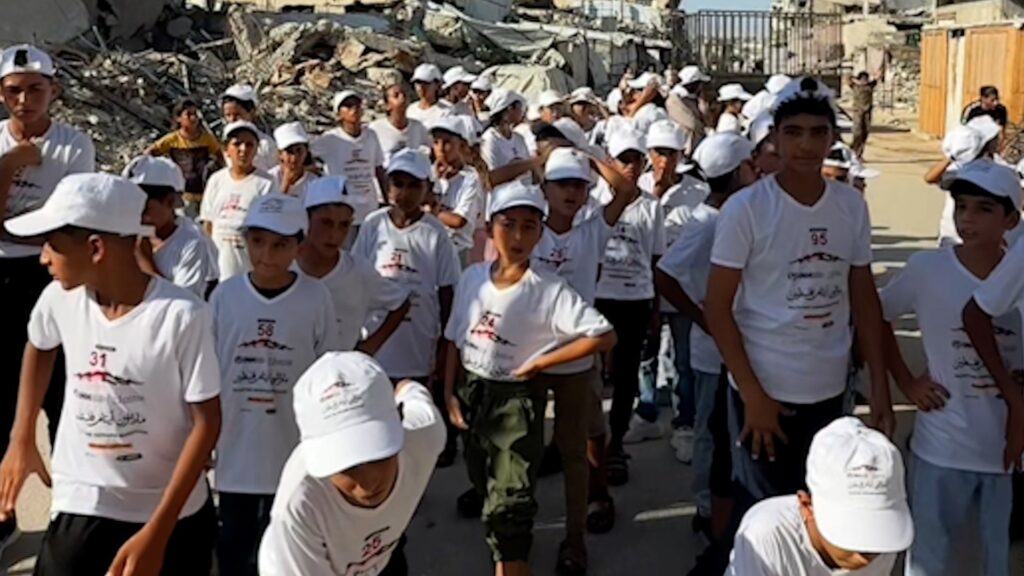
In a heartfelt and inspiring event, children in Gaza recently took part in a marathon designed to draw international attention to the increasing number of orphans in the region. The marathon not only showcased the resilience and determination of these young participants but also highlighted the urgent need for support and aid for orphans affected by ongoing conflicts.
Gaza, a territory that has faced prolonged conflict and hardship, has seen a rise in the number of children left without parents due to violence and instability. This growing orphan crisis poses significant challenges for the community, including the provision of adequate care, education, and emotional support.
The children participating in the marathon, many of whom have been personally impacted by loss, ran with a purpose beyond physical achievement—they aimed to raise awareness about their situation and the broader plight of orphans in Gaza. Organizers of the event emphasized that while the marathon was a symbol of hope and solidarity, it also served as a call to action for humanitarian organizations and governments worldwide.
Local officials and community leaders attended the event to express solidarity and to advocate for increased resources and programs dedicated to supporting orphans. Efforts to provide psychological support, foster care, and educational opportunities were highlighted as critical needs.
The marathon route was lined with banners and messages from families, volunteers, and supporters, all echoing the urgent message: the children of Gaza need our help. The event received coverage from international media, amplifying the call for global assistance.
Experts on humanitarian aid stress that the problems facing Gaza’s orphans require comprehensive strategies that address not only their immediate needs but also long-term stability and care. Investments in social services, education, and healthcare are vital to helping these vulnerable children build a hopeful future.
This marathon underscores the resilience of Gaza’s youth and their community, despite the challenging circumstances they face. It serves as a poignant reminder of the human cost of conflict and the collective responsibility to protect and nurture the most vulnerable members of society.
As the event concludes, the hope is that the spotlight it has shone on Gaza’s orphan crisis will translate into concrete support and a renewed commitment to improving the lives of these children. With continued advocacy and humanitarian efforts, there is hope that these young runners’ stories will inspire positive change and a path toward healing and recovery for many more children in Gaza.