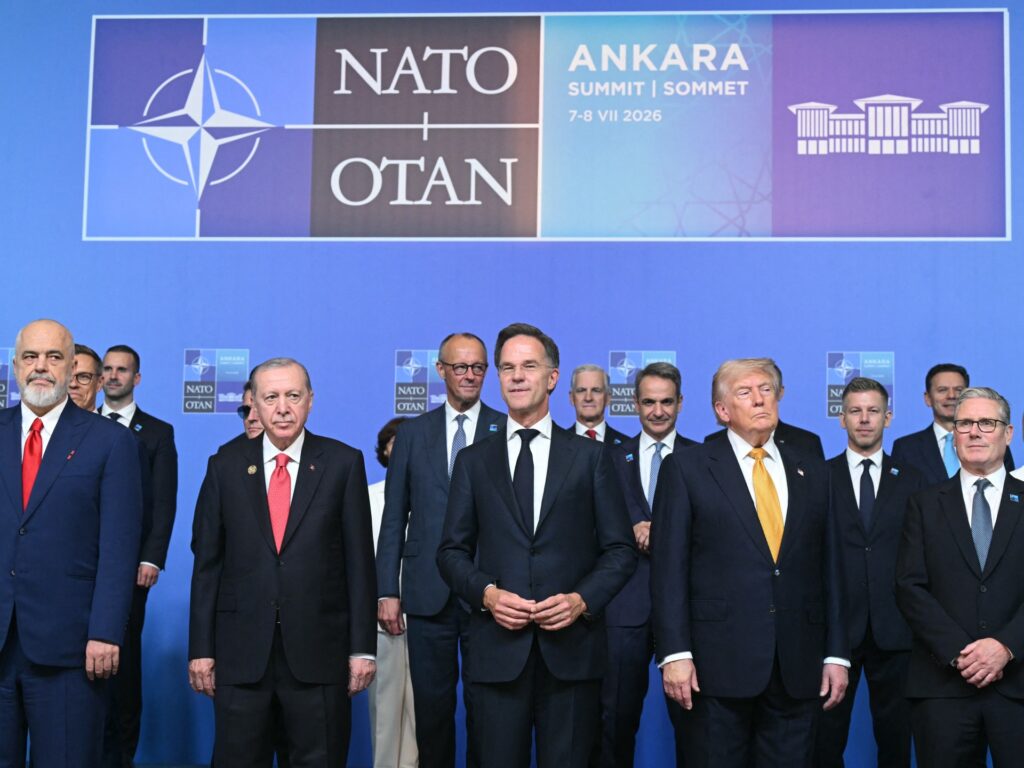
The North Atlantic Treaty Organization (NATO) is currently at a crossroads. Despite members agreeing to increase defense budgets to support collective security, internal tensions threaten the alliance’s unity. The recent attacks by former U.S. President Donald Trump on Spain and Greenland have stirred controversy and raised questions about the cohesion within NATO.
NATO, established in 1949 to provide collective defense against aggression, has demonstrated resilience in the face of various global challenges. In recent years, the alliance has focused significantly on supporting Ukraine amid escalating tensions with Russia. This solidarity has showcased NATO’s commitment to safeguarding the sovereignty of its partners and maintaining peace in Europe.
The decision by NATO members to augment defense expenditure signals a renewed dedication to collective security. Member states are responding to the evolving security environment, including cyber threats, hybrid warfare, and renewed great power competition. This financial commitment underscores NATO’s role as a cornerstone of transatlantic security.
However, despite these positive strides, Donald Trump’s criticisms have introduced friction. Trump’s disparagement of Spain, questioning its defense spending and strategic value, as well as his sidelining of Greenland — a territory pivotal for Arctic security — have unsettled alliances within NATO. His rhetoric has fueled debate over the relevance and effectiveness of NATO in the current geopolitical landscape.
Spain, a long-standing member, has been caught in the spotlight due to these comments. Spanish officials have reiterated their commitment to NATO and highlighted their strategic contributions, including participation in missions and hosting key military installations. They argue that unity and cooperation remain essential to confronting emerging threats.
Similarly, Greenland has strategic importance due to its geographic position in the Arctic. The region’s changing climate poses new security challenges and opportunities, making Greenland vital for NATO’s strategic interests. Trump’s dismissive remarks have sparked diplomatic sensitivity between the U.S., Denmark (which governs Greenland), and other alliance members.
The broader NATO community has expressed concerns about maintaining cohesion. Analysts suggest that while political rhetoric can disrupt temporary harmony, the underlying mutual interests in security and defense cooperation among member states remain strong. The alliance’s foundation rests on shared values of democracy, rule of law, and collective defense.
NATO’s support for Ukraine particularly exemplifies this unity. Following Russia’s assertive moves in Ukraine, the alliance has provided political backing, intelligence sharing, and military assistance. This coordinated response highlights the operational capacity and political will amongst members to act collectively when faced with security crises.
Still, the question arises: Can NATO sustain its unity amid internal criticisms and external pressures? Many experts believe that the alliance’s ability to evolve and address divergent national interests is crucial. Enhanced dialogue and diplomatic engagement are necessary to bridge divides and reinforce the alliance’s relevance in a changing world.
Furthermore, the contrasting views on defense spending and strategic priorities reflect a broader challenge for NATO. Balancing national sovereignty with collective responsibility remains a delicate task. Efforts are ongoing to encourage all members to meet agreed-upon defense spending targets, thereby strengthening the alliance’s military capabilities.
In conclusion, while Trump’s critiques have exposed fault lines within NATO, the alliance continues to demonstrate resilience. Its commitment to boosting defense spending, supporting Ukraine, and navigating complex geopolitical dynamics indicates that NATO remains a vital pillar of international security. The path forward requires continued unity, mutual respect, and adaptation to ensure that NATO can effectively meet 21st-century challenges.