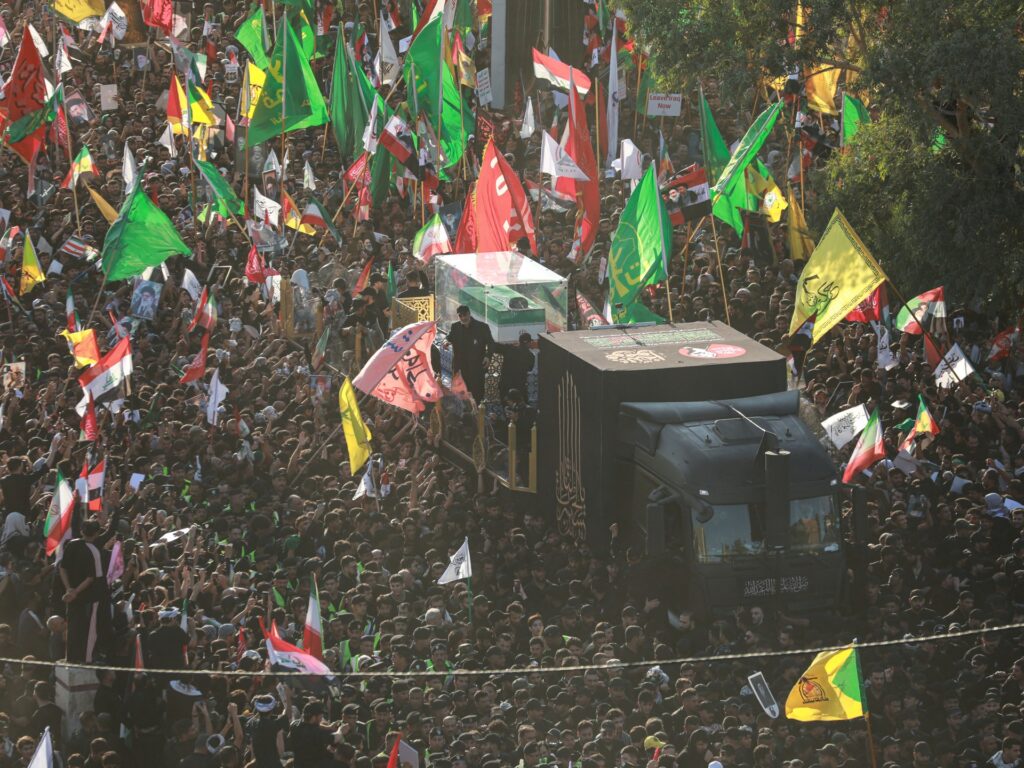
Funeral events are currently underway in Iraq to honor Iran’s slain Supreme Leader, Ayatollah Ali Khamenei. The solemn ceremonies have attracted a large gathering of mourners and officials, underscoring the deep respect and significance attributed to Khamenei in the region. The highlight of the events was the procession of Khamenei’s coffin through the historic streets of Najaf, a city revered within the Shia Muslim community. The coffin’s journey culminated at the sacred shrine of Imam Ali, the cousin and son-in-law of Prophet Muhammad, which stands as one of the holiest sites in Shia Islam. This location choice symbolizes a profound connection to religious heritage and leadership, reflecting Khamenei’s status as a spiritual and political figure. The funeral procession saw participants lining the streets, paying their homage with chants and prayers, creating a poignant atmosphere filled with mourning and reverence. Najaf, known for its religious significance and as a center for Shia scholarship, served as a fitting backdrop for this historic moment. The rites performed at the Imam Ali shrine included traditional mourning rituals, which are central to Shia funerary practices. The passing of Khamenei marks a pivotal moment in Iran’s history, raising questions about the future leadership and political trajectory of the country. The ceremonies in Najaf not only highlight the cross-border religious ties between Iran and Iraq but also emphasize the broader regional implications of Khamenei’s death. Officials from various countries and religious dignitaries participated, illustrating the extensive influence Khamenei wielded beyond Iran’s borders. The funeral events are expected to continue as mourners pay their final respects, with further commemorations possibly taking place in other significant locations linked to Khamenei’s life and legacy. The outpouring of grief and solidarity in Najaf echoes the profound impact Khamenei had on the Shia Muslim community and the geopolitical landscape of the Middle East. As the funeral rites proceed, observers worldwide closely watch the developments, recognizing the historic and emotional gravity of this moment. The legacy of Khamenei will likely shape the region’s religious and political dynamics for years to come, making these funeral events not only a moment of mourning but also a significant historical milestone. The community’s participation in Najaf reflects a collective tribute to a leader considered by many as a pivotal figure in contemporary Islamic history. These funeral events in Iraq stand as a testament to the enduring respect and complex interplay between religion and politics in this part of the world.