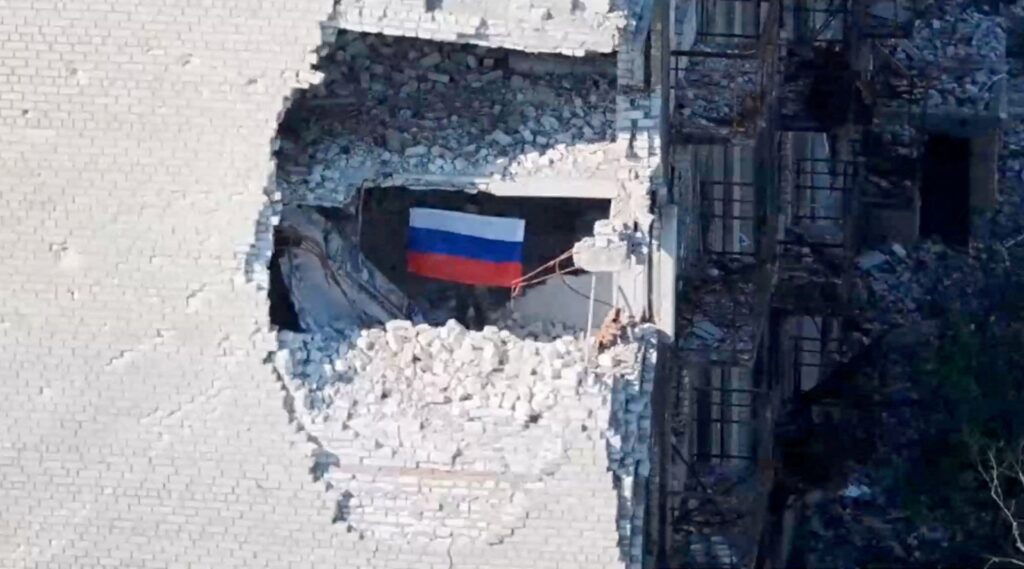
A drone view shows a soldier holding up a Russian flag, as the Russian defence ministry says its forces had taken control of Kostiantynivka, in the course of the Russia-Ukraine conflict, in the Donetsk region, Ukraine in this screen grab from handout video released July 3, 2026. Russian Defence Ministry/Handout via REUTERS THIS IMAGE HAS BEEN SUPPLIED BY A THIRD PARTY. OVERLAY FROM SOURCE. REFILE - ADDING INFORMATION VERIFICATION - Road layout, buildings and vegetations matched satellite images. - Date not verified but no older version found posted online before July 3. - Russian Defence Ministry said on July 3 that its forces captured Kostiantynivka in eastern Ukraine.
Tensions continue to simmer in the contested region of Donetsk as Russia claims to have captured the city of Kostiantynivka, a significant point of contention in the ongoing conflict with Ukraine. However, Kyiv firmly denies these assertions, stating that the city remains under Ukrainian control. This conflicting information has further complicated efforts toward a ceasefire in the region.
In recent developments, Russia has accused Ukraine of rejecting a proposed local ceasefire specifically aimed at easing hostilities around Kostiantynivka. Moscow’s officials assert that these ceasefire negotiations were intended to create a temporary halt in fighting to address humanitarian needs and reduce civilian casualties. Yet, Ukraine’s government has refuted these claims, describing the ceasefire proposal as unreasonable and strategically disadvantageous.
The city of Kostiantynivka, located in the eastern Donetsk region, has become a focal point in the Russo-Ukrainian conflict due to its strategic position. Control over this urban area could influence supply routes and military operations in an area that has witnessed sustained fighting for years since the conflict began.
The conflicting narratives regarding control of Kostiantynivka reflect broader challenges in verifying events on the ground, where both sides often present contradictory information to advance their own perspectives. Independent verification is difficult due to restricted access for international observers amid ongoing hostilities.
This dispute comes amid broader diplomatic efforts by international mediators to de-escalate tensions and negotiate ceasefires in various segments of the conflict zone. Previous agreements have been fragile and frequently violated, underscoring the complexity of reaching lasting peace.
Humanitarian organizations have expressed concern over the impact of continued fighting in the region, especially on civilian populations caught in the crossfire. The contested control of cities like Kostiantynivka exacerbates displacement, destruction of infrastructure, and difficulties in delivering essential aid.
Both Russia and Ukraine remain entrenched in their positions, complicating prospects for immediate resolution. Analysts warn that the situation could escalate further if no compromise is reached quickly.
In the meantime, military confrontations persist around Kostiantynivka, with reports of casualties on both sides. The international community watches closely, emphasizing the urgency of diplomatic solutions to prevent a protracted conflict.
The Kostiantynivka dispute exemplifies the broader geopolitical struggle unfolding in eastern Ukraine, where local battles have wider implications for regional stability and international relations. As the situation evolves, accurate information and transparent dialogue will be crucial in shaping peaceful outcomes for all parties involved.