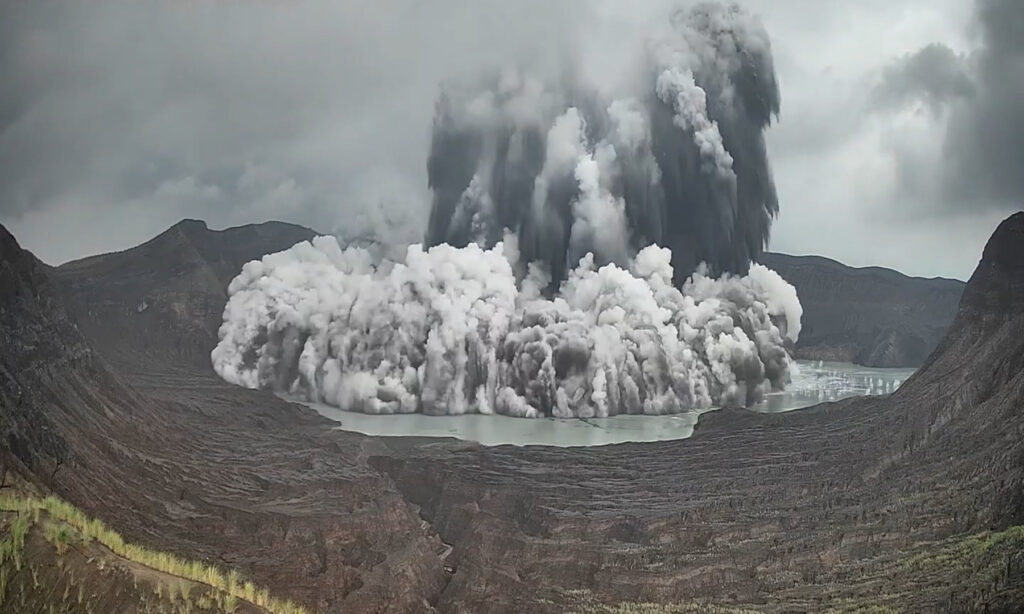
The Taal Volcano in the Philippines has recently erupted, sending a dramatic column of ash and steam soaring 1,200 metres into the sky. This volcanic event serves as a vivid reminder of the active volcanic landscape in the region and has sparked concern among local communities and authorities.
Taal Volcano, located on the island of Luzon, is one of the most active volcanoes in the Philippines and sits within a lake known as Taal Lake. Despite its relatively small size, the volcano poses significant risks due to its history of eruptions that have resulted in ash falls, steam emissions, and lava flows.
The recent eruption has seen ash and steam blast upwards, creating a substantial plume that clouded the sky and caused ash to settle in nearby areas. This phenomenon has led to precautionary measures being intensified, with authorities warning residents to prepare for potential further volcanic activity.
Officials have urged those living within the vicinity, particularly in the towns surrounding Taal Lake, to remain vigilant and adhere to safety protocols issued by disaster management agencies. Evacuation plans have been reviewed and emergency supplies are being stocked to aid those who might be displaced.
Monitoring of the volcano continues around the clock by the Philippine Institute of Volcanology and Seismology (PHIVOLCS), which tracks seismic activity and gas emissions to assess any signs of escalating unrest. The data collected will be critical in providing early warnings and preventing possible casualties.
Historically, Taal Volcano’s eruptions have had significant impacts on local agriculture, air quality, and transportation. Ash fallout can damage crops and disrupt daily life, while airborne ash poses respiratory health risks. Air traffic can also be affected due to visibility concerns and contamination of aircraft engines.
Community response has been mixed, with some residents expressing anxiety over the potential for more severe eruptions, while others remain hopeful that this event is a minor episode. Government efforts are focused on balancing public safety with minimizing disruption to livelihoods.
In sum, the Taal Volcano eruption underscores the ever-present challenge of living in close proximity to active volcanic sites. Ongoing vigilance, preparedness, and science-based response are key to mitigating the risks posed by such natural events.
As monitoring efforts continue, further updates will be provided to keep the public informed. The situation remains dynamic, and residents are advised to stay connected to official sources for the latest news and instructions.