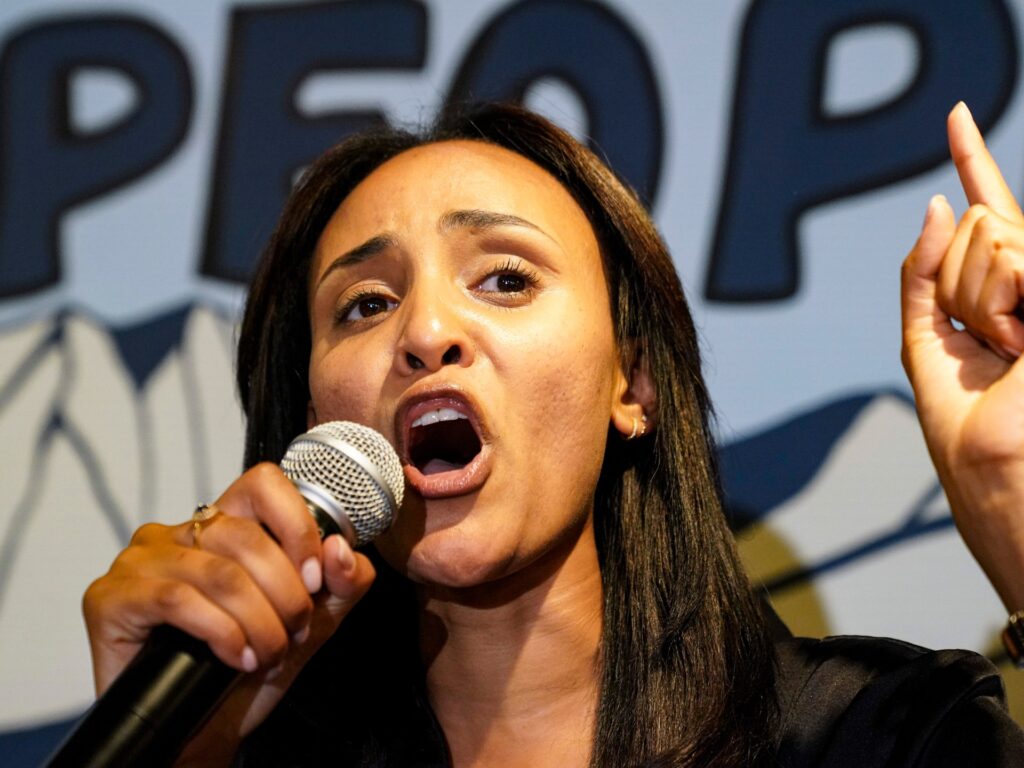
In a remarkable political upset in Colorado, Melat Kiros, a 29-year-old former lawyer and democratic socialist, has defeated a longtime incumbent in the state’s primary elections. Kiros’s victory marks a significant shift in the political landscape, potentially signaling growing support for progressive voices within the Democratic Party.
Kiros, who has garnered attention not just for her policies but also for her outspoken criticism of some of the party’s stances, has been particularly vocal about the Democratic leadership’s support for Israel amid the ongoing conflict in Gaza. She has sharply criticized the party for what she termed “support of Israel during its genocidal war on Gaza,” positioning herself as a progressive alternative within the party.
Her campaign focused on a platform of social justice, economic reform, and a reexamination of U.S. foreign policy, particularly regarding the Middle East conflict, which has sparked significant debate among American politicians and voters alike.
At only 29 years old, Kiros’s rise in politics reflects a broader trend of younger, more progressive candidates successfully challenging established incumbents. Her background as a lawyer gave her a solid foundation in advocacy and policy, helping to shape her approach to governance and reform.
The primary race drew considerable attention due to the contrast between Kiros’s progressive views and the incumbent’s more traditional stance. Voters in Colorado seemed eager for change, with many resonating with Kiros’s calls for a fresh perspective and her bold stance on contentious issues.
Political analysts note that this victory could inspire similar challenges in other states, where younger progressives seek to influence Democratic policies from within. Kiros’s campaign demonstrated the power of grassroots organizing and emphasized the importance of addressing issues like economic inequality, healthcare, and foreign policy in ways that align with the values of younger generations.
While the Democratic Party has historically been a big tent with diverse viewpoints, Kiros’s critique highlights ongoing tensions within the party regarding foreign policy and humanitarian issues. Her victory may encourage more open debates on these topics as the party navigates complex global relations.
Supporters of Kiros praise her courage and commitment to standing up for marginalized communities, both domestically and internationally. They see her as a representative of a new generation of leaders willing to challenge entrenched political norms.
As she prepares for the general election, Kiros faces the challenge of broadening her appeal while staying true to her principles. Her success so far suggests that voters are increasingly willing to embrace change and support candidates who prioritize social justice and human rights, even when those positions are controversial.
This primary result also raises questions about the future direction of the Democratic Party, as internal debates over issues like Israel and Palestine, economic policy, and social justice continue to evolve.
In summary, Melat Kiros’s primary victory is a noteworthy moment in Colorado politics and a possible indicator of shifting dynamics within the broader Democratic Party. It highlights the rise of progressive, younger voices eager to reshape political discourse and policy priorities in the years ahead.