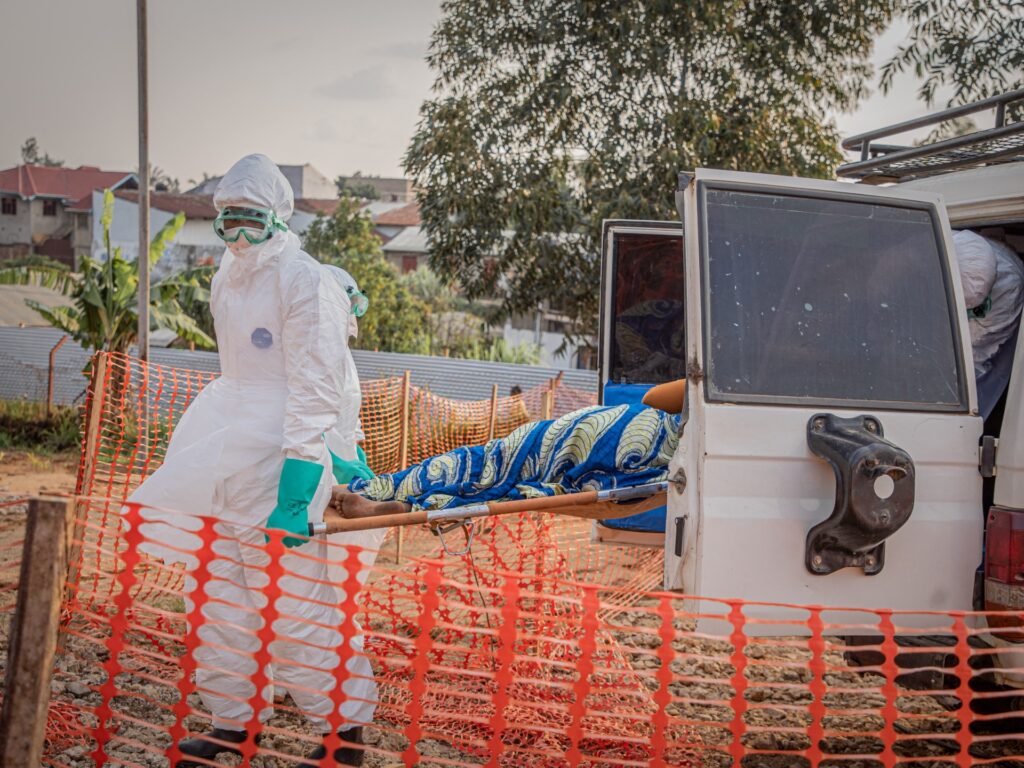
The Democratic Republic of Congo (DR Congo) is currently grappling with a significant Ebola outbreak as health authorities report 1,307 confirmed cases. The death toll has tragically risen to 377, highlighting the severe impact of the virus on the population.
According to recent media reports, the Ebola outbreak has now spread to a fourth province, Haut-Uele, which shares its borders with South Sudan and the Central African Republic (CAR). This expansion of the outbreak into new regions raises concerns about increased transmission risks and the challenges of containing the disease across national borders.
Health officials have been working tirelessly to control the outbreak, emphasizing the importance of swift response, early detection, and comprehensive treatment efforts. However, the spread to Haut-Uele province signifies that the virus continues to propagate into previously unaffected areas, complicating containment strategies.
Ebola virus disease is known for its high fatality rates and severe symptoms, including fever, hemorrhaging, and organ failure. The virus is transmitted through direct contact with bodily fluids of infected individuals or contaminated materials.
The increasing number of cases and deaths underscores the urgent need for enhanced medical resources and international support to aid DR Congo in managing the crisis. This includes deploying more healthcare workers, improving infrastructure, providing vaccines, and conducting public awareness campaigns to educate communities on preventive measures.
The proximity of Haut-Uele province to neighboring countries with vulnerable health systems could facilitate cross-border transmission, necessitating coordinated regional efforts to monitor and respond to new cases promptly.
In previous outbreaks, DR Congo has implemented strategies such as ring vaccination, isolation of cases, contact tracing, and community engagement, which have proven effective in curbing the spread of Ebola. Continuing and scaling these interventions in the affected provinces is critical.
Moreover, the international community must remain vigilant and responsive to the evolving situation in DR Congo, as uncontrolled Ebola outbreaks can pose a threat to global health security.
In summary, the DR Congo Ebola outbreak now includes 1,307 confirmed cases and 377 deaths, with the virus’s geographic spread reaching Haut-Uele province. This development presents new challenges and highlights the need for intensified containment and prevention efforts to protect both local populations and neighboring regions from further transmission.