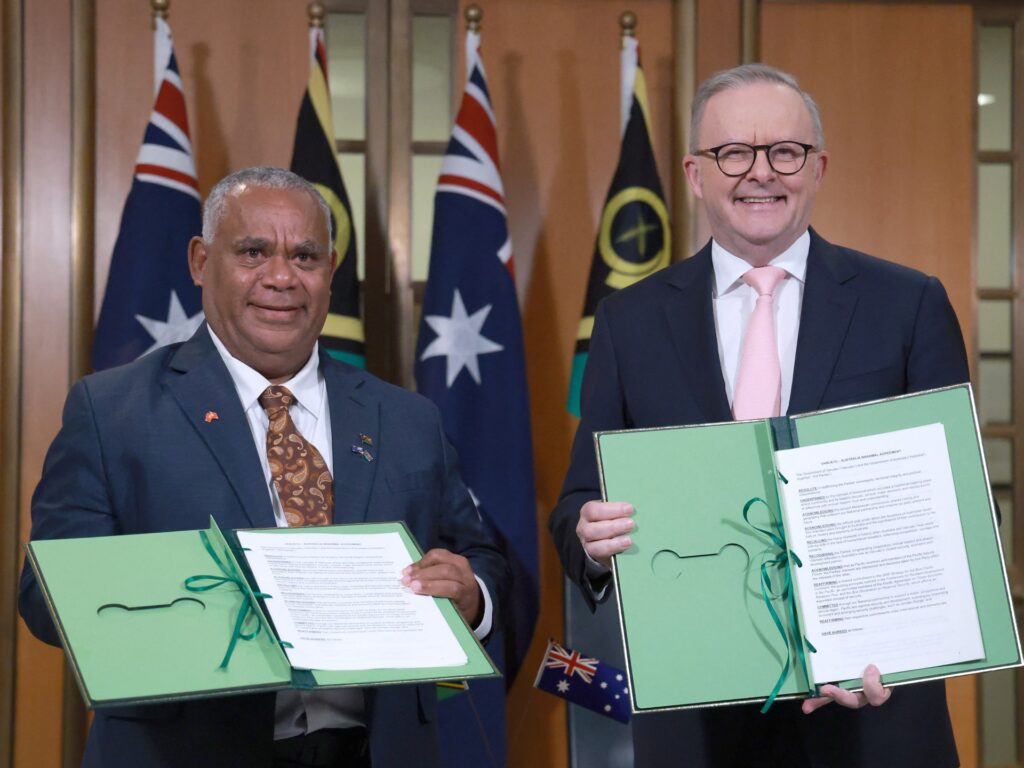
In a significant development aimed at enhancing regional security, Australia and Vanuatu have signed an economic and security pact designed to prevent the establishment of foreign military bases on Vanuatu’s soil. This agreement underscores the two countries’ commitment to maintaining stability and addressing strategic challenges in the Pacific region.
The pact marks a milestone in bilateral relations, focusing on cooperation and mutual interests beyond traditional economic ties. While fostering closer economic collaboration, the agreement prominently includes provisions to block foreign military installations, a move interpreted as a strategic action amidst growing geopolitical tensions involving major powers in the Pacific.
China has openly expressed concern regarding the pact, interpreting it as potentially targeting its expanding influence in the Pacific Islands. Beijing has been actively engaging with Pacific nations through infrastructure investments and diplomatic outreach, aiming to bolster its presence and sway in the region. The Australian-Vanuatu agreement is seen by some analysts as a counterbalance to these efforts, reflecting the broader strategic competition between Western-aligned countries and China.
For Vanuatu, a small island nation in the South Pacific, the pact represents an effort to assert sovereignty and navigate the complexities of international alliances carefully. The agreement ensures that Vanuatu remains free from becoming a battleground for foreign military rivalries, which could threaten its security and regional peace.
Australia’s role is pivotal, reinforcing its influence as a key security partner in the Pacific and signaling its resolve to protect regional interests against external military encroachment. The pact may also pave the way for enhanced economic cooperation, allowing both nations to benefit from shared development initiatives while bolstering defense and security collaboration.
This development comes at a time of heightened strategic competition in the Pacific, where countries like Australia, the United States, and China vie for influence. The security dimensions of such agreements gain prominence as concerns about military bases and foreign presence intensify.
The international community is watching closely, as the pact could set a precedent for other Pacific Island nations seeking to balance foreign investments and strategic partnerships with a focus on maintaining independence and regional stability.
Analysts suggest the pact reflects a nuanced approach by Australia and Vanuatu to safeguard their interests without escalating tensions unnecessarily. It highlights the delicate dynamics in the Pacific, where diplomacy and security strategies converge.
Looking ahead, the agreement may influence regional policy frameworks and encourage multilateral discussions on military presence and economic cooperation, contributing to a more stable and secure Pacific environment.