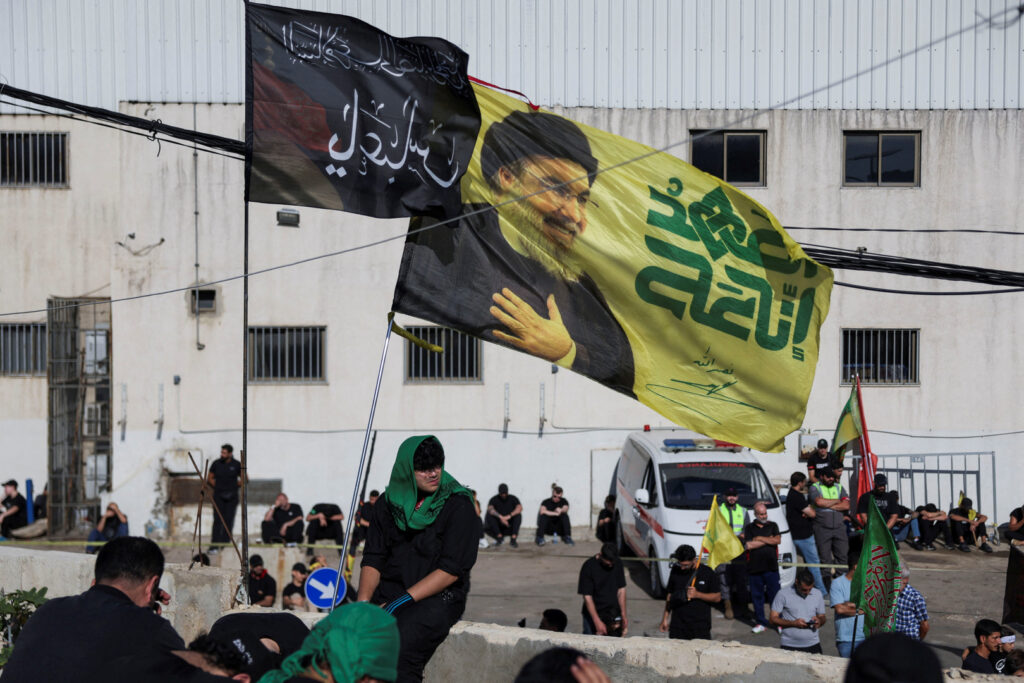
A flag depicting late former Hezbollah leader Hassan Nasrallah flutters as Shi'ite mourners mark Ashura, the holiest day on the Shi'ite Muslim calendar, in the southern suburbs of Beirut, Lebanon, June 26, 2026. REUTERS/Khalil Ashawi
In a significant development from the Middle East, the United States has announced a framework agreement aimed at resolving longstanding disputes between Israel and Lebanon. This deal, mediated in Washington, seeks to establish clear terms that could pave the way for enhanced stability and cooperation between the two nations. However, this announcement has met with firm opposition from Hezbollah, the powerful Lebanese political and militant group, which has explicitly stated that it will not support the framework agreement.
The US-brokered framework focuses primarily on delineating maritime borders and access to offshore oil and gas resources, a contentious issue that has fueled tensions between Israel and Lebanon for years. The agreement is positioned as a historic step towards easing friction and potentially fostering economic opportunities that could benefit the broader region.
Hezbollah’s rejection stems from concerns that the deal may undermine Lebanon’s sovereignty and strategic interests. The group alleges that the framework disproportionately favors Israel and constrains Lebanon’s ability to assert its claims in disputed territories. Hezbollah’s political influence in Lebanon is substantial, and its stance signals potential challenges for the Lebanese government in fully embracing the deal.
Al Jazeera’s correspondent in Beirut reports that the Lebanese public and politicians have mixed reactions. While some see the framework as a hopeful avenue for peace and economic development, others, aligned with Hezbollah and similar factions, view it as capitulation to external pressures that do not align with Lebanon’s national interests.
The US administration highlights the framework as a diplomatic success, aiming to reduce regional conflict and create a foundation for future discussions on broader peace issues. It emphasizes that the agreement respects Lebanon’s rights while fostering cooperation with Israel on critical economic and security matters.
However, the volatile political landscape in Lebanon and the broader Middle East means that the implementation of this framework will likely face significant hurdles. Hezbollah’s firm opposition could translate into political resistance within Lebanese institutions and possibly even increased tensions along the Israel-Lebanon border.
Analysts suggest that for the framework to have a genuine impact, it will require not only political will from the Lebanese government but also engagement from diverse Lebanese factions, including Hezbollah. International actors, including the US, Israel, and regional stakeholders, will need to navigate these complexities carefully.
This latest episode underscores the deep-rooted challenges in achieving lasting peace and cooperation in a region marked by historical grievances and geopolitical rivalries. The unfolding situation will be closely watched by the global community as an indicator of the prospects for stability in the eastern Mediterranean.
Al Jazeera continues to monitor developments in Beirut and across the region as further reactions and implications of the US-announced framework deal emerge.