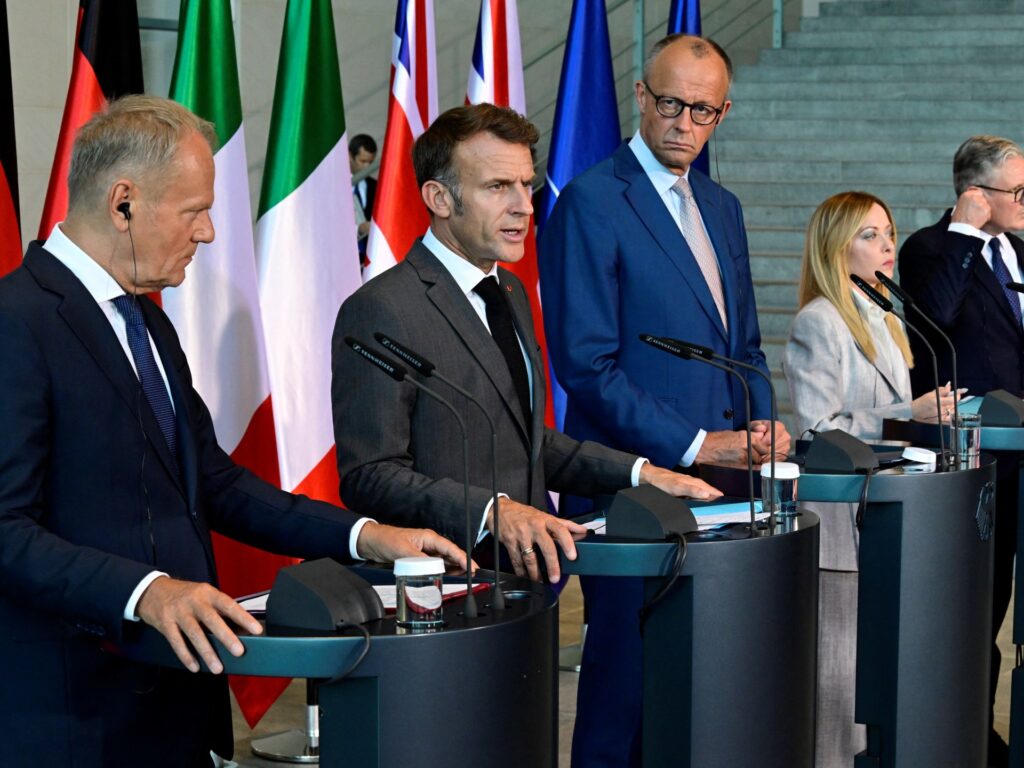
In a significant gathering ahead of the forthcoming NATO summit scheduled for July, the heads of state from five major European countries convened in Berlin to discuss the ongoing situation in Ukraine and reaffirm their collective support. British Prime Minister, French President, Italian Prime Minister, Polish Prime Minister, and German Chancellor came together in a display of unity and resolve, emphasizing a ‘strong’ backing for Ukraine amidst the continuing conflict.
The summit of these key European leaders, often referred to as the E5 talks, highlighted the shared commitment to ensuring Ukraine receives the necessary political and military support. This collaborative stance aims to fortify Ukraine’s defense abilities and to bolster regional security against the ongoing threats in Eastern Europe.
Discussions reportedly focused on coordinating diplomatic initiatives and enhancing military aid, including defensive weapons and humanitarian assistance. The leaders underscored the importance of solidarity among NATO allies and the wider international community in confronting aggression.
The timing of the E5 talks, shortly before the NATO summit, signals an intent to present a unified front and encourage further alliance-wide support for Ukraine. The leaders were also reported to have deliberated on reinforcing sanctions against aggressors and exploring ways to mitigate the humanitarian impact of the conflict.
Germany’s Chancellor stressed the critical role of European cooperation in sustaining Ukraine’s sovereignty and territorial integrity. Meanwhile, the British Prime Minister and the French President reiterated their nations’ commitment to remain steadfast allies to Ukraine, ensuring that diplomatic and military backing remain firm.
Italy and Poland, both geographically and strategically more proximate to the conflict zone, expressed their acute awareness of the stakes involved and the need for a continued robust response. Poland, hosting a significant number of Ukrainian refugees, highlighted the ongoing humanitarian concerns and the necessity for coordinated support.
Beyond military aid and diplomacy, the talks also touched upon economic measures to support Ukraine’s recovery and stabilize the region. The leaders emphasized that long-term stability in Eastern Europe requires not only military defense but also economic resilience to empower Ukraine’s sovereignty.
As the NATO summit approaches, expectations are high that these concerted efforts by European powers will translate into concrete measures and broader international commitment toward Ukraine. The E5 discussions reflect a strategic approach to ensure that Ukraine is not left isolated and that European security is further reinforced.
This unified stance sends a strong message to all stakeholders about Europe’s determination to support Ukraine in its fight for sovereignty while upholding international law and order. It underscores the critical role of diplomacy, alliance solidarity, and sustained international aid in addressing one of the most pressing security challenges in Europe today.
In conclusion, the E5 talks in Berlin mark a pivotal moment of European unity and strategic planning for Ukraine’s future, setting the stage for robust decisions at the upcoming NATO summit. The collaborative spirit and the pledge of ‘strong’ support highlight the importance Europe places on Ukraine’s stability and underline the collective responsibility to respond effectively to ongoing challenges in the region.