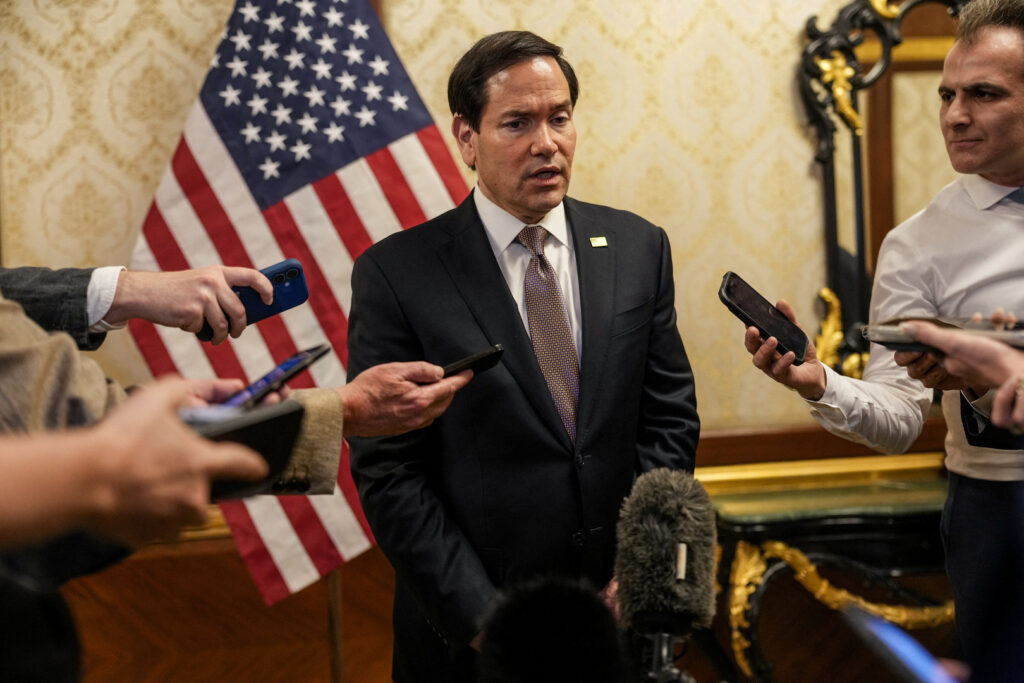
U.S. Secretary of State Marco Rubio speaks to members of the media before boarding a U.S. Air Force C-17 Globemaster III transport aircraft en route to Bahrain during his visit to the Middle East to discuss the interim deal between the U.S. and Iran with Arab Gulf allies, at Kuwait International Airport, June 24, 2026. REUTERS/Eric Lee/Pool
US Secretary of State Marco Rubio has publicly declared that Washington stands “completely aligned” with its Gulf allies regarding the ongoing peace talks with Iran. This statement marks a firm commitment from the US to coordinate closely with the nations of the Gulf Cooperation Council (GCC) as they navigate the complex geopolitical landscape surrounding Iran’s nuclear program and broader regional influence.
The Gulf region has long been a critical area of concern for US foreign policy, particularly due to the strategic and economic importance of its oil resources and the persistent security challenges posed by Iran. Recent months have seen intensified diplomatic efforts aimed at curtailing Iran’s nuclear ambitions and fostering stability in the Middle East.
Secretary Rubio emphasized that this alignment is essential to presenting a united front in negotiations and ensuring that the interests of the Gulf allies are fully integrated into any agreements or frameworks developed. This cooperation reflects shared concerns over Iran’s objectives, including its military capabilities, regional interventions, and ballistic missile programs.
Rubio underscored that the US approach is not only about security cooperation but also about broader economic and political partnerships that reinforce regional stability. The solidarity announced is likely to strengthen the Gulf countries’ leverage in talks with Iran, as Washington’s backing brings significant diplomatic weight.
The announcement coincides with intensified diplomatic shuttle missions by US envoys in the Gulf region, aimed at building consensus among allies and preparing for possible negotiations with Iranian officials. By forging a common stance, the US and its Gulf partners aim to prevent any unilateral agreements that might marginalize Gulf interests or diminish their security guarantees.
Observers note that this united front could affect the pace and nature of negotiations, with Gulf allies demanding robust assurances and enforcement mechanisms to prevent Iran from developing nuclear weapons capabilities. They also seek guarantees on curbing Iran’s support for proxy groups that destabilize countries like Yemen and Lebanon.
In response, Iran has historically accused the US and Gulf states of interference and hostility, yet the diplomatic engagement suggests a shared interest in finding a pathway to peace, albeit under complex conditions.
Rubio’s comments signal a broader US strategy to balance diplomatic engagement with strong security partnerships, ensuring that any peace deals with Iran do not undermine Gulf sovereignty or regional balance.
As the talks progress, the international community watches closely, understanding that the US and Gulf allies’ firm alignment could be pivotal in shaping the future of peace and stability in the Middle East. The unity shown also sends a clear message to Tehran about the resoluteness of the coalition opposing any aggressive nuclear advancements.
In essence, Rubio’s declaration reaffirms a US foreign policy direction that emphasizes alliance solidarity and cooperative diplomacy as key tools in addressing one of the most pressing security challenges faced by the region and the world today.