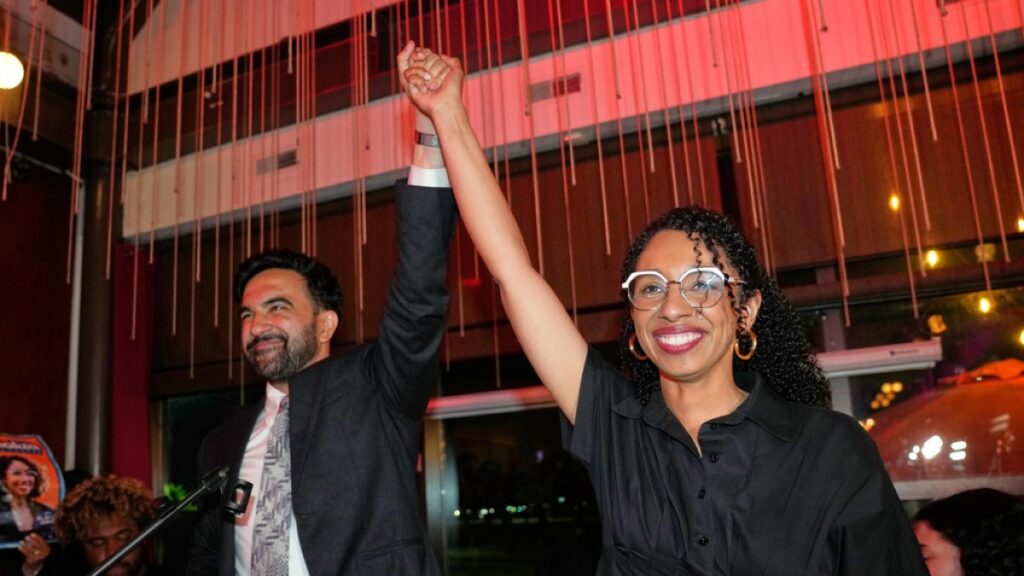
In a significant political development in New York, candidates backed by renowned academic and activist Mahmood Mamdani have secured notable victories, dealing a considerable blow to the pro-Israel camp in the United States. These wins mark a pivotal moment for Palestinian rights advocates and progressive movements, who are hailing the results as a “political earthquake.”
The recent elections saw a wave of progressive candidates, many supported by Mamdani and aligned groups, triumph over several contenders who were traditionally seen as pro-Israel. This shift underscores changing dynamics within certain US political circles, especially in urban centers like New York, where issues of international human rights and Middle East policies are increasingly influencing local and national politics.
Mamdani, a prominent voice in the discourse surrounding Palestine and its struggle, has long advocated for a reevaluation of US foreign policy towards the region. His backing has provided a moral and political boost to candidates willing to challenge the longstanding bipartisan support for Israel among American politicians.
The pro-Israel camp, which has traditionally enjoyed robust support within the US political establishment, now faces new challenges as these progressive victories signal a potential change in the narrative and policy approaches towards the Israeli-Palestinian conflict.
Palestinian rights advocates see this as an encouraging sign that their cause is gaining more mainstream acceptance and political traction. The success of Mamdani-backed candidates is expected to influence legislative debates and policy decisions related to the Middle East, potentially leading to greater scrutiny of US aid to Israel and stronger advocacy for Palestinian rights.
This political shift also reflects a broader trend in American politics, where younger and more diverse electorates are demanding accountability and a more nuanced understanding of international conflicts. The victories are not just symbolic but could translate into tangible policy shifts that redefine US engagement with the Israeli-Palestinian conflict.
Observers note that while these changes may face resistance from established pro-Israel lobbyists and political figures, the momentum gained by progressive candidates backed by Mamdani is unlikely to be reversed easily. It represents a growing movement that challenges entrenched positions and advocates for a more equitable approach to Middle Eastern affairs.
Overall, the electoral success of Mamdani-backed candidates in New York serves as a barometer of shifting attitudes within American politics towards Israel and Palestine. It highlights the increasing influence of progressive voices and the potential for substantial changes in US foreign policy driven by grassroots activism and changing voter priorities.
As these newly elected officials take office, their policies and leadership will be closely watched by supporters and critics alike. Their victories offer a glimpse into a possible future where Palestinian rights and justice play a central role in shaping US political discourse and action on the global stage.