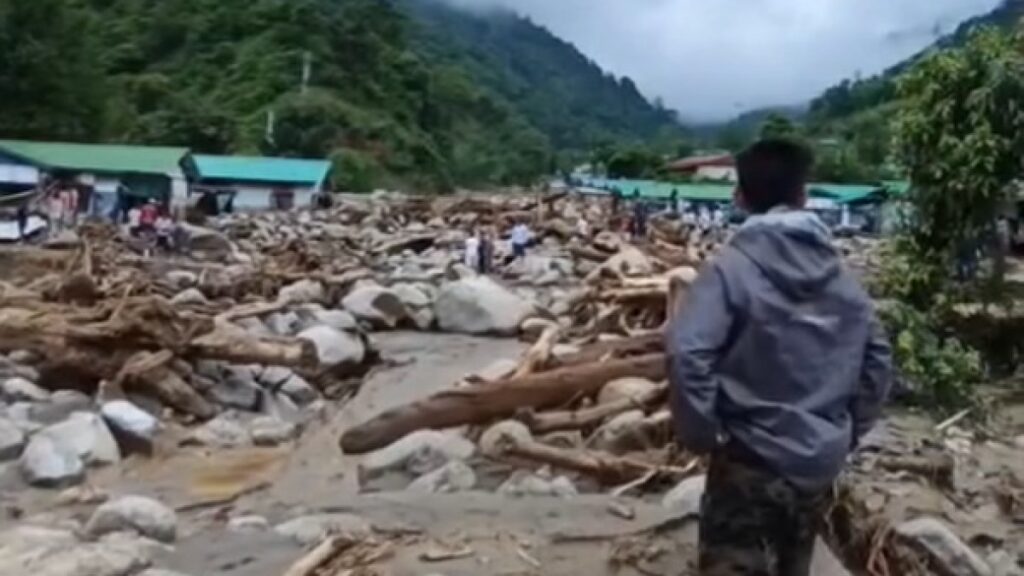
Torrential rains have caused severe flash floods and landslides in India’s northeastern state of Arunachal Pradesh, creating a critical situation for the region’s residents and authorities. The heavy downpour began several days ago, overwhelming rivers and drainage systems, leading to sudden and destructive flooding. Arunachal Pradesh, known for its mountainous terrain and diverse ecosystems, is particularly vulnerable to such natural disasters during the monsoon season.
The flash floods have triggered landslides that have blocked roads and isolated several communities, making rescue and relief efforts more challenging. Local authorities have reported damage to homes, infrastructure, and farmland, with many families forced to evacuate to safer areas. Emergency services have been dispatched to affected regions, and rescue operations are underway to assist stranded individuals and provide necessary aid.
Meteorologists have warned that the heavy rainfall may continue in the coming days due to prevailing weather conditions and the monsoon season, increasing the risk of further flooding and landslides. The government has urged residents to remain vigilant and follow safety instructions to minimize casualties and damage.
This incident highlights the growing vulnerability of northeastern India to extreme weather events, exacerbated by changing climate patterns. Local officials and disaster management teams are emphasizing the need for enhanced preparedness, early warning systems, and infrastructure improvements to better handle such emergencies in the future.
Communities in Arunachal Pradesh are now focusing on recovery efforts, with support from both state and national agencies. Relief camps have been set up for displaced people, and efforts are underway to restore normalcy as quickly as possible. The disaster underscores the importance of coordinated response and resilience-building in India’s flood-prone regions.