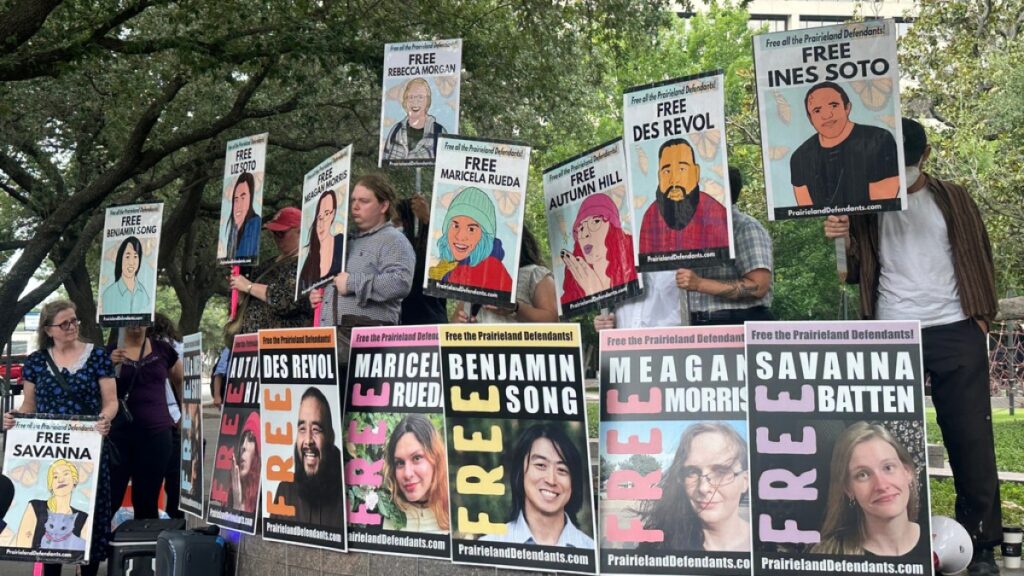
A group of protesters has been sentenced to decades in prison in the United States amid allegations of ties to the Antifa movement. The case centers on a protest that took place outside the Prairieland Detention Center, where demonstrators rallied against immigration detention practices. Authorities accused the suspects of engaging in violent actions and conspiring to commit crimes during the protest, leading to their prosecution and lengthy prison sentences.
Civil liberties advocates and human rights organizations have expressed significant concern over the proceedings. They argue that the charges and subsequent sentences appear disproportionate and serve as a troubling precedent for the treatment of political protests in the country. Many fear that the case could undermine the right to peaceful assembly and free speech, potentially chilling activism and dissent.
The Prairieland Detention Center protest reportedly began as a peaceful demonstration opposing the detention of immigrants and the conditions within such facilities. However, law enforcement agencies alleged that some participants engaged in destructive behavior, which authorities linked to Antifa, an anti-fascist political movement often associated with militant activism.
The defendants deny the accusations, asserting that their actions were within legal bounds of protest and that they were targeted due to their political beliefs. Their lawyers have argued that evidence against the protesters is circumstantial and influenced by political bias.
This case has sparked debates nationwide about the balance between public safety and protecting constitutional rights during protests. Supporters of the sentences emphasize the need to deter violent outbreaks and ensure law enforcement’s authority is respected. Conversely, critics warn that criminalizing dissent risks eroding democratic freedoms and escalating tensions between the state and activists.
As the convicted protesters begin serving their lengthy terms, advocacy groups continue to call for a reassessment of the verdicts. They are urging for greater scrutiny of the legal processes involved and for the protection of civil liberties, especially regarding the right to protest.
This development highlights ongoing challenges in the United States surrounding immigration policy, protest regulation, and political expression. It raises critical questions about how the justice system navigates politically charged situations and the implications for activists advocating for social change through public demonstration.
The Prairieland Detention Center protest case will likely remain a focal point for discussions on protest rights, government accountability, and the limits of lawful dissent in the US. Observers and stakeholders continue to watch closely as the story unfolds, with the hope that future responses to civil unrest will respect both security concerns and fundamental freedoms.