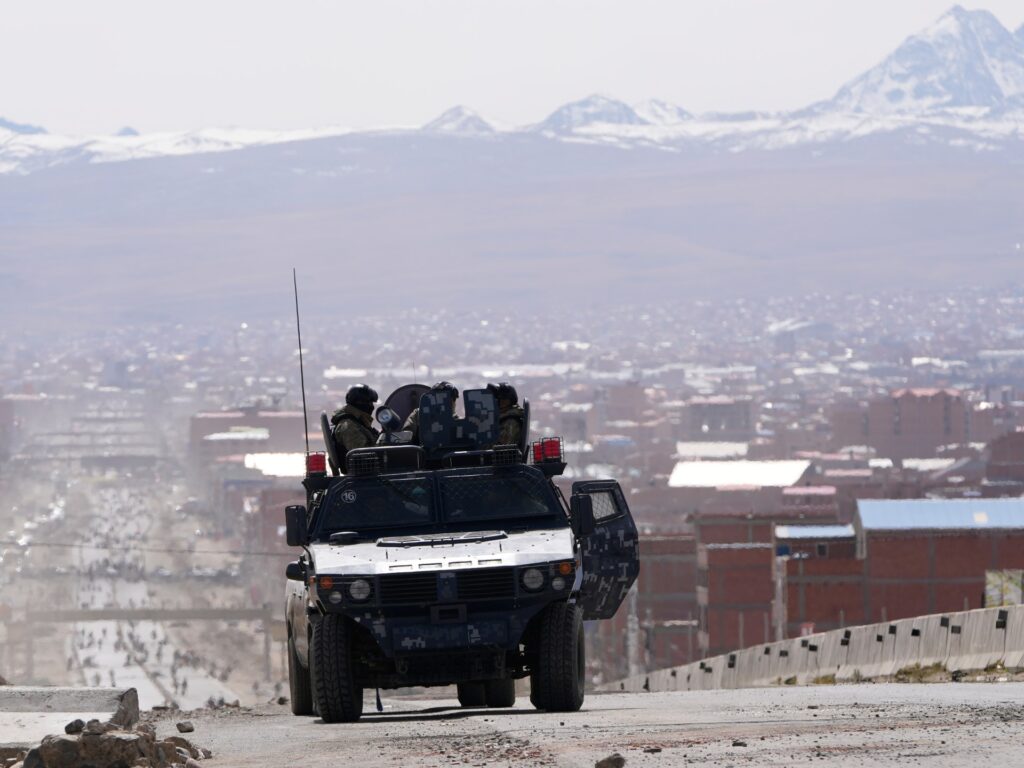
Bolivian authorities have reported that there are currently no active blockades following the recent decree of a state of emergency. This state of emergency was declared amid ongoing anti-government protests that have persisted for five weeks across various parts of the country. The decree has empowered security forces, allowing the deployment of the military to assist the police in maintaining order and public safety during this period.
The protests, which stem from widespread dissatisfaction with government policies and leadership, have led to significant disruptions and confrontations between demonstrators and law enforcement. Local leaders and the government have expressed concern over the escalating tensions and the potential for violence, prompting the exceptional measure to ensure stability.
Since the state of emergency was announced, authorities have taken swift action to clear blockades and reopen key transportation routes that had been obstructed by protesters. These blockades had severely impacted commerce and mobility, leading to economic losses and difficulties for residents in affected areas.
The military presence is focused on supporting the police, helping to manage crowd control and protect vital infrastructure. Officials emphasize that the intent is to restore normalcy while respecting citizens’ rights to peaceful assembly and expression.
Experts suggest that the deployment of military forces alongside police is a response to the complexity and intensity of the protests, which have included not only civil disobedience but also sporadic incidents of violence. The government is urging dialogue and negotiations as a path forward to address the protesters’ grievances and seek long-term solutions.
Community leaders and human rights organizations have called for restraint and adherence to legal standards by all parties involved. They stress the importance of avoiding excessive use of force and ensuring that security operations do not undermine democratic principles.
As the situation develops, the Bolivian government has pledged to monitor the impact of the state of emergency closely and to lift the restrictions as soon as it is deemed safe and appropriate. The international community is also watching the events closely, with some countries offering to mediate discussions or provide support for resolution efforts.
In summary, while the declaration of a state of emergency and military deployment marks a significant step by Bolivian authorities, it has also resulted in the absence of active blockades, signaling a temporary easing of one aspect of the upheaval. The path ahead remains uncertain as dialogues continue and the government works to reconcile with a populace eager for change and stability.