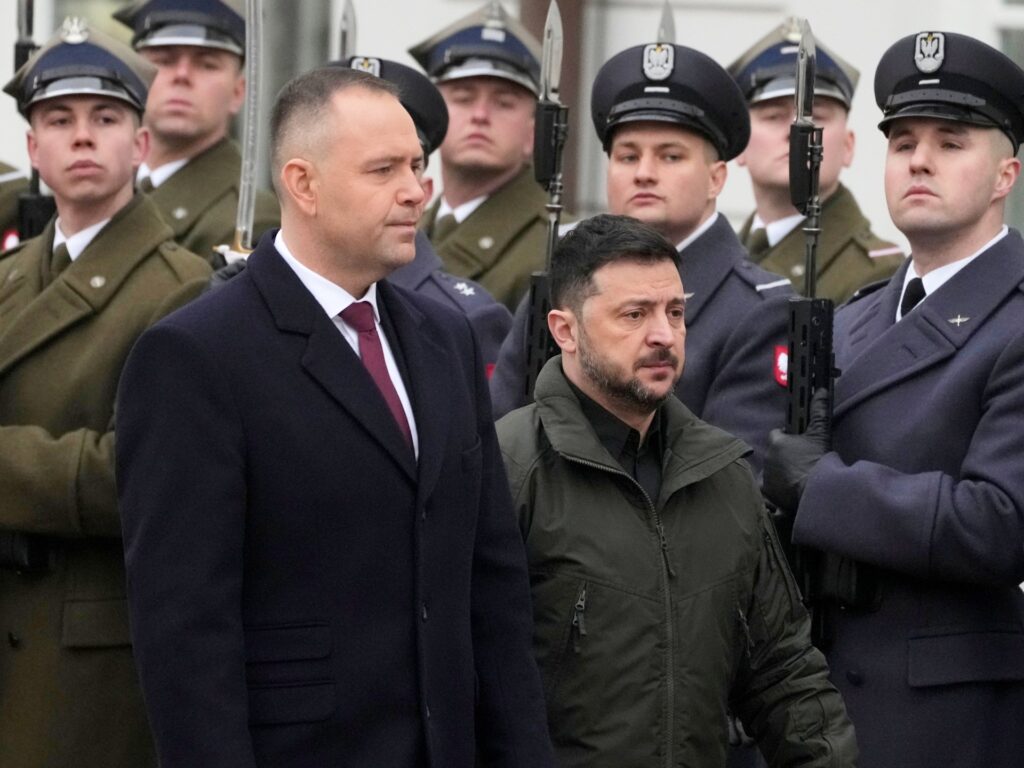
In a significant diplomatic gesture, several top Ukrainian officials have chosen to return their Polish awards in the wake of mounting tensions between the two countries over differing perspectives on World War II history. This move follows shortly after Ukrainian President Volodymyr Zelenskyy was stripped of Poland’s highest honor, intensifying the diplomatic strain.
The dispute centers on the historical narrative and interpretation of events during and after WWII, a period that saw profound suffering and complex interactions between Ukrainians and Poles. The mutual sensitivities to these historical accounts have recently escalated, culminating in actions by both sides that reflect the depth of their discord.
Ukrainian leaders, responding to President Zelenskyy’s removal of the prestigious Polish accolade, have returned their own awards as a form of protest and to underscore their disagreements with Poland’s stance. These awards, which were originally bestowed to recognize contributions to Polish-Ukrainian friendship and cooperation, now symbolize the fractured relationship.
The controversy highlights the challenges that Eastern European nations face in reconciling their shared yet often painful histories. Poland and Ukraine, despite being allies in many contemporary geopolitical and economic matters, find themselves grappling with unresolved historical grievances that threaten to overshadow their partnership.
Analysts suggest that this incident could have broader implications for the region, impacting collaborative efforts in security, trade, and cultural exchange. The timing is particularly sensitive given the ongoing conflict in Ukraine and the necessity for regional unity and support.
Poland, a key member of the European Union and NATO, has been a critical supporter of Ukraine’s sovereignty and defense efforts against external aggression. However, historical disputes such as this illustrate the complex layers of international relations where past and present often intersect.
Efforts by diplomats and historians to mediate the conflict and promote a more nuanced understanding of WWII events are underway, aiming to pave the way for reconciliation. Both nations acknowledge the importance of dialogue to prevent historical disagreements from damaging their strategic alliance.
The debate over WWII narratives extends beyond academic circles and influences national identities, collective memories, and political decisions in both countries. It also reflects the broader regional dynamics where history is an integral part of contemporary politics.
Despite the current setback, there is hope among observers that the resolution of these disputes could lead to stronger mutual respect and closer cooperation in the future. The symbolic exchange of awards, while painful, may ultimately serve as a catalyst for deeper conversations and understanding.
This episode serves as a reminder of the enduring impact of history on current affairs and the importance of addressing past conflicts with sensitivity and openness to foster lasting peace and friendship between nations.